Welcome to Cali Reporter
A magazine-style daily on national headlines, California politics and culture, and West Coast business.
Ten weeks into a war with Iran, the U.S. peace proposal sits unanswered while the path to ending the conflict stays deliberately vague.
Washington’s latest sanctions on Iran’s weapons network come as nuclear deal odds sit at a dismal 21% and oil traders price in only modest escalation risk.
Trump insists the ceasefire with Iran holds even after Tehran fired on three U.S. Navy ships, exposing how fragile any deal really is.
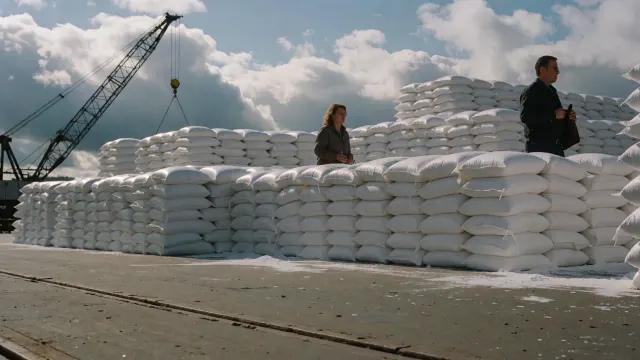
Trump’s naval blockade is squeezing global oil and fertilizer supplies while Iran probes with missiles and drones—yet markets keep dancing like it’s still 1999.
The US Navy's two-ship escort mission in the Strait of Hormuz collapsed in 48 hours, exposing the gap between American rhetoric and the brutal geography that favors Iran.
The Iran war is already driving gas to $4.54 a gallon and Republicans are watching their cost-of-living agenda slip away six months before midterms.
Saudi Arabia blocked U.S. aircraft from its bases and airspace after Trump launched Project Freedom without notice, exposing how little coordination existed between the administration and key Gulf allies.
An Iranian adviser just equated control of the Strait of Hormuz to a nuclear weapon, hardening Tehran’s position and dragging down already slim odds of any US-Iran deal.
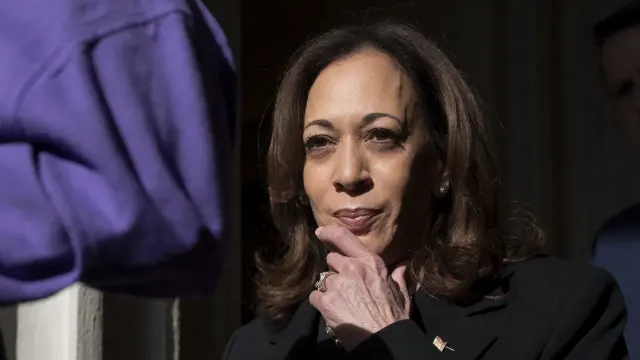
Kamala Harris calls Trump's strikes on Iran 'all bulls**t' while blaming him for higher gas prices and America's diminished global clout.
U.S. strikes on Iranian tankers and an expanding oil spill expose how fragile the month-old ceasefire really is, as Tehran keeps the Strait of Hormuz closed and global energy prices spike.
Trump’s rush to reopen the Strait of Hormuz has sidelined his own red line on Iran’s nuclear program, exposing a familiar pattern of declaring victory while hard problems fester.
JPMorgan now warns $5 gas is coming after the Iran war shut the Strait of Hormuz and cut off 20% of global oil supply—the largest disruption on record.
JPMorgan now says $5 gasoline is no longer dismissible as Iran’s war reroutes refiners toward jet fuel and away from the stuff Americans put in their cars.
Wall Street hits records on strong jobs data even as US-Iran clashes in the Strait of Hormuz send oil higher and consumer confidence to rock bottom.
US strikes two more empty Iranian tankers even as diplomats haggle over a 30-day pause and nuclear guarantees—showing how quickly ceasefires unravel in the Strait of Hormuz.
Lebanon's president pleads for pressure on Israel while Hezbollah keeps firing rockets, exposing how a fragile ceasefire is already collapsing under mutual violations.
Rubio demanded Europe stop issuing statements and start acting on Iran, but Italy's Meloni—fresh from calling U.S. strikes 'illegal'—offered only minesweeping after a ceasefire.
Despite a month-old ceasefire, fresh clashes in the Strait of Hormuz and a CIA assessment that Iran can endure a U.S. naval blockade for four months expose the limits of American leverage in a war voters never wanted.
A CIA report reveals Iran can endure a US naval blockade for four more months, exposing the limits of American leverage even as fighting reignites in the Strait of Hormuz.
Mojtaba Khamenei’s knee, back, and ear injuries from Israeli strikes have pushed prediction markets to price a 32.5% chance of Iranian leadership change by year-end — exposing how fragile the regime’s succession plan already was.
The U.S. Navy stepped in to stop Iranian attacks on three commercial vessels while officials still chase a "serious offer" from Tehran on its nuclear program.
Trump's Pentagon dropped Apollo 11 UFO transcripts on Friday, but critics from Marjorie Taylor Greene to Tim Dillon called it classic shiny-object theater to bury Epstein files, $4.50 gas, and an Iran war he promised to avoid.
ASEAN's emergency fuel pact from 2009 sits unused while leaders scramble for a regional power grid as the Iran war spikes costs and strands over a million workers in the Middle East.
Tucker Carlson's blunt verdict on Trump—'incompetent' rather than malicious—exposes the widening rupture inside conservatism over the Iran war.
Former counterterrorism chief Joe Kent claims U.S. intelligence accurately warned that Iran was not building a nuclear weapon—yet Israel’s narrative prevailed and dragged America into war.
Satellite images show a 45-square-kilometer oil slick off Kharg Island, the latest sign that Trump’s blockade is overwhelming Iran’s export system and forcing the regime into desperate, polluting workarounds.
Iran’s shutdown of the Strait of Hormuz has already pushed WTI crude to $95.42, yet prediction markets now price a spike to $150 this month at just 3.5 percent.
Iran says it slammed US destroyers with 8 cruise missiles and 24 suicide drones in the Strait of Hormuz, yet prediction markets barely budged and the US still denies any damage.
Ceasefire declared a month ago is fraying fast as US and Iranian forces trade blows in the Strait of Hormuz, yet both sides still claim a diplomatic off-ramp is close.
China’s confirmation of an attack on one of its own oil tankers in the Strait of Hormuz has crushed prediction-market odds on resumed shipping, exposing how neutral vessels are now fair game.
Trump insists the Iran ceasefire is holding with "love taps" and a terminated war, yet U.S. and Iranian forces have clashed at least 15 times since April 7.
Joe Rogan sees the Pentagon's sudden dump of 160 UFO files as a classic sleight-of-hand while the Iran war sours. Tim Burchett isn't so sure.
US airstrikes on two massive Iranian oil tankers expose the fragility of a month-old ceasefire already strained by Iran's blockade of the Strait of Hormuz and refusal to accept a nuclear rollback deal.
Prediction markets now price a return to normal Strait of Hormuz traffic by mid-May at just 2.2%, signaling that Europe’s six-week jet fuel reserve is about to be tested in a crisis reminiscent of 1973.
The U.S. and Iran just traded strikes in the Strait of Hormuz while both insisting it wasn't a resumption of war, revealing how 'ceasefire' now means something closer to managed violence than actual peace.
Washington's precision strikes on Iranian tankers expose the fragility of a ceasefire already fraying under mutual accusations and blocked shipping lanes.
While Trump insists the Iran ceasefire holds, the UAE tallies 551 ballistic missiles, 2,263 drones, ten dead, and 230 wounded from Tehran’s barrage — and is building an international legal case.
Iran's foreign ministry just dismissed American deadlines on a U.S. peace proposal, insisting review comes first and ultimatums won't work.
Iran's regime admits prices doubled in days and inflation hit 67%, yet it keeps crushing protests while its currency collapses to 1.8 million rial per dollar.
Iran’s strikes on UAE oil targets just widened a conflict the prediction markets already priced as peace’s death knell.
Five dead in southern Lebanon after Israeli strikes as Hezbollah's rockets slam into empty Israeli fields — another day of calibrated violence that changes nothing on the ground.
The labor market shrugged off an Iran war oil shock with 150,000 new jobs in April—proof that consumer spending and AI investment are tougher to derail than pundits expected.
Iran's IRGC declares the U.S. ceasefire broken over a 'love tap' strike and a tanker blockade, even as Trump insists the fighting has stopped and Rubio awaits Tehran's reply to a peace proposal.
Iran seizing its own sanctions-busting tanker reveals a regime turning on allies to project strength it no longer possesses.
Trump’s ex-counterterrorism chief says US intelligence warned against striking Iran, yet Israeli messaging overrode CIA assessments that Tehran wasn’t building a bomb.
Trump halted a major Strait of Hormuz military operation after 48 hours, and prediction markets now price a nuclear deal with Iran by June at 36 percent — up from 28 percent last week.
“Morning Joe” host Joe Scarborough heavily criticized President Trump Friday morning for downplaying Iran’s strikes against U.S.
U.S. forces just disabled two more Iranian tankers trying to breach the Hormuz blockade, yet prediction markets now price the chance of normal traffic by mid-May at under 2 percent.
Tehran’s Museum of Contemporary Art is displaying American Pop art critiquing war—while Iran and the U.S. remain locked in active military confrontation.
The U.S. is bombing empty Iranian tankers in the Gulf of Oman even as Secretary of State Marco Rubio claims a nuclear deal is nearly in hand.
Tehran’s streets stayed busy and defiant under bombardment, revealing how external attack can paper over a regime’s bloody domestic cracks—at least for now.
A leaked CIA assessment reveals Iran can endure a full naval blockade for four more months, exposing the limits of U.S. pressure even as American and Iranian forces exchange fire in the Gulf.
The U.S. keeps floating cease-fire offers to Iran while its forces trade fresh blows with Tehran’s proxies, exposing how little either side wants this conflict to end right now.
Iran’s latest drone and missile barrage wounded three in the UAE just hours after U.S. forces disabled two more Iranian tankers, exposing how fragile the month-old ceasefire really is.
While Trump insists a month-old ceasefire holds, US strikes on Iranian tankers and fresh missile attacks expose a collapsing truce that has already spiked global fuel prices.
US precision strikes on Iranian tankers expose the fragility of a ceasefire already strained by Iranian missile attacks and toll demands on the Strait of Hormuz.
Iran’s decision to etch its Strait of Hormuz shipping curbs into permanent law locks in higher oil prices and kills any near-term hope of de-escalation with the Trump administration.
Iran just made its Strait of Hormuz restrictions permanent after a U.S.-Israel strike, stranding 2,000 ships and crushing prediction-market odds of any quick return to normal traffic.
Oil prices are tumbling 7% this week despite Iranian seizures, Chinese tankers under fire, and European gas storage at a perilous 34% — proof that diplomatic smoke signals from Washington and Tehran still trump actual supply chaos.