Veterinary Professionals and the Impact of Work Habits on Aging
This article explores the potential long-term health effects of common work habits in veterinary medicine, including inadequate sleep, poor nutrition, and insufficient exercise.

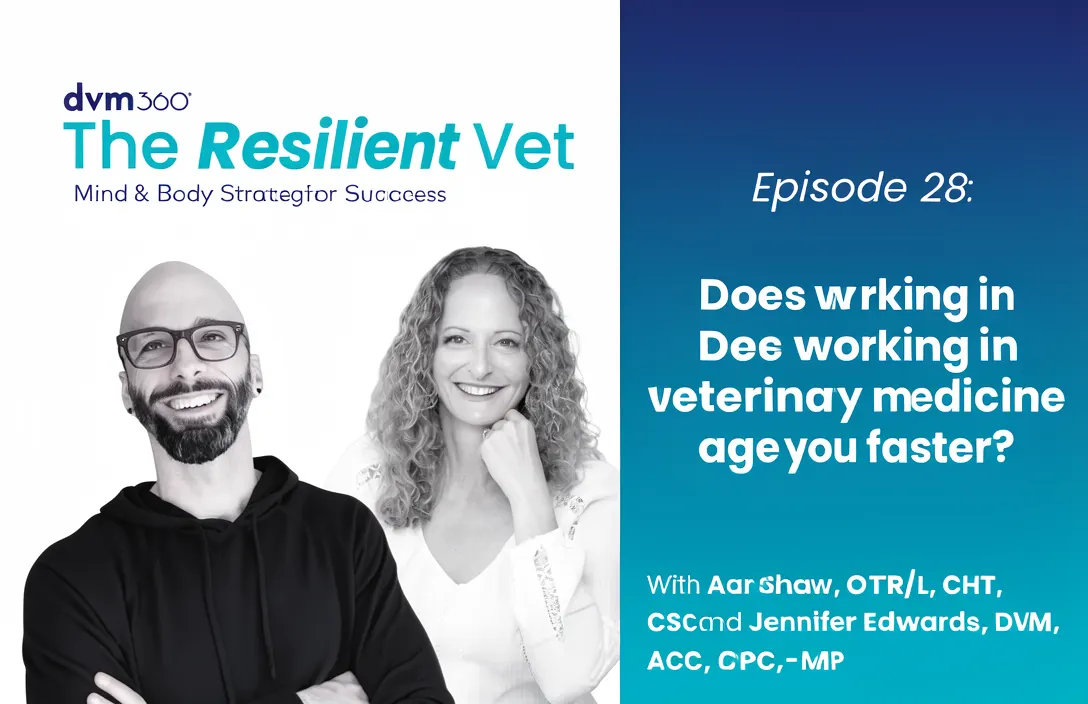

Veterinary professionals frequently encounter work environments that challenge their ability to maintain healthy habits, according to a conversation between Aaron Shaw, OTR/L, CHT, CSCS, and Jennifer Edwards, DVM, PCC, CPC, ELI-MP. The discussion highlights how factors such as skipped meals, insufficient sleep, and lack of exercise can accumulate over time and negatively affect long-term health. Shaw emphasizes that inadequate sleep, poor nutrition, chronic stress, and insufficient exercise have significant health consequences, particularly for those in veterinary medicine. These habits are often sacrificed during busy clinic days, leading to potential long-term health risks. [1]
Edwards reflects on her own experiences as a practice owner, noting that many veterinary professionals sacrifice their health due to long hours and the demands of their work. She recalls working over 40 hours a week, managing the practice during the night and on weekends, and often compromising on nutrition and sleep. This pattern is common among professionals in the field, who may not fully recognize the cumulative effects of these sacrifices on their long-term health. Edwards acknowledges that while it is possible to be an excellent parent and veterinarian, this does not exempt individuals from the physiological consequences of aging. [1]
Shaw underscores the importance of three fundamentals of healthy aging: exercise, nutrition, and sleep. He explains that the fatigue associated with clinical work does not serve as a substitute for strength or cardiorespiratory training. Additionally, he stresses that lost sleep cannot be compensated for on days off, highlighting the need for consistent healthy habits. Edwards adds that clinic culture and the pressure to be perfect can lead professionals to prioritize their work over their health. Both experts agree that understanding the long-term impact of current habits is crucial for maintaining a healthy lifespan. [1]
The discussion in the dvm360 article centers on the specific challenges faced by veterinary professionals in maintaining healthy aging practices due to the demanding nature of their work. The cohosts, Aaron Shaw and Jennifer Edwards, highlight the unique stressors of the profession, such as long hours and the necessity of working late into the night, as seen in Edwards' experience of working over 40 hours a week as a practice owner, often extending into the late evening and early morning hours. These conditions contribute to the sacrifice of essential health practices like proper nutrition, adequate sleep, and regular physical activity, which are critical components of healthy aging. [1]
Advertisement
The article specifically notes the impact of clinic culture on health behaviors, emphasizing how the fast-paced environment can lead to the normalization of poor health choices. Edwards reflects on the role of perfectionism and self-sacrifice within the profession, which often results in veterinary professionals prioritizing the needs of their patients and practice over their own well-being. This is further compounded by the perception that short-term sacrifices in health are manageable, despite the long-term consequences that may arise from chronic stress, inadequate sleep, and poor nutrition over decades of practice. [1]
The scope of the discussion includes the distinction between lifespan and health span, with the cohosts stressing the importance of not only living longer but also maintaining a high quality of life. Shaw outlines the three fundamentals of healthy aging—exercise, nutrition, and sleep—as essential pillars that, when neglected, can accelerate the aging process. The article does not provide specific data on the number of veterinary professionals affected, but it underscores the widespread nature of these challenges within the field, particularly during busy seasons and demanding clinic days. [1]
The discussion centers on the veterinary profession, specifically within clinic settings where long hours and high demands are common. The cohosts, Aaron Shaw and Jennifer Edwards, reference the typical work environment of veterinary professionals, including the challenges faced by practice owners who may work over 40 hours a week, often extending into evenings and weekends. This context highlights the physical and mental toll of the profession, particularly on those in leadership roles, who may sacrifice personal health in favor of professional responsibilities. Such environments often lead to skipped meals, insufficient sleep, and limited opportunities for exercise, all of which are critical components of healthy aging. The conversation also touches on the cumulative effects of these sacrifices over time, emphasizing the need for sustainable habits despite demanding schedules. [1]
The history of the conversation is rooted in the recognition of chronic stress and its impact on long-term health within the veterinary field. The cohosts draw from their own experiences and observations, with Jennifer Edwards reflecting on her early years as a practice owner, during which she frequently worked excessive hours. This historical perspective underscores the ongoing challenge of balancing professional duties with personal well-being. The discussion also acknowledges the documented limits of current practices in the veterinary industry, particularly the lack of emphasis on self-care and the tendency to prioritize immediate clinical demands over long-term health outcomes. These documented limits are evident in the common patterns of behavior among veterinary professionals, such as reliance on convenience foods and insufficient rest. [1]
Advertisement
The project scope discussed by Shaw and Edwards encompasses a broader conversation about health span versus lifespan, emphasizing the importance of maintaining physical and mental health throughout a professional’s career. They explore how clinic culture can either support or hinder the development of healthy habits, suggesting that systemic changes may be necessary to foster sustainability in the profession. Specific examples include the role of planning around demanding days and seasons, which can help professionals maintain consistency in their health routines. The scope also extends to the role of education and awareness, as the cohosts highlight the need for veterinary professionals to recognize the long-term consequences of their daily choices, even if those choices seem minor in the moment. [1]
Sources
Prepared with AI assistance from the cited sources.
The Cali Reporter newsletter
The stories worth your time.
California, the country, and what comes next. Join our free newsletter for reporting that keeps you informed.
More in Pets & Animals
- Petsgiving Gets Its Own Day
WUF World and Best Friends Animal Society have launched a new annual event called Petsgiving, which takes place on the Sunday before Thanksgiving, starting November 22, 2026, to celebrate pets and promote shelter…
- Chronic Inflammatory Enteropathy in Dogs: Management and Treatment Approaches
Chronic inflammatory enteropathy (CIE) in dogs is a complex condition requiring a multifaceted approach to diagnosis and treatment, as outlined in a recent veterinary article. Management strategies include dietary…
- Aging Pets and Cognitive Decline
As pets age, their brains undergo significant changes that mirror human neurodegenerative diseases, leading to cognitive decline often mistaken for normal aging.