Metro D Line Extensions Face Final Cost Increase Before 2027 Opening
The Los Angeles Metro D Line extensions to Century City and Westwood are expected to open in 2027, but the project has faced a final $300 million budget increase due to unforeseen construction challenges.

The Los Angeles Metro is nearing completion of two new extensions of the D Line, with both segments expected to open in 2027 (source ID: 1). The extensions to Century City and Westwood will allow D Line riders to travel from Westwood to downtown Los Angeles in about 25 minutes and from Century City to downtown in 20 minutes. Construction on the D Line began in 2014, with Section 1 (from Koreatown to Beverly Hills) opening in May 2023. Section 2 (from Beverly Hills to Century City) is 95% complete, and Section 3 (from Century City to Westwood) is approximately 90% complete. [1]
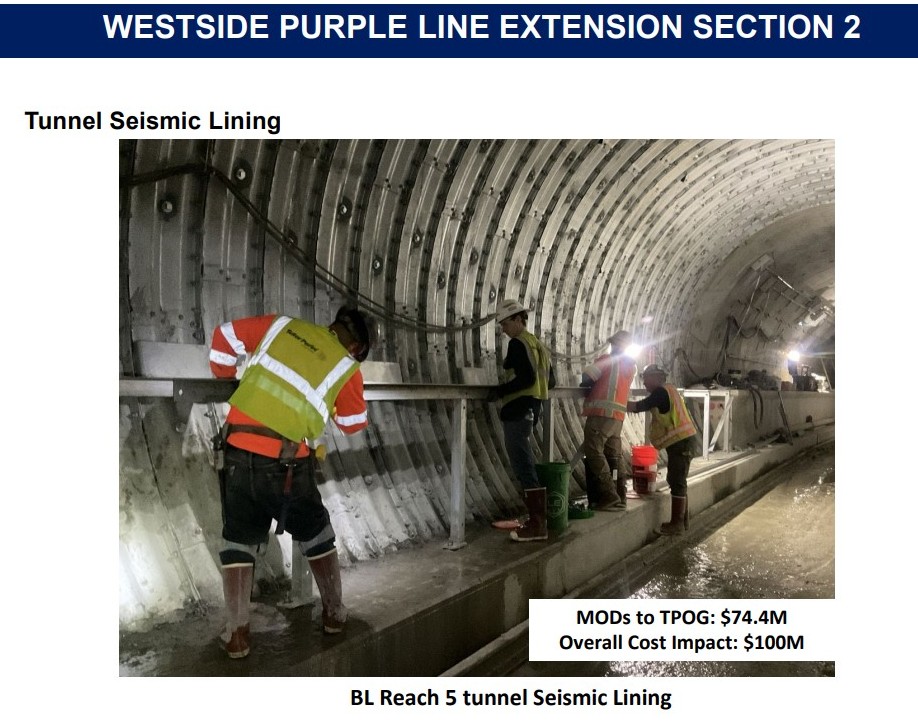
The Metro Board Finance Committee recently approved a $300 million budget increase for D Line Section 2, raising its total cost to $2.87 billion from the previously approved $2.57 billion (source ID: 1). This marks an 18% increase over the original 2017 budget for the project, which was then known as the Purple Line. The increase is attributed to several unforeseen factors, including tunneling around old oil wells under Beverly Hills High School, upgrades to tunnel seismic lining, and realignments of Century City station and storm drain. [1]
Metro Chief Program Management Officer Tim Lindholm stated that the increase is the 'final budget increase' needed to complete the project and prepare for the 2027 opening of both extensions (source ID: 1). The cost increase still requires approval from the full Metro board at its December 3 meeting. Current schedules anticipate Section 2 (to Century City) opening in early Fall 2027 and Section 3 (to Westwood) opening in late Fall 2027. [1]
The Los Angeles Metro is nearing completion of two new extensions of the D Line, with both segments expected to open in 2027 (source ID: 1). The Metro Board Finance Committee recently approved a $300 million budget increase for D Line Section 2, raising its total cost to $2.87 billion from the previously approved $2.57 billion (source ID: 1). This increase is described as the 'final budget increase' needed to complete the project and prepare for the 2027 opening of both extensions (source ID: 1). [1]
Advertisement
The budget increase for D Line Section 2 follows earlier increases, including a $134 million budget increase in 2023, which raised the cost by 5.5% (source ID: 1). The current 12% increase brings the total cost of the project to 18% over its 2017 budget (source ID: 1). Metro Chief Program Management Officer Tim Lindholm noted that an 18% cost overage is not unusual for this type of project (source ID: 1). [1]
The increase in the budget for D Line Section 2 is attributed to several unforeseen factors that have expanded the scope and duration of construction (source ID: 1). These factors include tunneling around old oil wells under Beverly Hills High School, upgrading tunnel seismic lining to be stronger than initially planned, and realigning Century City station and storm drain to avoid impacting a mall (source ID: 1). [1]
The Los Angeles Metro is nearing completion of two new extensions of the D Line, with both segments expected to open in 2027 (source ID: 1). The Metro Board Finance Committee recently approved a $300 million budget increase for D Line Section 2, raising its total cost to $2.87 billion from the previously approved $2.57 billion (source ID: 1). Metro Chief Program Management Officer Tim Lindholm stated that the increase is the 'final budget increase' needed to complete the project and prepare for the 2027 opening of both extensions (source ID: 1). [1]
The budget increase for D Line Section 2 follows earlier increases, including a $134 million budget increase in 2023, which raised the cost by 5.5% (source ID: 1). The increase in the budget for D Line Section 2 is attributed to several unforeseen factors that have expanded the scope and duration of construction (source ID: 1). These factors include tunneling around old oil wells under Beverly Hills High School, upgrading tunnel seismic lining to be stronger than initially planned, realigning Century City station, and compliance with construction restrictions imposed by Beverly Hills (source ID: 1). [1]
Advertisement
Metro detected 'anomalies' (possible obstacles to tunnel boring) under Beverly Hills High School. Two of these turned out to be abandoned oil wells (source ID: 1). Lindholm noted that an 18% cost overage is not unusual for this type of project, citing a 2020 Federal Transit Administration (FTA) study that found heavy rail subway projects (including earlier Metro B and D Line sections) averaged 42% cost increases (source ID: 1). [1]
The Los Angeles Metro is nearing completion of two new extensions of the D Line, with both segments expected to open in 2027 (source ID: 1). The Metro Board Finance Committee recently approved a $300 million budget increase for D Line Section 2, raising its total cost to $2.87 billion from the previously approved $2.57 billion (source ID: 1). This decision follows a series of budget adjustments aimed at addressing construction complications and ensuring the project's completion by the anticipated timeline. [1]
The increase in the budget for D Line Section 2 is attributed to several unforeseen factors that have expanded the scope and duration of construction (source ID: 1). These include tunneling around old oil wells under Beverly Hills High School, upgrading tunnel seismic lining, realigning Century City station, and modifying a storm drain to avoid impacting a mall (source ID: 1). Metro detected 'anomalies' (possible obstacles to tunnel boring) under Beverly Hills High School, two of which turned out to be abandoned oil wells (source ID: 1). [1]
Metro Chief Program Management Officer Tim Lindholm stated that the $300 million increase is the 'final budget increase' needed to complete the project and prepare for the 2027 opening of both extensions (source ID: 1). The budget increase follows an earlier $134 million increase in 2023, which raised the cost by 5.5% (source ID: 1). Lindholm noted that an 18% cost overage is not unusual for this type of project, citing a 2020 Federal Transit Administration (FTA) study that found heavy rail subway projects averaged 42% cost increases (source ID: 1). [1]
Advertisement
The Cali Reporter newsletter
The stories worth your time.
California, the country, and what comes next. Join our free newsletter for reporting that keeps you informed.
More in Transportation
- Transportation Projects and Public Safety Concerns in Los Angeles
Recent developments in Los Angeles transportation projects and incidents involving vehicles and pedestrians have drawn attention from local media and officials.
- Metro Freeway Expansion Projects Blocked by Committee Vote
A Metro board committee rejected $222 million in funding for three freeway widening projects in Southeast L.A. County, marking a rare shift in the agency's usual approval process for such expansions.
- Metro Concludes Sepulveda Transit Corridor Scoping Meetings
Metro has completed a series of public scoping meetings for the Sepulveda Transit Corridor project, with final input due by Wednesday, November 18, 2026.