Wildfire Smoke Damages Airway Defenses
A study has revealed that wildfire smoke disrupts the airway's natural defenses, potentially increasing the risk of serious health issues. This research was conducted in response to the 2025 Los Angeles wildfires.

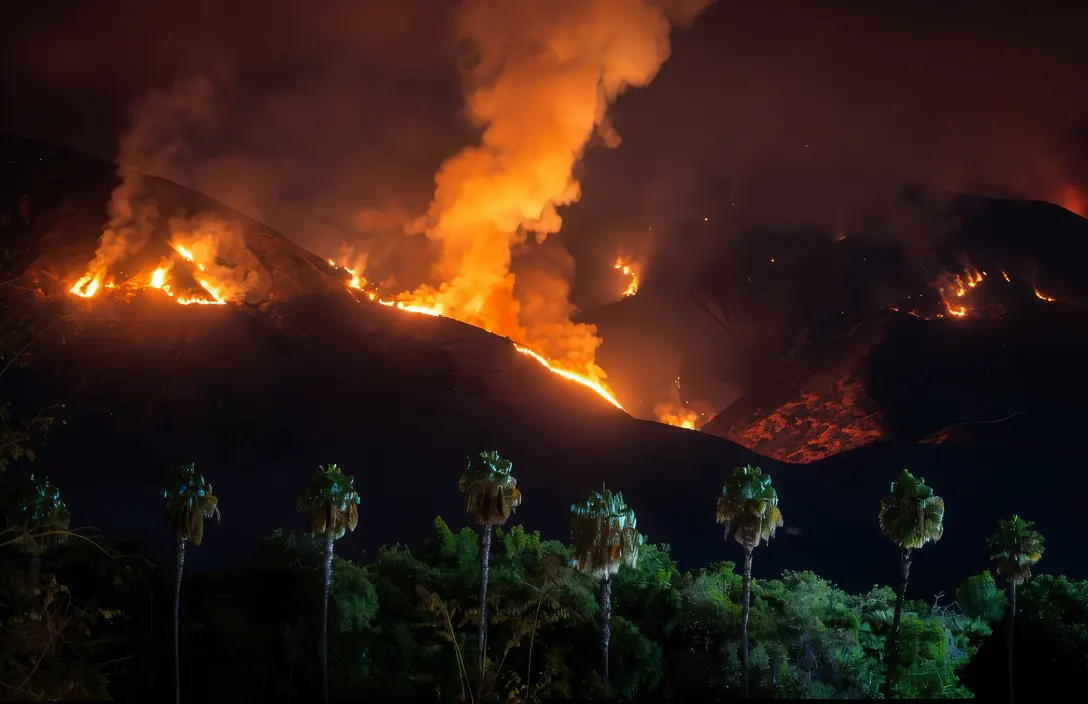

Wildfire smoke is reversing years of air quality improvements, with fire seasons now spanning the entire year. The 2025 Los Angeles wildfires exemplified this trend, as smoke drastically reduced air quality to hazardous levels. Researchers from UCLA found that wildfire smoke simultaneously paralyzes cilia and weakens the cellular 'cement' that holds airway cells together, according to evidence from the study (1). These findings were based on tissue samples collected from Los Angeles residents before, during, and after the fires, showing significant damage to the airway lining during the smoldering phase (1). [1]
To replicate the effects of wildfire smoke on human airways, researchers used lab-grown airway tissue. They adapted an exposure chamber originally designed for cigarette smoke, using pine bark to create 'wooden cigarettes' that mimicked the particle size and chemical composition of real wildfire smoke (1). The mini airways were exposed to smoke for five days, with each exposure leading to cumulative damage. Ciliary movement, which is crucial for clearing particles from the airways, dropped from 71% to 25%, even though the cells themselves were not dying (1). [1]
The study also identified a cell signal involved in the damage caused by wildfire smoke. By blocking the MEK/ERK pathway using a drug called pimasertib, researchers were able to maintain higher levels of ciliary movement and preserve the airway's cellular seals (1). This suggests that targeting this pathway could potentially protect the airway from the harmful effects of smoke. The researchers are now exploring the possibility of developing an inhaler or nasal spray that could be used to prevent damage before exposure to smoke (1). [1]
The 2025 Palisades and Eaton wildfires in Los Angeles marked a significant event in the region's environmental history, as smoke from these fires caused air quality to reach hazardous levels, impacting a wide geographic area. This incident highlighted the expanding scope of wildfire seasons, which are no longer limited to summer months but now occur throughout the year, an increase attributed to climate change and increasing fire frequency. The wildfires occurred in the greater Los Angeles area, affecting densely populated regions and demonstrating the vulnerability of urban centers to wildfire-related air quality degradation. The smoke from these fires traveled across the region, reaching areas far beyond the immediate fire zones, as documented by air quality monitoring stations across Los Angeles County. The event was a critical case study for researchers investigating the effects of wildfire smoke on human health and airway defenses, providing a real-world context for their findings. [1]
Advertisement
The research on the effects of wildfire smoke on airway defenses was conducted using nasal and sinus tissue samples collected from 14 Los Angeles residents who had undergone sinus surgery before, during, or shortly after the 2025 wildfires. These samples were collected in a specific timeframe—before the fires, during the active burning phase, and during the subsequent smoldering period. The geographic location of the study was limited to Los Angeles due to the availability of tissue samples and the direct exposure of participants to the wildfires. The research team emphasized that while the samples provided valuable insights into the impact of wildfire smoke on airway tissues, the findings were limited by the inability to measure individual smoke exposure levels, as well as the pre-existing chronic sinus disease in all participants, which could have influenced the results. This limitation underscores the need for further studies in diverse populations and settings to confirm the generalizability of the findings. [1]
The experimental model used in the study involved lab-grown human airway tissue, which was developed from airway stem cells isolated from donated lungs with no pre-existing lung disease. This model was specifically designed to replicate the structure and function of human airways, including the presence of beating cilia and the protein "cement" that holds cells together. The research team at UCLA used a programmable exposure chamber originally designed for cigarette smoke studies, which they adapted to expose the lab-grown tissue to wildfire smoke. The smoke used in the experiments was generated from pine bark ground into "wooden cigarettes" and burned in the exposure chamber. The particle size and chemical composition of the smoke were verified by UCLA atmospheric and environmental health scientists to match those found in real-world wildfire smoke samples. This model allowed the researchers to simulate the effects of repeated smoke exposure on airway tissues in a controlled laboratory setting, providing a unique opportunity to study the long-term impacts of wildfire smoke on human health. [1]
The study identified the MEK/ERK signaling pathway as a key contributor to the damage caused by wildfire smoke on airway tissues. This pathway is known to regulate cell growth and is already a target for several cancer drugs. The research team tested the effects of a MEK inhibitor called pimasertib, which was administered to the lab-grown airway tissue before each smoke exposure. The results showed that the drug significantly reduced the damage caused by the smoke, preserving ciliary function and maintaining the integrity of the airway barrier. This finding suggests that targeting the MEK/ERK pathway could be a potential strategy for developing protective treatments against wildfire smoke exposure. However, the study was limited to in vitro experiments, and further research is needed to determine the safety and efficacy of such treatments in human clinical trials. The research team is currently working on formulating the compound for inhalation and conducting safety studies to move toward the development of an over-the-counter product. [1]
Sources
Prepared with AI assistance from the cited sources.
The Cali Reporter newsletter
The stories worth your time.
California, the country, and what comes next. Join our free newsletter for reporting that keeps you informed.
More in Health & Medicine
- Understanding Fascia and the Evidence Behind Fascia Release
Fascia is a connective tissue that plays a structural role in the human body, but evidence supporting specific exercises or tools for 'fascia release' remains limited.
- Antidepressant Effectiveness and Long-Term Use
A new review suggests that some antidepressants may be more effective than others in helping people manage depression symptoms over the long term, according to a study published in The Lancet Psychiatry.
- Experimental Weight-Loss Drug Shows Promise for Knee Osteoarthritis Pain
A new study suggests that an experimental weight-loss drug, retatrutide, may significantly reduce knee pain in people with osteoarthritis and obesity.