

Why confide in AI? Teens open up on why they trust chatbots
Teens are confessing their deepest secrets to chatbots instead of friends or parents because AI never judges them, a new Hopelab-Harvard survey reveals.
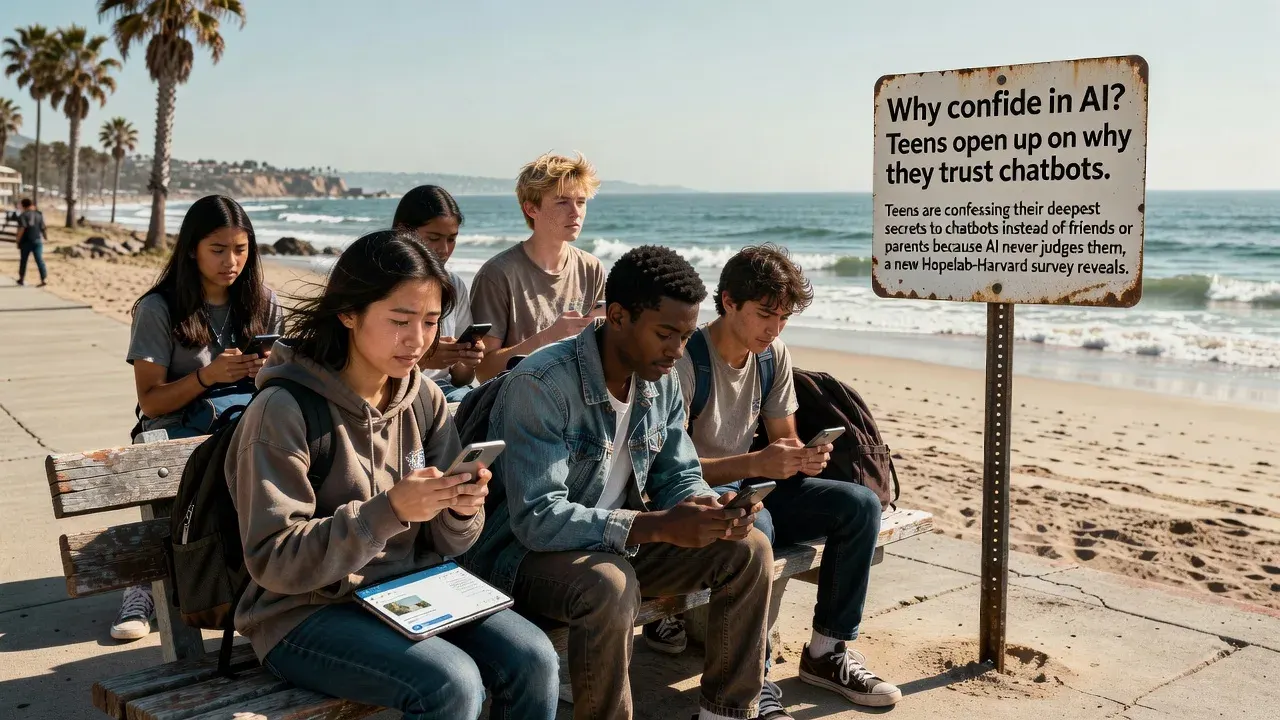
California teenagers have found a confidant that never gossips, never lectures, and never tells their parents: artificial intelligence. A new report from San Francisco-based Hopelab and the Harvard Graduate School of Education shows that many young people aged 14 to 22 prefer opening up to chatbots precisely because the machines lack the social baggage that comes with human relationships.
The survey of 30 participants laid bare a simple truth: teens fear judgment from peers and parents far more than they fear a lifeless algorithm. One participant after another described the relief of typing their most private thoughts into a chatbot that offers responses without eye rolls, rumors, or repercussions. The report makes clear this isn’t idle experimentation; it’s a deliberate choice for emotional safety.
That preference exposes a quiet failure in the adult world. When real-life relationships feel too risky, adolescents turn to the one entity guaranteed not to betray them. The Hopelab-Harvard findings suggest today’s teens are optimizing for zero emotional friction, trading the messy give-and-take of friendship for the frictionless validation of a large language model.

Yet the convenience comes with its own cost. While the report highlights the appeal of nonjudgmental listening, it leaves unexamined what happens when the only reliable confidant is a corporation’s profit-driven software. The very absence of human stakes that makes AI attractive also removes any genuine accountability or wisdom that flawed humans occasionally provide.
The pattern is now unmistakable: young Californians are voting with their thumbs. They would rather risk sharing their secrets with silicon than with the people who actually know them. The question the Hopelab and Harvard researchers have surfaced, but not answered, is how long this digital confessional can substitute for the harder work of building real human trust.
Original reporting: CalMatters.
More in California
- UC Berkeley Lab Proposes New Civic Framework for California’s Next Governor
A research-driven agenda calls for institutionalizing 'co-governance' to address low public trust and lack of resident influence in state decision-making.
- Five Tax Measures on California’s Ballot Aim to Reshape State Finances
Propositions 3, 40–43 would alter income, wealth and local taxation rules—marking the highest number of tax measures on a general election ballot since 1994.
- Catalina Helicopter Crash Highlights Risks of Island Medevac Flights
A medical evacuation chopper carrying Catalina Romero, pilot, and nurse Jessica Devries crashed into the ocean shortly after takeoff, killing all three; federal investigators are assessing causes including night flying, spatial disorientation, and the island’s challenging Pebbly Beach heliport.