

Which wildfire treatment saved most damage? #science
A UC Davis study shows every dollar spent on forest fuel treatments avoids $3.75 in wildfire damages, proof that thinning and controlled burns deliver when fires inevitably hit.
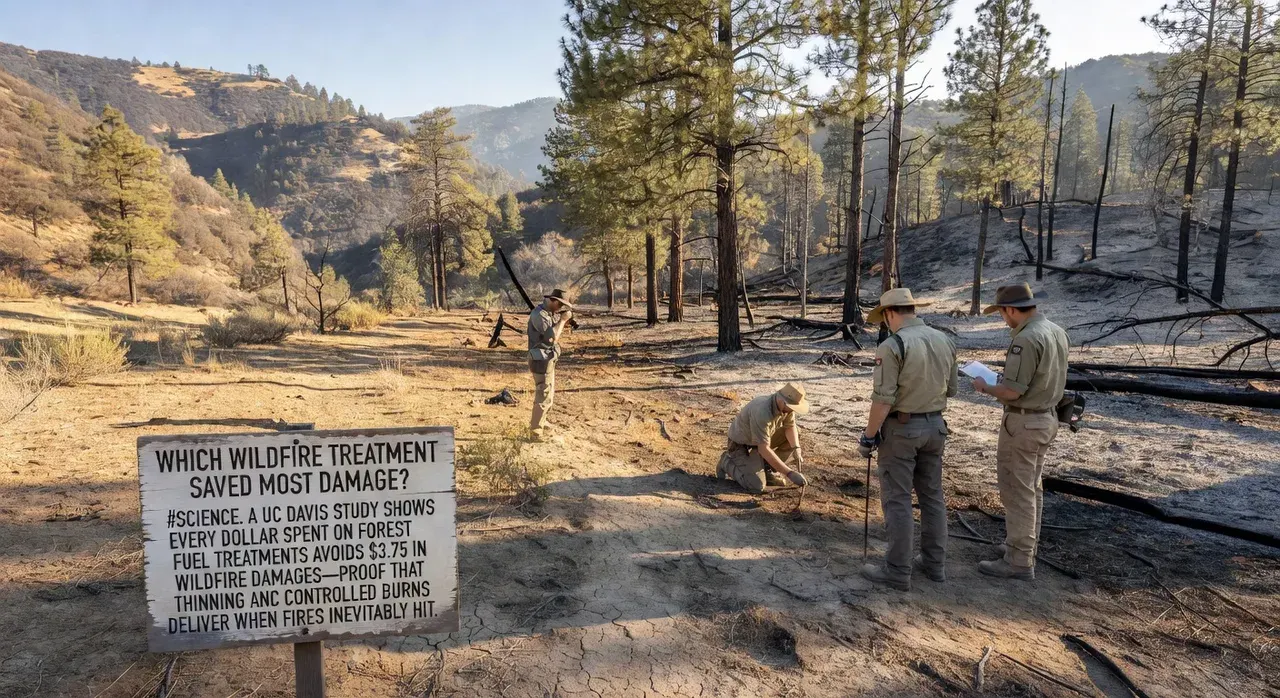
Forest fuel treatments slash wildfire damage by nearly four times, according to new research from the University of California, Davis. For every dollar spent thinning trees, conducting controlled burns, or clearing underbrush, California avoids roughly $3.75 in destroyed homes, timber, and infrastructure.
The finding lands at a moment when state and federal agencies keep pouring money into suppression while debating whether prevention measures justify their upfront costs. The UC Davis analysis shows the return comes not only from stopping fires outright but from limiting their reach once they ignite, changing flame intensity, slowing spread, and giving crews a fighting chance in overgrown stands.
Critics have long dismissed fuel reduction as expensive forestry theater that rarely intersects with actual wildfire footprints. The study dismantles that view with hard numbers: treatments deliver measurable risk mitigation even in the fires that do occur. Measuring success only by acres unburned misses the second, quieter payoff, smaller losses when the match finally drops.

That distinction matters in California, where decades of fire suppression, drought, and beetle kill have left forests choked with dry biomass. The UC Davis team frames fuel management as classic insurance: you pay now so the inevitable event costs less later. The nearly fourfold return suggests current budget arguments pitting treatments against engines, retardant drops, and evacuation planning rest on an incomplete ledger.
Yet the study also highlights a deeper policy failure. Agencies still treat fuel work as optional vegetation management rather than core infrastructure protection. If every dollar spent buys nearly four back in avoided damage, the real question is why these projects remain chronically underfunded while suppression budgets balloon after each October catastrophe.
The data won’t quiet every skeptic, but it sharpens the debate: California can keep reacting to bigger fires or start pricing the cost of doing nothing about the fuel that feeds them.
Original reporting: Alltoc.com
More in California
- UC Berkeley Lab Proposes New Civic Framework for California’s Next Governor
A research-driven agenda calls for institutionalizing 'co-governance' to address low public trust and lack of resident influence in state decision-making.
- Five Tax Measures on California’s Ballot Aim to Reshape State Finances
Propositions 3, 40–43 would alter income, wealth and local taxation rules—marking the highest number of tax measures on a general election ballot since 1994.
- Catalina Helicopter Crash Highlights Risks of Island Medevac Flights
A medical evacuation chopper carrying Catalina Romero, pilot, and nurse Jessica Devries crashed into the ocean shortly after takeoff, killing all three; federal investigators are assessing causes including night flying, spatial disorientation, and the island’s challenging Pebbly Beach heliport.