USS Spruance Returns to San Diego After 12-Month Combat Deployment in the Middle East
The guided-missile destroyer USS Spruance has returned to its home port of Naval Base San Diego, marking the end of a 12-month combat deployment across the U.S. 3rd, 7th, and 5th Fleet areas of operations. The ship's…

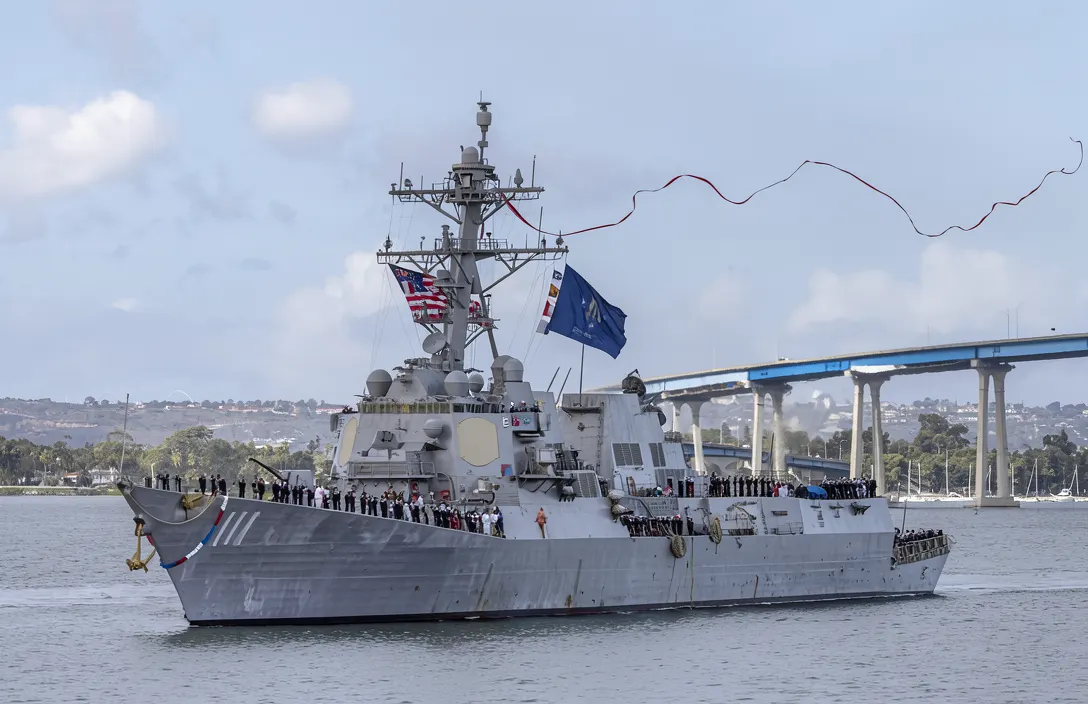
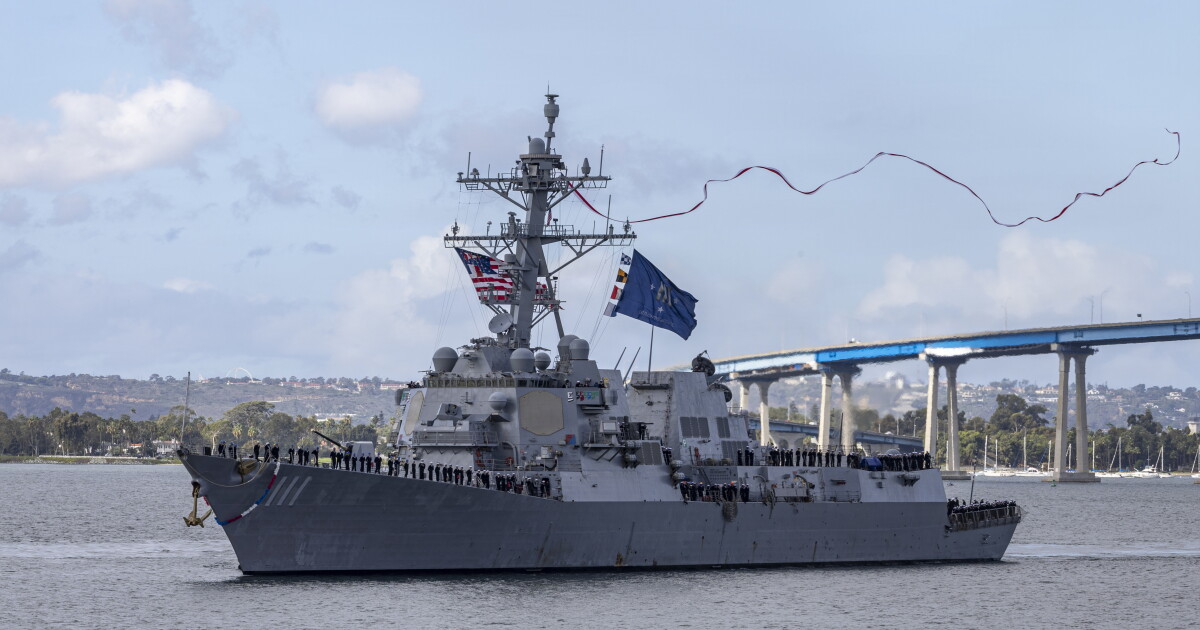
On November 13, 2026, the guided-missile destroyer USS Spruance returned to its home port, Naval Base San Diego, marking the end of a 12-month combat deployment spanning the U.S. 3rd, 7th, and 5th Fleet areas of operations. The event, covered by KPBS, highlighted the significance of the Spruance's role in the U.S.-Israeli conflict with Iran (1). The ship had initially departed San Diego on November 21, 2025, as part of the aircraft carrier USS Abraham Lincoln's strike group, but remained in the Middle East after the Lincoln returned home in the summer of 2026. The Spruance received a Presidential Unit Citation and the Combat Action Ribbon for its actions during the deployment, with its commanding officer, CMDR Leigh Tate, noting that the crew faced intense combat, including ship-to-ship fire and engagements with Iranian drones and guided-missiles. [1]
On November 21, 2025, the Spruance departed San Diego as part of the aircraft carrier USS Abraham Lincoln's strike group. However, later this summer, as the Lincoln began its return journey, the Spruance stayed behind in the Middle East. This choice resulted in the Spruance's deployment lasting longer than originally planned, with the ship continuing to participate in the ongoing conflict (1). [1]
The Spruance's deployment included a rare instance of ship-to-ship fire in modern naval warfare. In April, an Iranian ship attempted to run the Navy's blockade of Iranian ports. In response, the Spruance fired on the Iranian cargo ship M/V Touska, striking and disabling its engine. This action was confirmed by the Pentagon and highlighted the ship's active role in enforcing the U.S. blockade of Iran (1). [1]
The Spruance also engaged Iranian drones and guided-missiles, shooting several out of the sky. CMDR Leigh Tate, the Spruance's commanding officer, emphasized the ship's role in air defense. He noted that the Spruance was instrumental in defending the carrier and the broader force from inbound threats, including anti-ship cruise missiles and one-way attack waves (1). [1]
Advertisement
The Spruance’s deployment is notable for its length. CMDR Tate stated that the ship’s tour is the longest a warship has been at sea since World War II. This extended deployment underscores the significant and sustained involvement of U.S. naval forces in the Middle East (1). [1]
The return of the Spruance was met with emotional reactions from family members. Hanna Weiss, who was waiting for her fiancée, Maria Melchor, to return with the ship, described the experience as a long and difficult 12 months. She noted that many people advised her to avoid paying attention to the news, but she believed that being informed was important (1). [1]
CMDR Tate mentioned that the crew can expect a lot of downtime following their return. This includes a post-deployment stand-down and the upcoming holiday season. The extended deployment and combat operations have likely taken a toll on the crew, and the return to San Diego marks a significant shift in their schedule (1). [1]
The USS Spruance received a Presidential Unit Citation and the Combat Action Ribbon for its role in the U.S.-Israeli war against Iran, highlighting the crew's valor and the ship's involvement in the conflict. CMDR Leigh Tate noted the severity of the combat encountered, though he refrained from sharing specific details for operational security reasons (1). [1]
Advertisement
On November 13, 2026, the USS Spruance returned to Naval Base San Diego after a 12-month combat deployment spanning the U.S. 3rd, 7th, and 5th Fleet areas of operations. The ship's arrival was celebrated by sailors and their families, as reported by KPBS, which emphasized the significance of the Spruance’s deployment in the U.S.-Israeli war against Iran (1). The guided-missile destroyer had departed San Diego on November 21, 2025, as part of the USS Abraham Lincoln's strike group, but remained in the Middle East after the Lincoln returned home later that summer. The Spruance earned a Presidential Unit Citation and the Combat Action Ribbon for its actions during the deployment, with its commanding officer, CMDR Leigh Tate, noting that the crew experienced intense combat, including rare ship-to-ship fire when the Spruance disabled an Iranian vessel attempting to evade a U.S. blockade. The ship also engaged Iranian drones and missiles, playing a key role in defending the carrier and the strike group from various threats. [1]
On November 21, 2025, the Spruance departed San Diego as part of the USS Abraham Lincoln's strike group. However, later this summer, when the Lincoln began its return journey, the Spruance stayed behind in the Middle East. This choice led to an extended deployment for the Spruance, as the ship continued to be actively involved in the conflict (1). [1]
The Spruance's deployment included a rare instance of ship-to-ship fire in modern naval warfare. In April, an Iranian ship attempted to run the Navy's blockade of Iranian ports. In response, the Spruance fired on the Iranian cargo ship M/V Touska, striking and disabling its engine. This action was confirmed by the Pentagon and highlighted the ship's active role in enforcing the U.S. blockade of Iran (1). [1]
The Spruance also engaged Iranian drones and guided-missiles, shooting several out of the sky. CMDR Leigh Tate, the Spruance's commanding officer, emphasized the ship's role in air defense. He noted that the Spruance was instrumental in defending the carrier and the broader force from inbound threats, including anti-ship cruise missiles and one-way attack waves (1). [1]
Advertisement
The Spruance’s deployment is notable for its length. CMDR Tate stated that the ship’s tour is the longest a warship has been at sea since World War II. This extended deployment underscores the significant and sustained involvement of U.S. naval forces in the Middle East (1). [1]
The return of the Spruance was met with emotional reactions from family members. Hanna Weiss, who was waiting for her fiancée, Maria Melchor, to return with the ship, described the experience as a long and difficult 12 months. She noted that many people advised her to avoid paying attention to the news, but she believed that being informed was important (1). [1]
CMDR Tate mentioned that the crew can expect a lot of downtime following their return. This includes a post-deployment stand-down and the upcoming holiday season. The extended deployment and combat operations have likely taken a toll on the crew, and the return to San Diego marks a significant shift in their schedule (1). [1]
The USS Spruance received a Presidential Unit Citation and the Combat Action Ribbon for its role in the U.S.-Israeli conflict with Iran, highlighting the crew's valor and the ship's involvement in the fighting (1). CMDR Leigh Tate described the combat as intense, though he refrained from disclosing specific details to maintain operational security (1). [1]
Advertisement
On November 13, 2026, the USS Spruance arrived back at Naval Base San Diego, concluding a 12-month combat deployment across the U.S. 3rd, 7th, and 5th Fleet areas of operations. The ship’s return was celebrated by sailors and their families, who gathered to greet the crew. KPBS covered the event, emphasizing the significance of the Spruance’s deployment and its involvement in the U.S.-Israeli war against Iran (1). [1]
The guided-missile destroyer USS Spruance departed San Diego on November 21, 2025, as part of the aircraft carrier USS Abraham Lincoln's strike group. However, later this summer, as the Lincoln began its return journey, the Spruance stayed behind in the Middle East. This choice led to an extension of the Spruance's deployment past its original schedule, with the vessel continuing to be actively involved in the conflict (1). [1]
The Spruance's deployment included a rare instance of ship-to-ship fire in modern naval warfare. In April, an Iranian ship attempted to run the Navy's blockade of Iranian ports. In response, the Spruance fired on the Iranian cargo ship M/V Touska, striking and disabling its engine. This action was confirmed by the Pentagon and highlighted the ship's active role in enforcing the U.S. blockade of Iran (1). [1]
The Spruance also engaged Iranian drones and guided-missiles, shooting several out of the sky. CMDR Leigh Tate, the Spruance's commanding officer, emphasized the ship's role in air defense. He noted that the Spruance was instrumental in defending the carrier and the broader force from inbound threats, including anti-ship cruise missiles and one-way attack waves (1). [1]
The Spruance’s deployment is notable for its length. CMDR Tate stated that the ship’s tour is the longest a warship has been at sea since World War II. This extended deployment underscores the significant and sustained involvement of U.S. naval forces in the Middle East (1). [1]
The return of the Spruance was met with emotional reactions from family members. Hanna Weiss, who was waiting for her fiancée, Maria Melchor, to return with the ship, described the experience as a long and difficult 12 months. She noted that many people advised her to avoid paying attention to the news, but she believed that being informed was important (1). [1]
CMDR Tate mentioned that the crew can expect a lot of downtime following their return. This includes a post-deployment stand-down and the upcoming holiday season. The extended deployment and combat operations have likely taken a toll on the crew, and the return to San Diego marks a significant shift in their schedule (1). [1]
The USS Spruance was awarded a Presidential Unit Citation and the Combat Action Ribbon for its role in the U.S.-Israeli conflict with Iran. These honors highlight the crew's valor and the ship's significant involvement in the fighting. CMDR Leigh Tate noted the high intensity of the combat experienced by the crew, though he avoided giving specific details to maintain operational security (1). [1]
The return of the USS Spruance to San Diego marks the conclusion of a 12-month deployment that saw the ship involved in significant combat operations in the U.S.-Israeli war against Iran. The ship’s extended deployment, which lasted longer than initially planned, raises questions about the future of U.S. naval strategy in the region. CMDR Leigh Tate, the Spruance’s commanding officer, noted that the ship’s tour was the longest a warship had been at sea since World War II, underscoring the intensity and duration of the conflict (1). [1]
One of the most notable aspects of the Spruance’s deployment was its involvement in the rare use of ship-to-ship fire in modern naval warfare. In April 2026, the Spruance fired on the Iranian cargo ship M/V Touska after it attempted to run the U.S. blockade of Iranian ports. This action, confirmed by the Pentagon, highlights the ship’s role in enforcing the U.S. naval strategy in the region. However, the long-term implications of such actions remain unclear, particularly in terms of how they may affect U.S.-Iran relations and the broader geopolitical landscape (1). [1]
The Spruance also engaged in several air defense operations, shooting down Iranian drones and guided-missiles. CMDR Tate emphasized the ship’s critical role in defending the carrier and other U.S. naval assets from inbound threats, including anti-ship cruise missiles and one-way attack waves. These operations demonstrate the ship’s capabilities in a high-intensity combat environment, but they also raise questions about the potential escalation of hostilities and the risks associated with such engagements (1). [1]
The extended deployment of the Spruance, which continued even after the USS Abraham Lincoln’s strike group returned to San Diego, suggests a growing U.S. commitment to maintaining a long-term naval presence in the Middle East. This raises questions about the sustainability of such deployments and the potential impact on the morale and well-being of the crew. CMDR Tate mentioned that the crew can expect a lot of downtime following their return, including a post-deployment stand-down and the upcoming holiday season (1). [1]
The emotional toll of the Spruance’s deployment on the crew and their families is also a significant consideration. Hanna Weiss, who was waiting for her fiancée, Maria Melchor, to return with the ship, described the experience as a long and difficult 12 months. She noted that many people advised her to avoid paying attention to the news, but she believed that being informed was important. This highlights the personal and emotional challenges faced by military families during extended deployments (1). [1]
The Spruance’s return to San Diego also brings into focus the broader implications of the U.S.-Israeli war against Iran. The ship earned a Presidential Unit Citation and the Combat Action Ribbon for its actions in the conflict, recognizing the crew’s bravery and the ship’s contributions. However, the long-term consequences of the war, including its impact on regional stability and the potential for further conflict, remain uncertain (1). [1]
As the Spruance prepares for its post-deployment period, the Navy’s future operations in the Middle East will be closely watched. The ship’s extended deployment and the intensity of its combat operations suggest that the U.S. may continue to maintain a strong naval presence in the region. However, the exact nature of these operations and the potential risks they may entail remain to be seen (1). [1]
The Spruance’s return to San Diego also raises questions about the future of U.S. naval strategy and the potential for more extended deployments. CMDR Tate’s comments about the ship’s tour being the longest a warship has been at sea since World War II indicate a shift in U.S. naval operations. What this shift means for the Navy’s overall strategy and the implications for U.S. military readiness in the long term remain open questions (1). [1]
In the coming months, it will be important to monitor the Navy’s response to the Spruance’s return, including how it plans to support the crew and address the challenges they may have faced during their deployment. Additionally, the broader implications of the U.S.-Israeli war against Iran and the role of the U.S. Navy in the conflict will continue to be of interest to policymakers, military analysts, and the public (1). [1]
The Spruance’s deployment and the events surrounding its return to San Diego offer a glimpse into the challenges and complexities of modern naval warfare. As the Navy continues to navigate the evolving security landscape in the Middle East, the lessons learned from the Spruance’s mission may shape future operations and strategies. However, the full extent of these lessons and their implications for the U.S. military remain to be determined (1). [1]
Editorial note: This article is sourced. Some claims are awaiting further verification.
Sources
Prepared with AI assistance from the cited sources.
The Cali Reporter newsletter
The stories worth your time.
California, the country, and what comes next. Join our free newsletter for reporting that keeps you informed.
More in San Diego
- New Mexico's Universal Childcare Program Faces Capacity Challenges
New Mexico's universal childcare initiative, the first of its kind in the U.S., has been transformative for many families but is grappling with significant capacity constraints that leave thousands on waitlists.
- GOP Officials Push to Revive Trump's Mail Voting Restrictions for 2028 Election
Republican state attorneys general are appealing a court order that blocked the U.S. Postal Service from implementing Trump-era mail voting restrictions for the 2028 election.
- SpaceX Successfully Catches Starship in Historic Achievement
SpaceX's Starship made history on Saturday with the first-ever midair capture of a spacecraft returning from space, marking a significant step toward full reusability for future lunar and Martian missions.