Using AI in Tech Job Searches: Ethical and Practical Considerations
AI can be a valuable tool in tech job searches, but it must be used carefully to avoid misrepresentation of experience and skills. This article discusses how AI can assist in organizing and presenting real examples,…

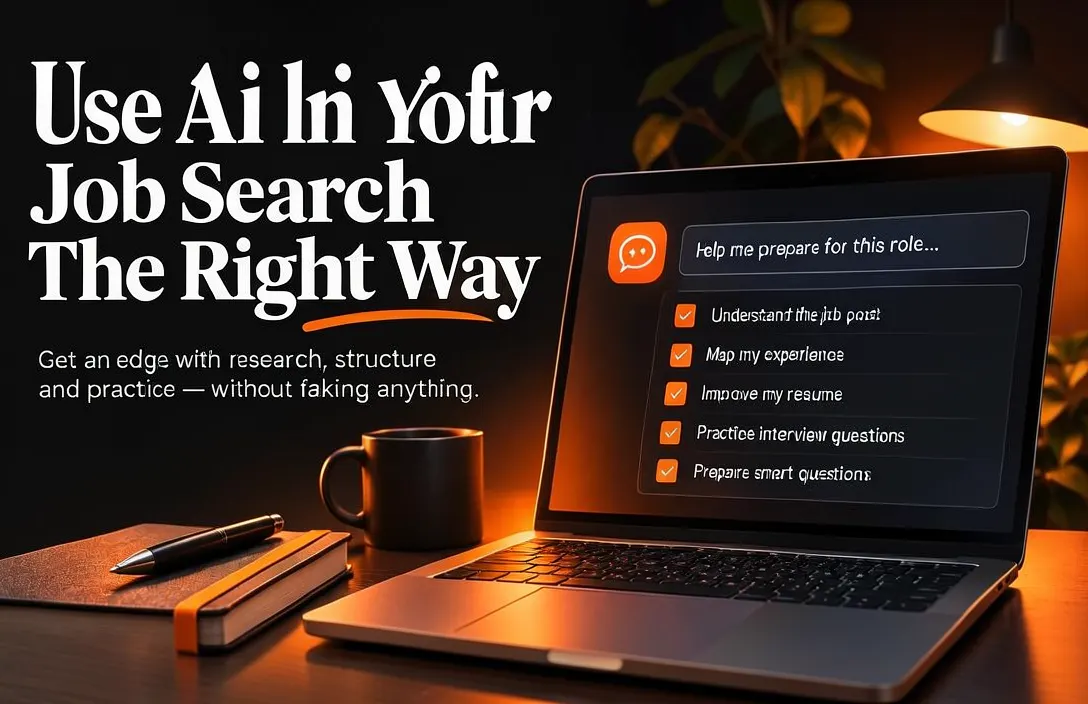

AI can be a valuable tool in the job search process when used to research roles, organize real examples, and improve clarity in applications. According to the Dev.to article, AI should not be used to fabricate experience but rather to help turn authentic experience into a clear application. It is recommended to use AI as an editor and practice partner, not the author of one's professional history. One key use of AI is to decode job descriptions by separating them into categories such as core requirements, supporting requirements, responsibilities, and unknowns. This analysis helps job seekers understand the job's expectations and align their experience accordingly (Dev.to, 1). [1]
Matching one's experience to job requirements is another area where AI can be beneficial. The Dev.to article suggests using AI to create a requirement-to-evidence map by providing a redacted job description and a factual experience inventory. This helps identify strong matches, adjacent experience, and gaps in one's qualifications. This approach allows job seekers to evaluate whether they can address gaps through learning or if a particular role may not be a good fit. It is important to be honest about the differences between one's experience and the job's requirements (Dev.to, 1). [1]
AI can also be used to turn duties into clear achievements by helping job seekers rewrite resume bullets for clarity and relevance. The article emphasizes that AI should not be used to invent metrics or add unsupported claims. Instead, it should help rephrase existing information to make it more precise and actionable. For example, vague statements such as 'worked on frontend performance' can be revised to 'Profiled the product listing page, identified repeated rendering work, and refactored the component state to reduce unnecessary updates.' This approach preserves the factual details while making the contribution more specific and traceable (Dev.to, 1). [1]
AI can be a valuable tool in the job search process when used to research roles, organize real examples, and improve clarity in applications. According to Dev.to, AI should not be used to fabricate experience or inflate ownership of achievements. Instead, it should help job seekers rewrite resume bullets for clarity and relevance while keeping every claim traceable to actual work. This approach ensures that AI serves as an editor and practice partner rather than the author of one's professional history (1). [1]
Advertisement
One specific application of AI is decoding job descriptions by categorizing them into core requirements, supporting requirements, responsibilities, and unknowns. Dev.to explains that AI can help job seekers analyze job postings to identify the key aspects of the role and match their experience accordingly. This method allows for a more accurate alignment between a candidate's skills and the job requirements, ensuring that applications are based on factual evidence rather than assumptions (1). [1]
AI can also assist in turning duties into clear achievements by helping job seekers rephrase resume bullets. According to Dev.to, this should be done by separating action, scope, and result, and preserving the exact ownership and impact of the work. It is crucial not to let AI generate metrics or results that were not actually achieved. Instead, AI should help refine existing information to make it more precise and impactful (1). [1]
AI can be used to decode job descriptions by categorizing them into core requirements, supporting requirements, responsibilities, and unknowns (Dev.to). This method helps job seekers better understand the expectations of a role and identify areas where they may need to provide additional evidence or clarification. By separating the job description into these categories, applicants can ensure that their understanding of the role is accurate and that they are prepared to discuss the requirements during interviews. [1]
AI can assist in matching a candidate's experience to the requirements of a job by creating a requirement-to-evidence map (Dev.to). This process involves providing the AI with a redacted job description and a factual experience inventory, allowing the model to identify which requirements are supported by the candidate's experience and which are not. This mapping reveals three groups of requirements: strong matches, adjacent experience, and gaps. This approach helps job seekers determine whether they should apply for a role, how to address gaps, or whether to seek additional training or experience. [1]
Advertisement
AI can also help turn duties into clear achievements by making resume bullets more precise and relevant (Dev.to). By supplying the AI with factual details about a candidate's ownership, change, context, and result, the model can generate concise alternatives that preserve these elements. This process ensures that the resume accurately reflects the candidate's contributions without inventing metrics or exaggerating their role. It is important to avoid letting the AI add unsupported metrics or inflate the level of ownership in the resume. [1]
Sources
Prepared with AI assistance from the cited sources.
The Cali Reporter newsletter
The stories worth your time.
California, the country, and what comes next. Join our free newsletter for reporting that keeps you informed.
More in Technology
- Modern Web Guidance 1.0 and Browser Compatibility
Modern Web Guidance 1.0, announced by Chrome for Developers on November 10, introduces browser compatibility data to assist coding agents in building web features. The initiative emphasizes the importance of fallback…
- Apache mod_http2 Vulnerability Detection with Nmap
A new Nmap scripting module has been developed to detect the Apache mod_http2 vulnerability (CVE-2026-119618), addressing the challenges of identifying affected systems accurately.
- Securing Remote Vendor Access in Industrial Networks
Best practices for managing remote vendor access in operational technology (OT) networks emphasize controlled access points, multifactor authentication, and time-bound sessions to reduce cybersecurity risks.