Updated COVID Vaccines Reduce Severe Illness in U.S. Veterans
Two studies involving over 1 million U.S. veterans demonstrate that the 2025–26 updated COVID-19 vaccines provide significant protection against severe illness, including emergency department visits and hospitalizations.


A study published in the journal Vaccine found that the 2025–26 COVID-19 vaccine reduced the risk of emergency department visits by approximately 32% and the risk of hospitalization by roughly 44% among U.S. veterans (source ID: 1). The research, led by a team from the Veterans Affairs (VA) Saint Louis Health Care System, analyzed data from 931,943 veterans who received a seasonal flu vaccine between Sept. 21, 2025, and Jan. 31, 2026. Of these, 114,911 received a COVID vaccine on the same day, while 817,032 received only the flu vaccine. Over the course of 180 days, vaccination was associated with a 31.7% reduction in COVID-related emergency department visits and a 43.6% decrease in hospitalizations (source ID: 1). [1]
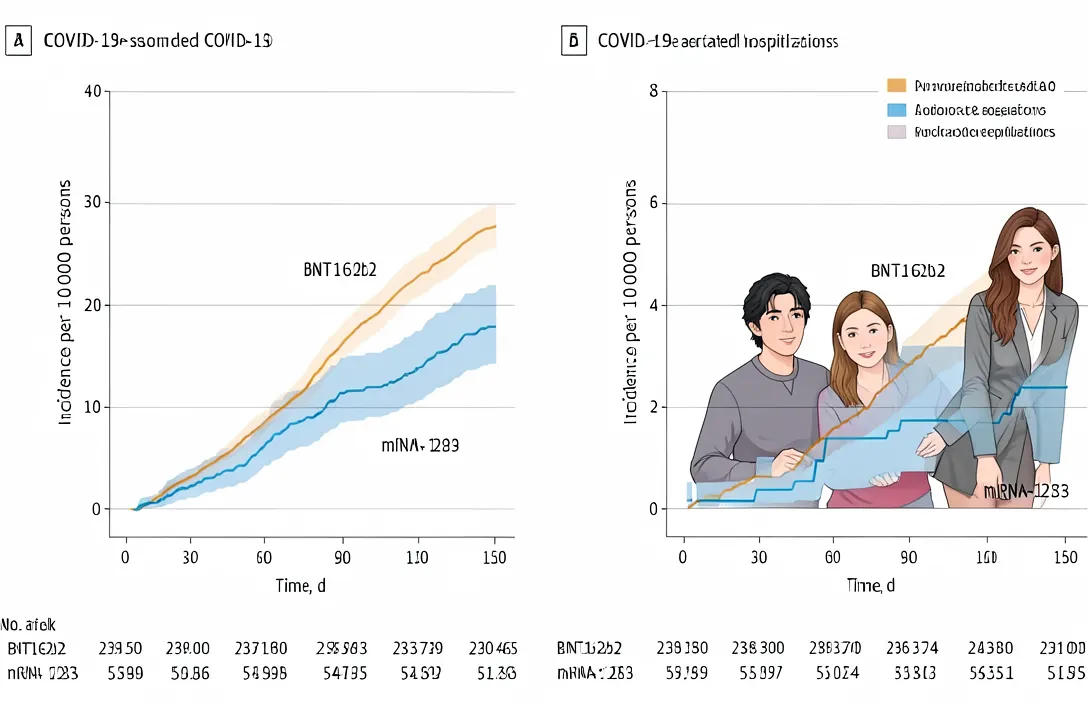
In a separate study published in JAMA Network Open, researchers from the VA Providence Healthcare System compared the effectiveness of Moderna's newer mRNA-1283 vaccine with Pfizer/BioNTech's mRNA vaccine among U.S. veterans aged 65 years or older. The study found that the Moderna vaccine offered greater protection against medically attended COVID among older adults than Pfizer's vaccine (source ID: 1). Among the 294,499 participants, medically attended COVID occurred in 86 of 55,349 mRNA-1283 vaccine recipients (0.16%) and 672 of 239,150 Pfizer vaccine recipients (0.28%) (source ID: 1). [1]
The findings suggest that the mRNA-1283 vaccine may offer more clinically meaningful protection for older adults at high risk of severe COVID-19 outcomes and could inform seasonal vaccine selection (source ID: 1). The study also found that the Moderna vaccine was associated with a 47.0% greater relative vaccine effectiveness in reducing hospitalizations compared to the Pfizer vaccine (source ID: 1). [1]
A study published in the journal Vaccine found that the 2025–26 COVID-19 vaccine reduced the risk of emergency department visits by approximately 32% and the risk of hospitalization by roughly 44% among U.S. veterans (source ID: 1). The research, led by a team from the Veterans Affairs (VA) Saint Louis Health Care System, analyzed data from 931,943 veterans who received a seasonal flu vaccine from Sept. 21, 2025, to Jan. 31, 2026. Of those, 114,911 received a COVID vaccine on the same day, while 817,032 received only the flu vaccine. Over the course of 180 days, COVID vaccination was associated with a 31.7% reduction in COVID-related emergency department (ED) visits and a 43.6% decrease in hospitalizations. [1]
Advertisement
In the second study, published in JAMA Network Open, researchers led by a team from VA Providence Healthcare System in Rhode Island compared Moderna's newer mRNA-1283 vaccine with Pfizer/BioNTech's mRNA vaccine among U.S. veterans aged 65 years or older. Medically attended COVID occurred in 86 of 55,349 mRNA-1283 vaccine recipients (0.16%) and 672 of 239,150 Pfizer vaccine recipients (0.28%) (source ID: 1). This corresponds to a 35.9% greater relative vaccine effectiveness (VE) for the Moderna vaccine, or 10 fewer medically attended cases per 10,000 vaccinated people. [1]
The study also found that the mRNA-1283 vaccine had a greater relative VE of 47.0% compared to the Pfizer vaccine for preventing hospitalizations, with 11 mRNA-1283 vaccine recipients (0.02%) hospitalized compared to 114 Pfizer vaccine recipients (0.05%) (source ID: 1). The researchers concluded that the findings suggest the mRNA-1283 vaccine may offer more clinically meaningful protection for older adults at high risk of severe COVID-19 outcomes and could inform seasonal vaccine selection. [1]
A study published in JAMA Network Open found that Moderna's newer mRNA-1283 vaccine offered greater protection against medically attended COVID-19 among older U.S. veterans compared to Pfizer/BioNTech's mRNA vaccine (source ID: 1). The study, led by researchers from VA Providence Healthcare System in Rhode Island, analyzed data from 294,499 veterans aged 65 or older. Medically attended COVID-19 occurred in 86 of 55,349 mRNA-1283 vaccine recipients (0.16%) and 672 of 239,150 Pfizer vaccine recipients (0.28%). [1]
The findings indicate a 35.9% greater relative vaccine effectiveness (VE) for the Moderna vaccine compared to the Pfizer vaccine, which corresponds to 10 fewer medically attended cases per 10,000 vaccinated people (source ID: 1). Additionally, the study found that the mRNA-1283 vaccine had a greater relative VE of 47.0% compared to the Pfizer vaccine for preventing hospitalizations, with 11 mRNA-1283 vaccine recipients (0.02%) hospitalized compared to 114 Pfizer vaccine recipients (0.05%). [1]
Advertisement
The researchers concluded that the mRNA-1283 vaccine may offer more clinically meaningful protection for older adults at high risk of severe COVID-19 outcomes and could inform seasonal vaccine selection (source ID: 1). This study adds to the growing body of evidence supporting the effectiveness of updated vaccines in reducing severe illness and hospitalization among vulnerable populations. [1]
A study published in JAMA Network Open compared the effectiveness of Moderna's newer mRNA-1283 vaccine with Pfizer/BioNTech's mRNA vaccine among U.S. veterans aged 65 years or older. The findings indicate that the mRNA-1283 vaccine had a greater relative vaccine effectiveness (VE) of 47.0% compared to the Pfizer vaccine for preventing hospitalizations, with 11 mRNA-1283 vaccine recipients (0.02%) hospitalized compared to 114 (source ID: 1). [1]
The same study also found that the mRNA-1283 vaccine had a 35.9% greater relative VE for preventing medically attended COVID-19 cases compared to the Pfizer vaccine, corresponding to 10 fewer medically attended cases per 10,000 vaccinated people. Among the 294,499 participants, medically attended COVID occurred in 86 of 55,349 mRNA-1283 vaccine recipients (0.16%) and 672 of 239,150 Pfizer vaccine recipients (0.28%) (source ID: 1). [1]
The researchers concluded that the mRNA-1283 vaccine may offer more clinically meaningful protection for older adults at high risk of severe COVID-19 outcomes and could inform seasonal vaccine selection. However, further studies are needed to evaluate the long-term effectiveness and safety of the newer vaccines in diverse populations (source ID: 1). [1]
Advertisement
The Cali Reporter newsletter
The stories worth your time.
California, the country, and what comes next. Join our free newsletter for reporting that keeps you informed.
More in Health & Medicine
- Understanding Fascia and the Evidence Behind Fascia Release
Fascia is a connective tissue that plays a structural role in the human body, but evidence supporting specific exercises or tools for 'fascia release' remains limited.
- Antidepressant Effectiveness and Long-Term Use
A new review suggests that some antidepressants may be more effective than others in helping people manage depression symptoms over the long term, according to a study published in The Lancet Psychiatry.
- Experimental Weight-Loss Drug Shows Promise for Knee Osteoarthritis Pain
A new study suggests that an experimental weight-loss drug, retatrutide, may significantly reduce knee pain in people with osteoarthritis and obesity.