UN Court Rules Myanmar Committed Genocide Against Rohingya
The International Court of Justice has ruled that Myanmar committed genocide against the Rohingya minority, marking a historic first for the court.

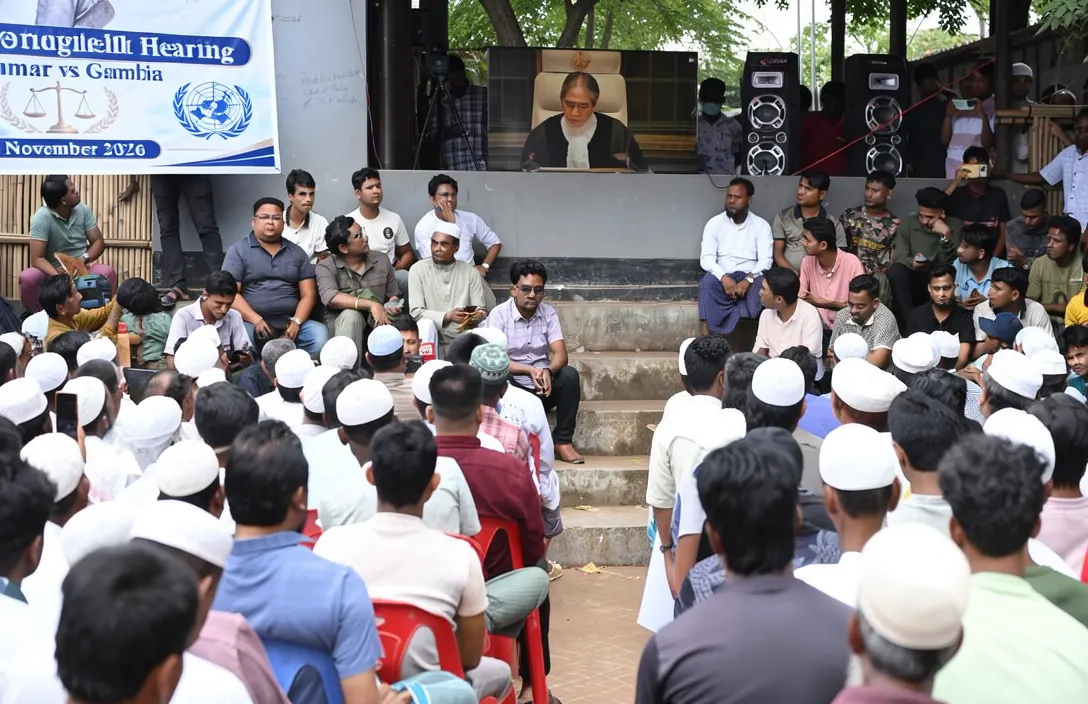

The United Nations' top court ruled on November 19, 2026, that Myanmar committed genocide against its Rohingya minority, the first time in the court's 80-year history that it has held a state responsible for the crime (source ID 1). Judges of the International Court of Justice voted 9-6 that the military's 2017 crackdown was carried out with intent to destroy the long-persecuted Muslim minority. The ruling was brought by Gambia under the 1948 Genocide Convention and will have repercussions far beyond Myanmar, according to a legal expert. For Ma Roga Bibi, a Rohingya who fled Maungdaw township in northern Rakhine state, the impact was immediate. She said, 'I feel wonderful and grateful,' and described the day as 'emotional and historic.' [1]
The court estimated that about 10,000 Rohingya were killed during the military's 2017 campaign, with up to 2,109 Rohingya children under the age of 5 dying, and found the violence was systematic, including the burning of all or parts of 392 villages (source ID 1). Ma Roga Bibi, then age 9, was one of about 700,000 people to flee to Bangladesh, joining earlier refugee waves. Rohingya are denied citizenship on both sides of the border. She said, 'Recognition alone is not enough. We need justice, accountability, and the opportunity to return home with dignity.' [1]
Myanmar had argued its military was conducting counterinsurgency operations against an armed group, the Arakan Rohingya Salvation Army. The court said the military failed to distinguish between civilians and alleged insurgents, and that the scale and nature of the violence could not be explained by counterterrorism. ICJ president, Judge Yuji Iwasawa, stated that 'the execution of Rohingya men and boys in some locations, the widespread sexual violence, the targeting of children and babies, the methodical burning of villages, and attacks on fleeing civilians are not consistent with an intent to conduct counterinsurgency operations' (source ID 1). [1]
The United Nations' top court ruled on November 19, 2026, that Myanmar committed genocide against its Rohingya minority, the first time in the court's 80-year history that it has held a state responsible for the crime (source ID 1). The court found that the military's 2017 crackdown was carried out with the intent to destroy the long-persecuted Muslim minority, with judges voting 9-6 on the matter. The ruling was brought by Gambia under the 1948 Genocide Convention, and it will have repercussions far beyond Myanmar, according to a legal expert. Ma Roga Bibi, a Rohingya who fled Maungdaw township in northern Rakhine state, expressed gratitude for the ruling, calling it an emotional and historic day (source ID 1). [1]
Advertisement
The court estimated that about 10,000 Rohingya were killed during the military's 2017 campaign, with up to 2,109 Rohingya children under the age of 5 dying, and found the violence was systematic, including the burning of all or parts of 392 villages (source ID 1). For several weeks in August and September 2017, the Myanmar military attacked and burned to the ground hundreds of Rohingya villages. Soldiers committed rapes and massacred women, men, and children. Ma Roga Bibi, then age 9, was one of about 700,000 people to flee to Bangladesh, joining earlier refugee waves. Rohingya are denied citizenship on both sides of the border (source ID 1). [1]
Myanmar had argued its military was conducting counterinsurgency operations against an armed group, the Arakan Rohingya Salvation Army. The court said the military failed to distinguish between civilians and alleged insurgents, and that the scale and nature of the violence could not be explained by counterterrorism. The execution of Rohingya men and boys in some locations, the widespread sexual violence, the targeting of children and babies, the methodical burning of villages, and attacks on fleeing civilians are not consistent with an intent to conduct counterinsurgency operations, said ICJ president, Judge Yuji Iwasawa (source ID 1). [1]
The United Nations' top court ruled on November 19, 2026, that Myanmar committed genocide against its Rohingya minority, the first time in the court's 80-year history that it has held a state responsible for the crime (source ID 1). The court estimated that about 10,000 Rohingya were killed during the military's 2017 campaign, with up to 2,109 Rohingya children under the age of 5 dying, and found the violence was systematic, including the burning of all or parts of 392 villages (source ID 1). [1]
Myanmar had argued its military was conducting counterinsurgency operations against an armed group, the Arakan Rohingya Salvation Army. The court said the military failed to distinguish between civilians and alleged insurgents, and that the scale and nature of the violence could not be explained by counterterrorism (source ID 1). [1]
Advertisement
The judgment is binding on Myanmar and on all states that have ratified the Genocide Convention, according to Antonia Mulvey, executive director of Legal Action Worldwide. She said the ruling will affect future genocide cases, including South Africa's case against Israel, on questions such as genocidal intent and state responsibility (source ID 1). [1]
Rohingya refugees in Bangladesh expressed mixed emotions following the United Nations' top court ruling that Myanmar committed genocide against the Rohingya minority. Ma Roga Bibi, an 18-year-old Rohingya who fled Maungdaw township in northern Rakhine state, described the ruling as an 'emotional, historic day.' She expressed gratitude and hope for justice, stating that the ruling could bring accountability and the opportunity to return home with dignity (source ID 1). [1]
However, the ruling has not brought immediate relief for Rohingya refugees, many of whom continue to live in overcrowded camps in Cox's Bazar. Khin Khin Myint, an 18-year-old refugee leader in activist group Rohingya Youth Voice, emphasized the need for the international community to listen to survivors and include women in decisions about their future. She called for more than just sympathy, urging action that recognizes the 'unimaginable suffering' experienced by Rohingya women and girls (source ID 1). [1]
The ruling has been met with a range of reactions from Rohingya refugees, who are now waiting for tangible outcomes. While some expressed hope that the judgment would lead to justice, others remain skeptical about the practical impact of the decision on their lives. The court's ruling does not immediately change the conditions in the refugee camps, where many Rohingya face ongoing challenges such as poverty, lack of access to education, and threats from multiple armed groups (source ID 1). [1]
Advertisement
The Cali Reporter newsletter
The stories worth your time.
California, the country, and what comes next. Join our free newsletter for reporting that keeps you informed.
More in San Diego
- Community Condemns ICE Enforcement Near Encinitas School
Residents and school officials in Encinitas are expressing deep concern over an ICE arrest near a local elementary school, highlighting the emotional and psychological impact on families and children.
- San Diego Lawmakers Push Immigration Enforcement Reforms
San Diego's Congressional delegation is advocating for changes to immigration enforcement practices following recent arrests that have raised concerns about the impact on families.
- Tide Pool Etiquette and Environmental Impact During King Tides
As king tides bring more visitors to San Diego's coastline, concerns grow over the impact of human activity on tide pool ecosystems. Educators and conservationists are urging visitors to follow responsible practices to…