Ultrasound Imaging Without the Goop: A Gel-Free Patch Shows Promise
Engineers at MIT and SMART WITEC have developed a dry, stretchy material that could eliminate the need for gel in ultrasound imaging, according to a recent study.

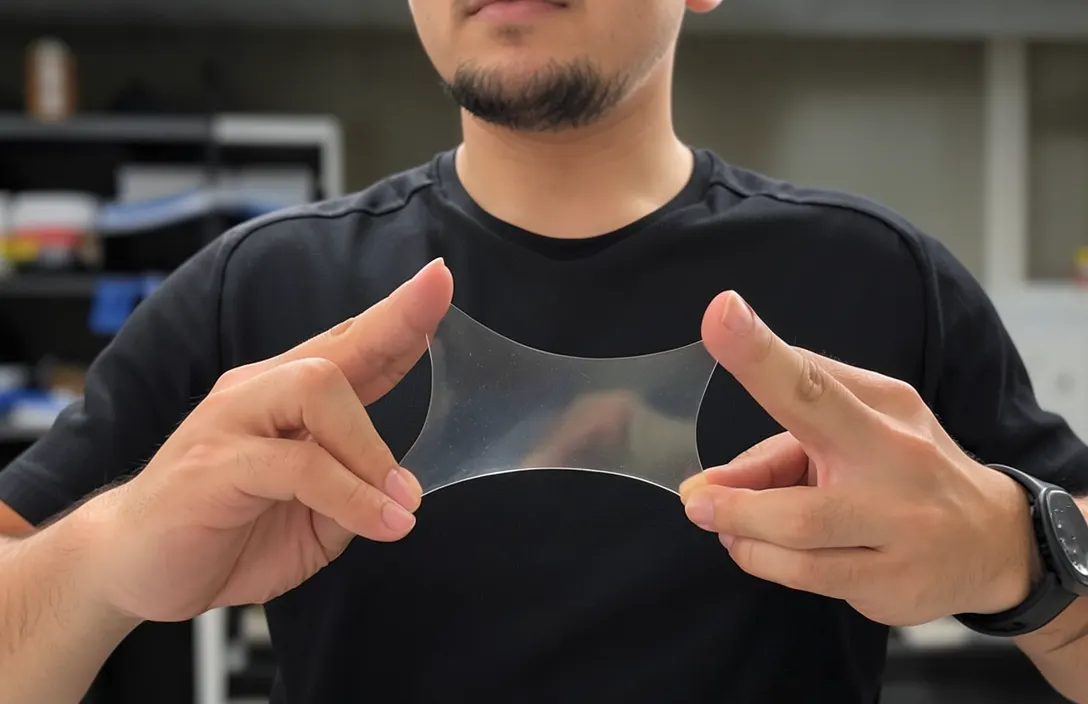

Engineers at MIT and the Singapore-MIT Alliance for Research and Technology's Wearable Imaging for Transforming Elderly Care project (SMART WITEC) have developed a dry and stretchy material that could eliminate the need for a wet and sticky gel in ultrasound imaging. This innovation addresses a key limitation in wearable ultrasound devices, where gel-based designs can lose their effectiveness over time. The material, developed by members of MIT's Zhao Lab, is designed to provide continuous imaging, at home or on the go. Unlike traditional gels, which can dry out and lose their ability to transmit sound waves, the new material remains stable over long periods. This development was reported in the journal Science. [1]
The MIT team's new material is a dry, rubbery substance that enables a wearable ultrasound device to generate clear, continuous images, even during vigorous exercise. In an experiment, a small wearable patch containing a small ultrasound probe and the dry and stretchy layer was fixed to a volunteer's neck. The patch was connected to a small portable tablet that recorded the patch's ultrasound images as the volunteer took a 30-minute bike ride. The results demonstrated that the material can maintain its performance under physical stress, making it a promising solution for long-term imaging applications. The study's co-authors include researchers from MIT, the University of Wisconsin at Madison, the National University of Singapore, and Nanyang Technological University in Singapore. [1]
The development of the new material involved a molecular engineering approach. The team aimed to create a solid, rubbery material that retained a gel's ultrasound-propagating properties by reducing the friction between polymer chains. They used a 'bottlebrush' structure, a molecular configuration that allows for low friction between polymer chains. Initial attempts at fabricating the material resulted in samples that were too soft and crumbly. However, by reinforcing the material with a second network of bottlebrush molecules, the team was able to produce a tougher, rubbery material that could be stretched repeatedly without tearing. This material was tested on a synthetic phantom model and showed efficient transmission of ultrasound waves for extended periods. [1]
The research was conducted by engineers at MIT and the Singapore-MIT Alliance for Research and Technology's Wearable Imaging for Transforming Elderly Care project (SMART WITEC). The project is interdisciplinary, with co-lead principal investigators including Xuanhe Zhao, Xiaodong Chen, and Chwee Teck Lim. The study was published in the journal *Science* on November 19, 2026, with the DOI: 10.1126/science.aef9553. The research team included contributors from MIT, the University of Wisconsin at Madison, the National University of Singapore, and Nanyang Technological University in Singapore. The project is part of SMART WITEC, which focuses on wearable imaging technologies for healthcare applications, particularly in elderly care. [1]
Advertisement
The new material was tested in multiple environments. In one experiment, a wearable patch, about the size of a key fob, was fixed to a volunteer's neck and used during a 30-minute bike ride from MIT to Bunker Hill and back to campus. The patch contained a small ultrasound probe and the dry, stretchy layer that adhered directly to the skin. The device successfully generated clear, continuous images of the volunteer's blood flow throughout the ride, even during vigorous exercise. The material was also tested on a synthetic phantom model that mimics human skin and internal structures, where it efficiently transmitted ultrasound waves for around nine days without degradation. Additionally, the material was tested on a treadmill, where it outperformed conventional silicone rubber by wicking away sweat rather than becoming waterlogged. [1]
The material is based on a molecular engineering approach that uses a "bottlebrush" structure, which consists of a main backbone of molecules with smaller side chains. This structure reduces friction between polymer chains, allowing the material to transmit ultrasound waves efficiently. The team initially faced challenges in fabricating the material, as early samples were too soft and crumbly. They overcame this by reinforcing the material with a second, loosely connected network of bottlebrush molecules, resulting in a tougher, rubbery material that could be stretched repeatedly without tearing. The final material is described as being very soft but durable, similar in texture to human skin. [1]
The development of this material addresses a long-standing challenge in wearable ultrasound imaging. Traditional gel-based designs are limited in their long-term usability because the gel can dry out and lose its ability to transmit sound waves over time. The new material, however, is dry from the start and remains stable over extended periods. This stability allows for continuous imaging in real-world conditions, such as during physical activity or in home settings. The researchers believe this material could enable the next generation of wearable, long-lasting ultrasound imagers that can be used to monitor health outside of clinical environments. [1]
Engineers at MIT and the Singapore-MIT Alliance for Research and Technology's Wearable Imaging for Transforming Elderly Care project (SMART WITEC) have developed a dry and stretchy material that could eliminate the need for a wet and sticky gel in ultrasound imaging. The material is a dry, rubbery substance that enables a wearable ultrasound device to generate clear, continuous images, even during vigorous exercise (Source ID: 1). [1]
Advertisement
The development of the new material involved a molecular engineering approach. The team aimed to make a solid, rubbery material that retained a gel's ultrasound-propagating properties by reducing the friction between polymer chains without adding liquid or lubricant. This approach resulted in a material with a "bottlebrush" structure, which allows for less friction between the molecular components (Source ID: 1). [1]
In experiments, the engineers found that the rubbery material enabled a wearable ultrasound device to generate clear, continuous images, even during vigorous exercise. As a demonstration, the team fixed a small wearable patch, about the size of a key fob, to a volunteer's neck. The patch contained a small ultrasound probe and the dry and stretchy layer that stuck directly to the skin (Source ID: 1). [1]
Sources
Prepared with AI assistance from the cited sources.
The Cali Reporter newsletter
The stories worth your time.
California, the country, and what comes next. Join our free newsletter for reporting that keeps you informed.
More in Health & Medicine
- Understanding Fascia and the Evidence Behind Fascia Release
Fascia is a connective tissue that plays a structural role in the human body, but evidence supporting specific exercises or tools for 'fascia release' remains limited.
- Antidepressant Effectiveness and Long-Term Use
A new review suggests that some antidepressants may be more effective than others in helping people manage depression symptoms over the long term, according to a study published in The Lancet Psychiatry.
- Experimental Weight-Loss Drug Shows Promise for Knee Osteoarthritis Pain
A new study suggests that an experimental weight-loss drug, retatrutide, may significantly reduce knee pain in people with osteoarthritis and obesity.