Trump, Xi, and Putin Meet in Shenzhen Amid Global Tensions
U.S. President Donald Trump, Chinese President Xi Jinping, and Russian President Vladimir Putin met in Shenzhen, China, for a trilateral summit marked by diplomatic posturing and divergent priorities.

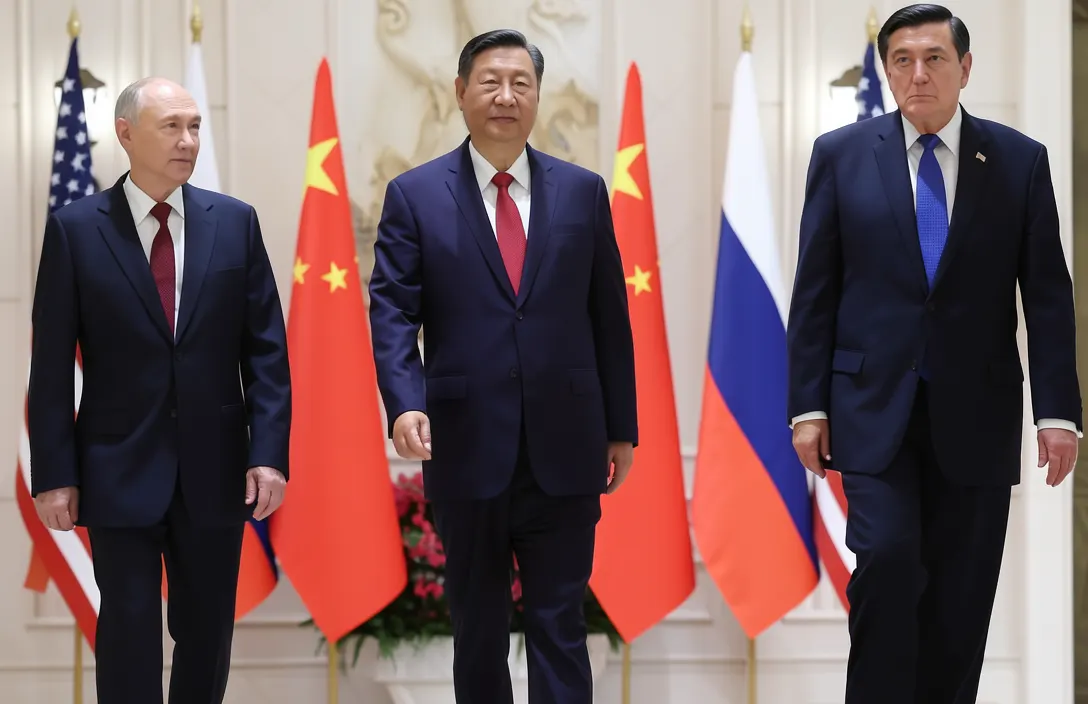

President Trump joined Chinese President Xi Jinping and Russian President Vladimir Putin for a trilateral summit in Shenzhen, China, on November 19, 2026, as part of a two-day series of talks (1). The meeting was characterized by high-level discussions on global peace and security, with Xi emphasizing the importance of great powers maintaining peace to ensure global stability (1). Putin highlighted the potential for the three nations to contribute to global security and stability, while Trump spoke of the "special responsibility" of the three countries to work together (1). [1]
Despite the summit's diplomatic tone, the leaders did not offer concrete solutions to ongoing global conflicts. Trump focused on reducing nuclear weapons and preventing Iran from obtaining them, while Putin aimed to push for an end to the war in Ukraine on terms favorable to Russia (1). Xi, on the other hand, preferred to emphasize China's global influence and promote economic stability, avoiding deep engagement on either the nuclear or Ukraine issues (1). The summit also avoided addressing allegations of Chinese espionage related to the theft of high-end Nvidia chips (1). [1]
The summit's key deliverable appeared to be the symbolic image of the U.S. president meeting with authoritarian leaders from China and Russia for the first time in American history (1). The talks were relatively brief, with Trump's meeting with Putin lasting 42 minutes and his discussions with Xi lasting about an hour (1). The trilateral session lasted an hour and a half, during which Trump expressed warm personal sentiments toward both leaders, acknowledging their longstanding relationships (1). [1]
President Trump joined Chinese President Xi Jinping and Russian President Vladimir Putin for a trilateral summit in Shenzhen, China, on November 19, 2026, as part of a two-day series of talks (1). Despite the summit's diplomatic tone, the leaders did not offer concrete solutions to ongoing global conflicts. The summit's key deliverable appeared to be the symbolic image of the U.S. joining with two authoritarian leaders in a rare display of international cooperation. This meeting was characterized by high-minded tributes to the role of great powers in maintaining peace, even as the men who led them had a role in starting some of the most intractable conflicts around the globe (1). [1]
Advertisement
The summit's discussions were brief, with Trump's meeting with Putin lasting 42 minutes and his talks with Xi going about an hour. The trilateral group session lasted an hour and a half. Despite the limited time, the leaders engaged in familiar Trump-style remarks, emphasizing personal relationships and mutual respect. Trump described Putin as a friend and noted that as long as he and Xi were in charge, there would be no problem (1). These statements were interpreted as tacit acknowledgments of the limited time remaining in Trump's presidency and the eventual shift in power dynamics in Washington (1). [1]
The summit was proposed by Putin during an October phone call with Trump, offering to meet together with President Xi when China hosted the APEC conference in November. For Putin, the meeting was a strategic coup, signaling that with Trump and Xi's help, he had chipped away at Western attempts to isolate him politically over his invasion of Ukraine (1). However, subtle power dynamics were evident, with Xi greeting Trump personally and offering him the top spot next to him during the APEC group photo, while Putin received a more scaled-down delegation upon arrival in Shenzhen (1). [1]
President Trump joined Chinese President Xi Jinping and Russian President Vladimir Putin for a trilateral summit in Shenzhen, China, on November 19, 2026, as part of a two-day series of talks (1). The summit's discussions were brief, with Trump's meeting with Putin lasting 42 minutes and his talks with Xi going about an hour. The summit was proposed by Putin during an October phone call with Trump, offering to meet together with President Xi when China hosted the APEC conference in November (1). [1]
Despite the summit's diplomatic tone, the leaders did not offer concrete solutions to ongoing global conflicts. Trump wanted to talk about reducing nuclear weapons and his mission to keep Iran from obtaining them; Putin was looking to push for an end to the war in Ukraine on terms favorable to Moscow; Xi was signaling he hoped to avoid wading too deep into either topic — preferring to showcase China's growing global clout with more general statements promoting peace and economic stability (1). [1]
Advertisement
There were also topics to avoid: Trump refused to engage with journalists' questions over China's alleged role in an espionage plot to steal high end Nvidia chips. In the end, the summit's key deliverable was arguably the image itself: the president of the United States gathering with authoritarian leaders from China and Russia for the first time in American history (1). [1]
President Trump, Chinese President Xi Jinping, and Russian President Vladimir Putin met in Shenzhen, China, on November 19, 2026, as part of a two-day series of talks (1). The summit was characterized by high-minded tributes to the role of great powers in maintaining peace, even as the leaders involved had played roles in some of the most intractable conflicts globally. Despite the diplomatic tone, the summit did not produce any concrete solutions to ongoing global conflicts, with the leaders offering divergent agendas (1). [1]
The summit's discussions were brief, with Trump's meeting with Putin lasting 42 minutes and his talks with Xi going about an hour. The summit was proposed by Putin during an October phone call with Trump, offering to meet together with President Xi when China hosted the APEC conference in November (1). Despite the brevity of the meetings, the leaders engaged in familiar Trump-style exchanges, with Trump expressing personal warmth toward Putin and Xi, suggesting a focus on personal relationships over policy (1). [1]
There were also topics to avoid: Trump refused to engage with journalists' questions over China's alleged role in an espionage plot to steal high-end Nvidia chips. In the end, the summit's key deliverable was arguably the image itself: the president of the United States gathering with authoritarian leaders from China and Russia for the first time in American history (1). The summit was seen as a significant diplomatic gesture, with Russia's state media highlighting the event as a sign of its regained global standing (1). [1]
Advertisement
The Cali Reporter newsletter
The stories worth your time.
California, the country, and what comes next. Join our free newsletter for reporting that keeps you informed.
More in San Diego
- Community Condemns ICE Enforcement Near Encinitas School
Residents and school officials in Encinitas are expressing deep concern over an ICE arrest near a local elementary school, highlighting the emotional and psychological impact on families and children.
- San Diego Lawmakers Push Immigration Enforcement Reforms
San Diego's Congressional delegation is advocating for changes to immigration enforcement practices following recent arrests that have raised concerns about the impact on families.
- Tide Pool Etiquette and Environmental Impact During King Tides
As king tides bring more visitors to San Diego's coastline, concerns grow over the impact of human activity on tide pool ecosystems. Educators and conservationists are urging visitors to follow responsible practices to…