Trilateral Summit Declares Intent to Stabilise Energy Flows and Prevent Nuclear Proliferation
At an unprecedented summit in Shenzhen, China, the leaders of the United States, China, and Russia declared a shared intent to stabilise energy flows and prevent nuclear proliferation, according to Al Jazeera.

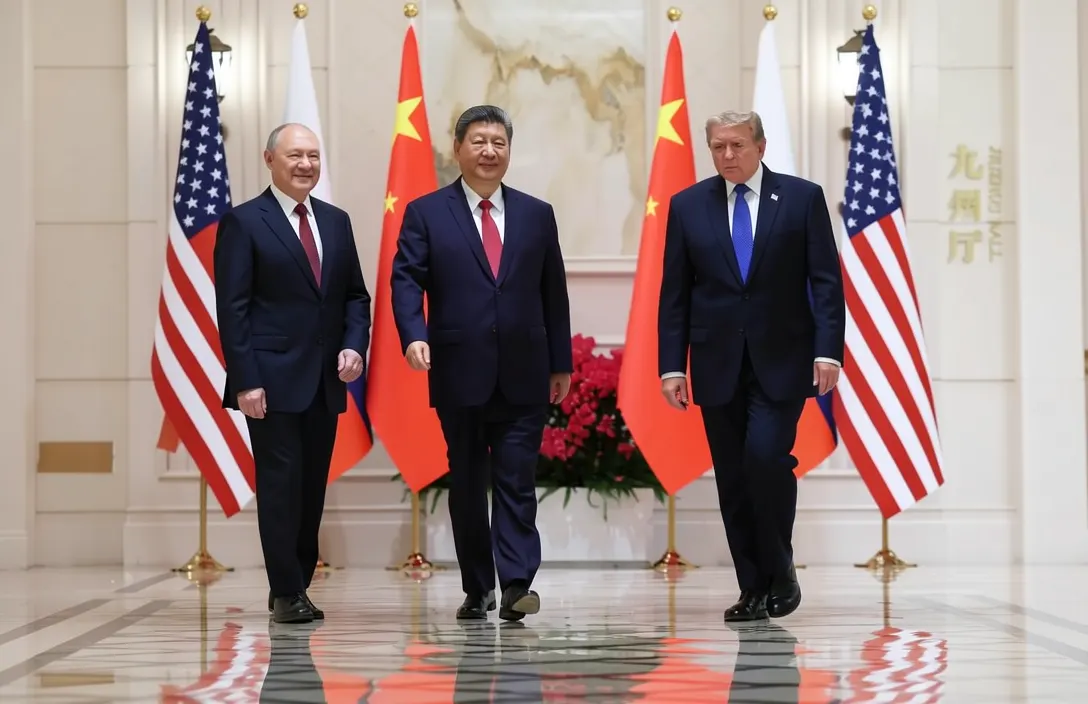

The presidents of the United States, China, and Russia announced a shared intent to stabilize energy flows and prevent nuclear proliferation during a trilateral summit in Shenzhen, China, on November 19, 2026. The meeting, held on the sidelines of the Asia-Pacific Economic Cooperation (APEC) conclave, was described as a landmark event, with leaders emphasizing the importance of global stability and cooperation (Al Jazeera (All)). The summit was chaired by Chinese President Xi Jinping, with U.S. President Donald Trump and Russian President Vladimir Putin participating after a series of bilateral discussions. [1]
The leaders released a joint 'peace declaration' following their meeting, which included commitments to reducing nuclear risks and promoting strategic stability. Trump emphasized that the three nations, holding the world’s three largest nuclear arsenals, were uniquely positioned to discuss nuclear weapons. Xi Jinping called for the comprehensive banning of nuclear weapons and the creation of a nuclear-free world, a stance echoed in the post-meeting declaration (Al Jazeera (All)). [1]
The summit also addressed global energy challenges, with the three leaders reaffirming the importance of stable energy flows. This comes amid ongoing conflicts, including the U.S. war on Iran and Russia’s war on Ukraine, which have disrupted global energy supplies. However, the summit did not directly address the war on Iran, with Trump only reiterating that Tehran must not be allowed to develop nuclear weapons (Al Jazeera (All)). [1]
The leaders also criticized the International Criminal Court (ICC), urging that the institution and 'similar institutions' not 'abuse their positions.' The U.S., Russia, and China, none of whom are members of the ICC, have all expressed strong opposition to the court, particularly after it issued arrest warrants for leaders of sovereign nations, including Putin and Netanyahu (Al Jazeera (All)). [1]
Advertisement
The trilateral summit between the United States, China, and Russia took place in Shenzhen, China, at the Qilin Shanzhuang State Residence on November 19, 2026. This location, a state guesthouse in Shenzhen, is a significant venue for high-level diplomatic meetings and is part of the infrastructure supporting major international conferences in the region. The summit occurred on the sidelines of the Asia-Pacific Economic Cooperation (APEC) conclave, which is held annually and brings together leaders from across the Pacific region to address economic and trade issues. The event marked a rare and unprecedented gathering of the three largest nuclear powers, highlighting the strategic significance of the location and the timing of the meeting. [1]
The summit’s scope was limited to discussions on stabilizing global energy flows, preventing nuclear proliferation, and fostering cooperation among the three nations. However, the declaration made no direct reference to the ongoing war in Ukraine or the US war on Iran, despite these conflicts having significant global implications. The focus on energy was partly due to the recent instability in global energy markets, including the closure of the Strait of Hormuz by Iran and attacks on Russian energy infrastructure by Ukrainian forces. These documented limits in the summit’s agenda underscore the complex geopolitical landscape in which the leaders operated, with each nation prioritizing its own strategic interests. [1]
The history of the meeting was marked by previous bilateral discussions among the leaders, including Trump’s earlier meetings with Putin in Manila, where the three leaders had previously gathered for separate summits. The summit in Shenzhen represented a continuation of these diplomatic efforts, aiming to build upon prior interactions and establish a framework for future cooperation. However, the absence of a clear roadmap for resolving ongoing conflicts, such as those in Ukraine and Iran, highlights the limitations of the summit’s outcomes. The joint “peace declaration” was a symbolic gesture, lacking concrete measures or enforcement mechanisms to address the underlying issues that continue to destabilize global security and economic stability. [1]
The presidents of the United States, China, and Russia declared a shared intent to stabilize energy flows and prevent nuclear proliferation during a trilateral summit in Shenzhen, China, on November 19, 2026, as reported by Al Jazeera. The meeting, held on the sidelines of the Asia-Pacific Economic Cooperation (APEC) conclave, marked a significant diplomatic event, with leaders from multiple countries gathering in the region for various summits. Chinese President Xi Jinping chaired the summit alongside U.S. President Donald Trump and Russian President Vladimir Putin, following a series of bilateral meetings. After a more than one-hour-long meeting, the leaders released a joint 'peace declaration' emphasizing the importance of global stability and cooperation among the three nations (source ID: 1). [1]
Advertisement
The 'peace declaration' included commitments to reducing nuclear risks and promoting strategic stability, with all three leaders agreeing that nuclear weapons should be comprehensively banned and thoroughly destroyed, as noted in the report. The U.S. president emphasized that the three countries hold the largest nuclear arsenals and are uniquely positioned to discuss nuclear weapons. The leaders also pledged to hold dialogues on reducing nuclear risks and preventing proliferation, underscoring their shared interest in maintaining international security (source ID: 1). [1]
The summit also addressed global energy challenges, with the three leaders reaffirming the importance of stable energy flows. However, the report highlights that there was no direct reference to the war on Iran during the meeting, despite Trump reiterating that Tehran cannot have a nuclear weapon. The leaders did not address the ongoing war in Ukraine directly during the trilateral meeting, though it was a key topic in Putin’s bilateral talks with Trump earlier. The report also notes that global energy supplies have been on edge due to recent conflicts, and the realization of the promise for stable energy flows remains uncertain given the differing priorities of the three nations (source ID: 1). [1]
Sources
Prepared with AI assistance from the cited sources.
The Cali Reporter newsletter
The stories worth your time.
California, the country, and what comes next. Join our free newsletter for reporting that keeps you informed.
More in World
- Myanmar Found Guilty of Genocide Against Rohingya
The International Court of Justice has ruled that Myanmar committed genocide against the Rohingya minority, marking a historic first in international law.
- Anthropic's Record-Breaking IPO Tests Investor Confidence in AI
Anthropic's initial public offering (IPO) has drawn significant attention as it marks the first major AI company to go public, raising $81 billion and valuing the firm at $2 trillion on its first day of trading.
- Glampsite Owner Challenges Legal Costs After Neighbors' Parking Dispute
A glampsite owner is appealing a court ruling that requires her to pay £135,000 in legal costs after a dispute with her neighbors over a shared driveway and parking rights.