Traffic Noise Linked to Increased Risk of Type 2 Diabetes
A large Scandinavian study has found that long-term exposure to noise from road traffic and trains is associated with an increased risk of developing type 2 diabetes, even at relatively low noise levels.

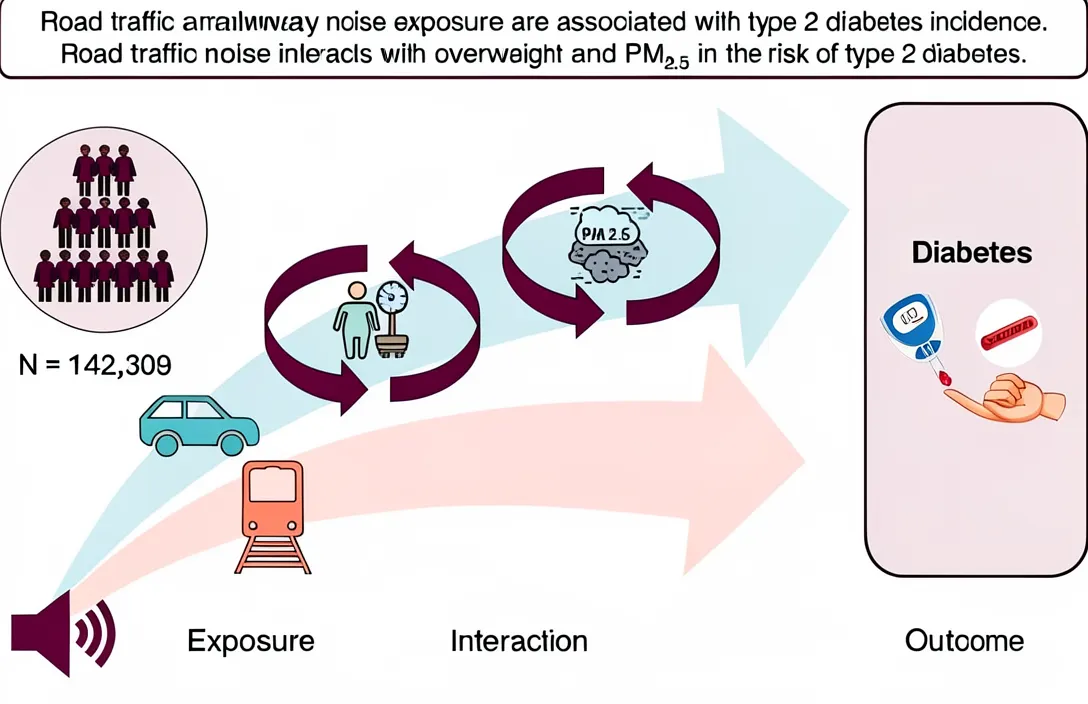

A large Scandinavian study published in the journal Environmental Health Perspectives has found that long-term exposure to noise from road traffic and trains is associated with an increased risk of developing type 2 diabetes, even at relatively low noise levels. The researchers analyzed data from more than 142,000 people in eight Swedish and Danish population studies (source ID: 1). The participants' home addresses were used to calculate long-term exposure to noise from road traffic, railways, and aircraft. During a median follow-up of just over 20 years, 12,761 participants developed type 2 diabetes. [1]
The results show that the risk of type 2 diabetes increased by 6% for every 10-decibel increase in road traffic noise. For railway noise, the corresponding increase in risk was 4%. The researchers took into account potential confounding factors including education, income, smoking, physical activity, and air pollution (source ID: 1). The association between road traffic noise and type 2 diabetes was primarily observed among people with overweight or obesity. No increased risk was seen among people of normal weight. [1]
Furthermore, the researchers found a stronger association in people who were also exposed to high levels of small air pollution particles, known as PM2.5. Among the quarter of participants with the highest PM2.5 exposure, the increase in risk was 14% per 10 decibels of road traffic noise (source ID: 1). One possible explanation for the association is that noise disrupts sleep and activates the body's stress system. This can affect stress hormones and metabolism, which in the long term may contribute to the development of type 2 diabetes. [1]
A large Scandinavian study published in the journal Environmental Health Perspectives has found that long-term exposure to noise from road traffic and trains is associated with an increased risk of developing type 2 diabetes, even at relatively low noise levels. The results show that the risk of type 2 diabetes increased by 6% for every 10-decibel increase in road traffic noise (Source ID: 1). The researchers analyzed data from more than 142,000 people in eight Swedish and Danish population studies, using participants' home addresses to calculate long-term exposure to noise from road traffic, railways, and aircraft. During a median follow-up of just over 20 years, 12,761 participants developed type 2 diabetes. [1]
Advertisement
The association between road traffic noise and type 2 diabetes was primarily observed among people with overweight or obesity. No increased risk was seen among people of normal weight, while the risk increased by 7% per 10 decibels among participants with overweight or obesity (Source ID: 1). The researchers found a stronger association in people who were also exposed to high levels of small air pollution particles, known as PM2.5. Among the quarter of participants with the highest PM2.5 exposure, the increase in risk was 14% per 10 decibels of road traffic noise. [1]
The researchers took into account potential confounding factors including education, income, smoking, physical activity, and air pollution. However, the researchers found no clear association between aircraft noise and type 2 diabetes. Relatively few participants were exposed to aircraft noise, making the results more uncertain (Source ID: 1). One possible explanation for the association is that noise disrupts sleep and activates the body's stress system, which can affect stress hormones and metabolism, potentially contributing to the development of type 2 diabetes. [1]
A large Scandinavian study published in the journal Environmental Health Perspectives has found that long-term exposure to noise from road traffic and trains is associated with an increased risk of developing type 2 diabetes, even at relatively low noise levels (Source ID: 1). The researchers analyzed data from more than 142,000 people in eight Swedish and Danish population studies. The participants' home addresses were used to calculate long-term exposure to noise from road traffic, railways, and aircraft. During a median follow-up of just over 20 years, 12,761 participants developed type 2 diabetes. [1]
The results show that the risk of type 2 diabetes increased by 6% for every 10-decibel increase in road traffic noise. For railway noise, the corresponding increase in risk was 4%. The researchers took into account potential confounding factors including education, income, smoking, physical activity, and air pollution (Source ID: 1). The association between road traffic noise and type 2 diabetes was primarily observed among people with overweight or obesity. No increased risk was seen among people of normal weight, while the risk increased by 7% per 10 decibels among participants with overweight or obesity. [1]
Advertisement
Furthermore, the researchers found a stronger association in people who were also exposed to high levels of small air pollution particles, known as PM2.5. Among the quarter of participants with the highest PM2.5 exposure, the increase in risk was 14% per 10 decibels of road traffic noise (Source ID: 1). The study suggests that some groups may be particularly sensitive to traffic noise, and that noise and air pollution need to be studied together. Measures in the residential environment that reduce both exposures could therefore be important from a public health perspective. [1]
A large Scandinavian study published in the journal Environmental Health Perspectives has found that long-term exposure to noise from road traffic and trains is associated with an increased risk of developing type 2 diabetes, even at relatively low noise levels (Source ID: 1). The researchers analyzed data from more than 142,000 people in eight Swedish and Danish population studies. The participants' home addresses were used to calculate long-term exposure to noise from road traffic, railways and aircraft. [1]
During a median follow-up of just over 20 years, 12,761 participants developed type 2 diabetes. The results show that the risk of type 2 diabetes increased by 6% for every 10-decibel increase in road traffic noise. For railway noise, the corresponding increase in risk was 4%. The researchers took into account potential confounding factors including education, income, smoking, physical activity and air pollution. [1]
The association between road traffic noise and type 2 diabetes was primarily observed among people with overweight or obesity. No increased risk was seen among people of normal weight, while the risk increased by 7% per 10 decibels among participants with overweight or obesity. Furthermore, the researchers found a stronger association in people who were also exposed to high levels of small air pollution particles, known as PM2.5. [1]
Advertisement
Among the quarter of participants with the highest PM2.5 exposure, the increase in risk was 14% per 10 decibels of road traffic noise. The results suggest that some groups may be particularly sensitive to traffic noise, and that noise and air pollution need to be studied together. Measures in the residential environment that reduce both exposures could therefore be important from a public health perspective. [1]
Sources
Prepared with AI assistance from the cited sources.
The Cali Reporter newsletter
The stories worth your time.
California, the country, and what comes next. Join our free newsletter for reporting that keeps you informed.
More in Health & Medicine
- Understanding Fascia and the Evidence Behind Fascia Release
Fascia is a connective tissue that plays a structural role in the human body, but evidence supporting specific exercises or tools for 'fascia release' remains limited.
- Antidepressant Effectiveness and Long-Term Use
A new review suggests that some antidepressants may be more effective than others in helping people manage depression symptoms over the long term, according to a study published in The Lancet Psychiatry.
- Experimental Weight-Loss Drug Shows Promise for Knee Osteoarthritis Pain
A new study suggests that an experimental weight-loss drug, retatrutide, may significantly reduce knee pain in people with osteoarthritis and obesity.