

Thousands of complaints, few punished: How LAPD handles claims of racial bias
LAPD officers face thousands of racial bias complaints yet fire almost none of them, until one rare case exposed how the system protects its own.
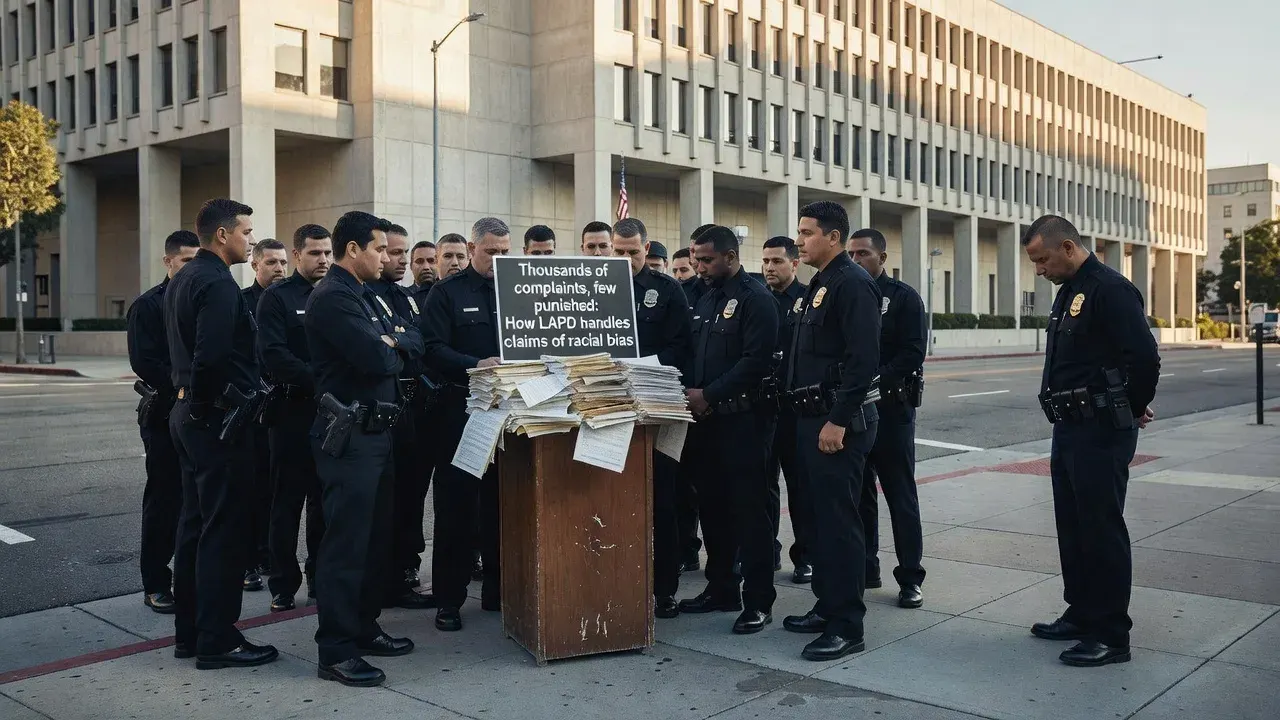
Los Angeles police officers rack up thousands of complaints for racial bias in traffic stops, yet the department disciplines or fires vanishingly few. A single recent firing for alleged racial bias stands out precisely because it is so exceptional, revealing a department that absorbs evidence of unequal treatment without meaningful consequences.
Decades of external studies have documented the same pattern: Black and Latino Angelenos are stopped at rates far exceeding their share of the population or any plausible crime data. Those disparities generate complaints by the hundreds each year. Most are investigated, reviewed and closed with no action against the officer involved. The bureaucracy churns, the stops continue, and the public is told the system is working.
The rarity of real accountability turns the lone recent termination into an unintended spotlight. It does not signal reform; it underscores how insulated the department’s internal discipline process remains. When bias complaints pile up by the thousand but punishment stays in the single digits, the message to officers is clear: the risk is low.

That protective posture collides with the lived reality on Los Angeles streets, where the volume of stops and the demographic skew have been measured repeatedly. The data are not in dispute. What remains in dispute is whether the LAPD treats those findings as a problem to solve or an inconvenience to manage.
The handful of cases that do result in discipline are outliers, not trends. They arrive years after the complaints, often only after external pressure or unusually detailed documentation. The rest disappear into personnel files and statistical summaries that never quite add up to change.
If thousands of documented complaints produce almost no firings, the department is not correcting bias, it is absorbing it. The next question is how many more years of the same numbers the city is prepared to accept before the rare exception becomes the expected rule.
Original reporting: LA Times.
Original reporting: LA Times, California.
More in California
- UC Berkeley Lab Proposes New Civic Framework for California’s Next Governor
A research-driven agenda calls for institutionalizing 'co-governance' to address low public trust and lack of resident influence in state decision-making.
- Five Tax Measures on California’s Ballot Aim to Reshape State Finances
Propositions 3, 40–43 would alter income, wealth and local taxation rules—marking the highest number of tax measures on a general election ballot since 1994.
- Catalina Helicopter Crash Highlights Risks of Island Medevac Flights
A medical evacuation chopper carrying Catalina Romero, pilot, and nurse Jessica Devries crashed into the ocean shortly after takeoff, killing all three; federal investigators are assessing causes including night flying, spatial disorientation, and the island’s challenging Pebbly Beach heliport.