Therapeutic Strategy Targets Cellular 'Traffic Jam' in Proteinopathies
Researchers at the Broad Institute have identified a shared mechanism in multiple genetic diseases, leading to a potential therapeutic approach that could treat a range of proteinopathies.


Researchers at the Broad Institute have discovered a potential therapeutic strategy that may treat inherited disorders affecting both the kidneys and eyes, as well as other genetic diseases known as proteinopathies. These diseases are caused by mutated proteins that do not fold correctly and accumulate within cells, eventually leading to cell death. The new therapeutic approach targets an entrapment complex, a malfunctioning part of the cell's trafficking machinery that causes a buildup of misfolded proteins. This discovery is published in the journal Neuron (source ID: 1). [1]
In 2019, the same research team reported the role of a protein called TMED9 in causing the accumulation of misfolded proteins in a rare disease called MUC1 kidney disease. Now, they have shown that TMED9 is part of a larger complex that includes four proteins—TMED2, 7, 9, and 10—and that a small molecule developed to target this complex works in mice against both MUC1 kidney disease and retinitis pigmentosa, a rare genetic eye disorder. This finding highlights a shared mechanism across seemingly disparate diseases (source ID: 1). [1]
The study suggests that targeting TMED7, a protein that plays a particularly potent role in holding the complex in place, could be an effective therapeutic approach. Deleting the gene for TMED7 reversed the hallmarks of disease in mice with MUC1 kidney disease and slowed vision loss in a mouse model of retinitis pigmentosa. Importantly, removing TMED7 stopped the buildup of mutated proteins but did not prevent the TMEDs from carrying out their normal function (source ID: 1). [1]
Researchers at the Broad Institute have discovered a potential therapeutic strategy that may treat inherited disorders affecting both the kidneys and eyes, as well as other genetic diseases known as proteinopathies. The new study suggests that targeting TMED7, a protein that plays a particularly potent role in holding the complex in place, could be an effective therapeutic approach. This discovery is based on findings that show TMED9 is part of a larger complex that includes four proteins—TMED2, 7, 9, and 10—and that a small molecule developed to target this machine works in mice against both MUC1 kidney disease and retinitis pigmentosa (source ID 1). [1]
Advertisement
In 2019, the same research team reported the role of a protein called TMED9 in causing the accumulation of misfolded proteins in a rare disease called MUC1 kidney disease. Now, they have shown that TMED9 is part of a larger complex, and that disabling TMED7, a specific protein within this complex, can reverse the hallmarks of disease in mice with MUC1 kidney disease and slow vision loss in a mouse model of retinitis pigmentosa. This suggests that targeting TMED7 could be a viable treatment strategy for these conditions (source ID 1). [1]
The study highlights the importance of a shared mechanism behind many seemingly disparate diseases, which are all caused by mutated proteins that do not fold correctly and accumulate in cells. The researchers found that TMED7 plays a particularly potent role in holding the complex in place, and that deleting the gene for TMED7 reversed the disease hallmarks in mice. This indicates that TMED7 is an especially good protein to target for therapeutic development (source ID 1). [1]
Researchers at the Broad Institute have discovered a potential therapeutic strategy that may treat inherited disorders affecting both the kidneys and eyes, as well as other genetic diseases known as proteinopathies. The study suggests that targeting TMED7, a protein that plays a particularly potent role in holding the complex in place, could be an effective therapeutic approach (source ID: 1). [1]
The study highlights the importance of a shared mechanism behind many seemingly disparate diseases, which are all caused by mutated proteins that do not fold correctly and accumulate in cells. The new therapeutic approach unclogs the traffic jam of misfolded proteins by targeting an entrapment complex, a malfunctioning arm of the cell's trafficking machinery (source ID: 1). [1]
Advertisement
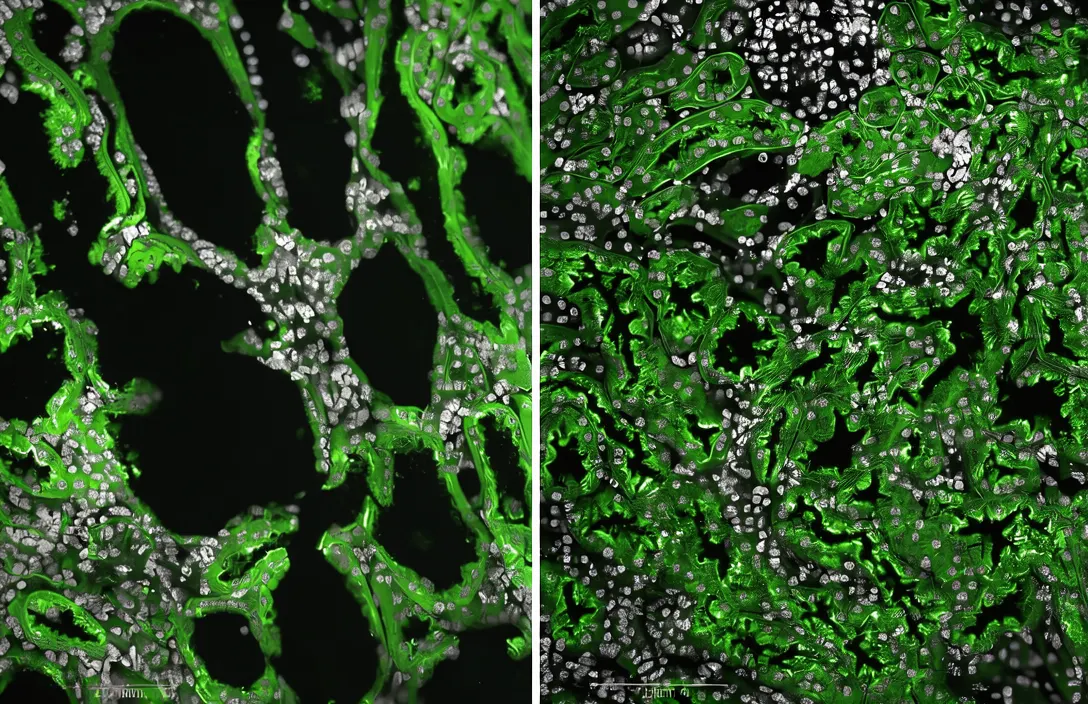
Microscopy images of mouse kidney tissue show the hallmarks of MUC1 kidney disease (left) and the effect of targeting a key protein, TMED7, (right) as a possible therapeutic strategy. The new work is published in the journal Neuron (source ID: 1). [1]
Sources
Prepared with AI assistance from the cited sources.
The Cali Reporter newsletter
The stories worth your time.
California, the country, and what comes next. Join our free newsletter for reporting that keeps you informed.
More in Health & Medicine
- Understanding Fascia and the Evidence Behind Fascia Release
Fascia is a connective tissue that plays a structural role in the human body, but evidence supporting specific exercises or tools for 'fascia release' remains limited.
- Antidepressant Effectiveness and Long-Term Use
A new review suggests that some antidepressants may be more effective than others in helping people manage depression symptoms over the long term, according to a study published in The Lancet Psychiatry.
- Experimental Weight-Loss Drug Shows Promise for Knee Osteoarthritis Pain
A new study suggests that an experimental weight-loss drug, retatrutide, may significantly reduce knee pain in people with osteoarthritis and obesity.