Therapeutic Nanobody Shows Broad-Spectrum Efficacy Against Major Coronaviruses
A new bispecific nanobody has demonstrated the ability to neutralize three highly pathogenic human coronaviruses in laboratory and animal studies.

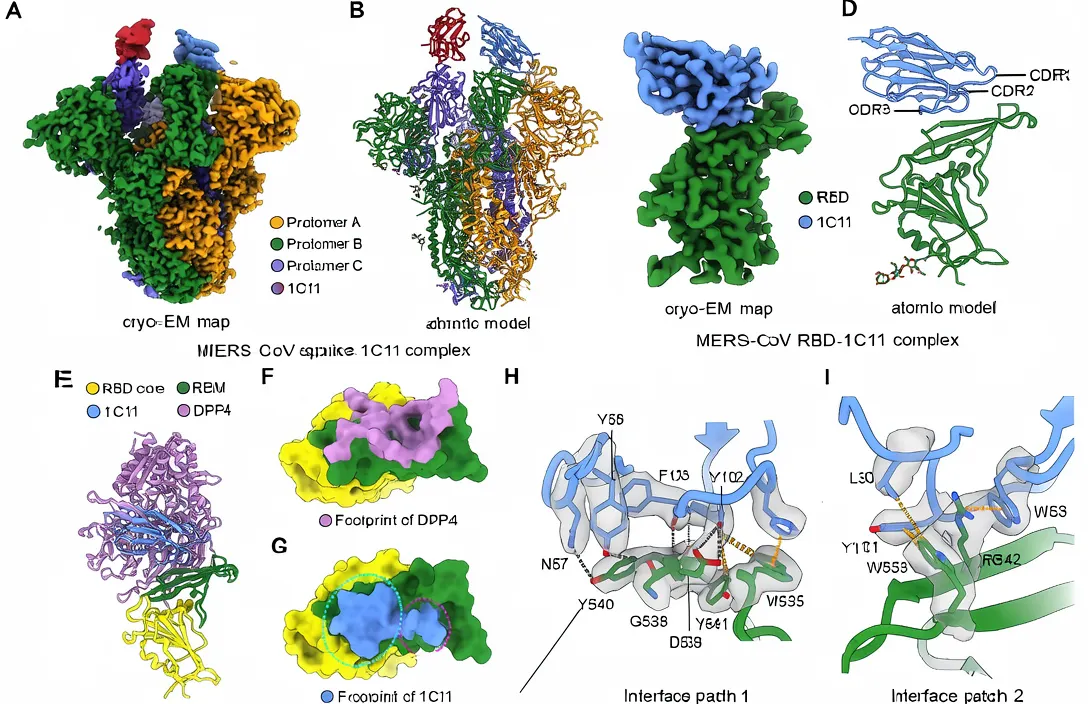

A study published in the journal ACS Nano reveals that a bispecific nanobody developed by researchers at Georgia State University and collaborators can neutralize all three highly pathogenic human coronaviruses: SARS-CoV, SARS-CoV-2, and MERS-CoV. The nanobody, named 3B11−1C11-Fc, was found to block the interaction between the viral receptor-binding domains (RBDs) and the human cell receptors that the viruses use to enter cells. This mechanism of action was confirmed through cryo-electron microscopy, computational modeling, and epitope-mapping approaches (source ID: 1). [1]
The research team identified nanobodies that bound to the RBDs of SARS-CoV, SARS-CoV-2, and MERS-CoV. These nanobodies, including 3B11 and 1C11, showed strong affinity for their respective viral targets. The Fc-fused version of 1C11 significantly enhanced its neutralizing potency against MERS-CoV. These findings highlight the potential of nanobodies as effective therapeutic agents against multiple coronavirus strains (source ID: 1). [1]
In mouse models, a single dose of the bispecific nanobody significantly reduced viral loads and protected the animals from infections caused by SARS-CoV, SARS-CoV-2, and MERS-CoV. The nanobody remained stable across various pH and temperature conditions and was produced at high yield in mammalian cells, suggesting its potential for large-scale manufacturing. This development could provide a broad-spectrum therapeutic for current and future coronavirus threats (source ID: 1). [1]
The research was conducted primarily at Georgia State University's Institute for Biomedical Sciences, with collaboration from other U.S. universities and institutes. The study was published in the journal ACS Nano in 2026. The project aimed to address the lack of effective treatments that work against SARS-CoV, SARS-CoV-2, and MERS-CoV, which continue to infect people or pose threats for new outbreaks. The therapeutic development was focused on creating a broad-spectrum agent capable of neutralizing all three viruses. [1]
Advertisement
The study involved the identification of nanobodies from immunized phage display libraries. These nanobodies specifically bound to the receptor-binding domains (RBDs) of the viral spike proteins, which are essential for viral entry into human cells. Nanobody 3B11 demonstrated binding to both SARS-CoV and SARS-CoV-2 RBDs, while nanobody 1C11 neutralized all tested MERS-CoV strains. The Fc-fused version of 1C11 improved its potency significantly. [1]
A bispecific nanobody, 3B11−1C11-Fc, was engineered to bind to all three RBDs. It was tested in mouse models, where a single dose significantly reduced viral loads and protected the animals against SARS-CoV, SARS-CoV-2, and MERS-CoV infections. The nanobody demonstrated stability across various pH and temperature conditions and could be produced at high yields in mammalian cells, supporting potential large-scale manufacturing. [1]
The study's findings were published in the journal ACS Nano, with the article authored by Shengnan Qian and others. The research team used cryo-electron microscopy, computational modeling, and epitope-mapping approaches to identify the unique epitopes on the viral proteins that the nanobodies recognize. These findings help explain the nanobodies’ antiviral potency and their ability to neutralize the viruses effectively. [1]
A bispecific nanobody developed by researchers at Georgia State University and collaborators has shown the ability to neutralize SARS-CoV, SARS-CoV-2, and MERS-CoV, according to a study published in the journal ACS Nano. The research team identified nanobodies that bound to the receptor-binding domains (RBDs) of these coronaviruses, which are critical for viral entry into human cells. The nanobodies worked by blocking the interaction between the viral RBDs and the respective receptors that the viruses use to enter human cells (Source ID: 1). [1]
Advertisement
The study demonstrated that nanobody 3B11 bound to the RBDs of both SARS-CoV and SARS-CoV-2, neutralizing diverse strains and variants tested, while nanobody 1C11 neutralized all MERS-CoV strains tested. The Fc-fused version of 1C11, in which the nanobody is attached to a segment of a human antibody, substantially enhanced potency (Source ID: 1). [1]
The researchers constructed a bispecific nanobody, 3B11−1C11-Fc, that binds to all three RBDs. It neutralized all tested SARS-CoV, SARS-CoV-2, and MERS-CoV viral strains, remained highly stable across a range of pH and temperature conditions, and was produced at a high yield in mammalian cells (Source ID: 1). [1]
In mouse models, a single dose of the bispecific nanobody significantly reduced viral loads and protected the animals from SARS-CoV, SARS-CoV-2, and MERS-CoV infections, with no apparent weight loss or severe clinical symptoms in most treated animals (Source ID: 1). [1]
A study published in the journal ACS Nano reveals that a bispecific nanobody developed by researchers at Georgia State University and collaborators can neutralize all three highly pathogenic human coronaviruses: SARS-CoV, SARS-CoV-2, and MERS-CoV. The research team identified nanobodies that bound to the RBDs of SARS-CoV, SARS-CoV-2, and MERS-CoV (Source ID: 1). [1]
Advertisement
The study demonstrated that nanobody 3B11 bound to the RBDs of both SARS-CoV and SARS-CoV-2, neutralizing diverse strains and variants tested, while nanobody 1C11 neutralized all MERS-CoV strains tested. The researchers constructed a bispecific nanobody, 3B11−1C11-Fc, that binds to all three RBDs (Source ID: 1). [1]
In mouse models, a single dose of the bispecific nanobody significantly reduced viral loads and protected the animals from infections caused by SARS-CoV, SARS-CoV-2, and MERS-CoV. The nanobodies worked by blocking the interaction between the viral RBDs and the respective receptors that the viruses use to enter human cells (Source ID: 1). [1]
Sources
Prepared with AI assistance from the cited sources.
The Cali Reporter newsletter
The stories worth your time.
California, the country, and what comes next. Join our free newsletter for reporting that keeps you informed.
More in Health & Medicine
- Understanding Fascia and the Evidence Behind Fascia Release
Fascia is a connective tissue that plays a structural role in the human body, but evidence supporting specific exercises or tools for 'fascia release' remains limited.
- Antidepressant Effectiveness and Long-Term Use
A new review suggests that some antidepressants may be more effective than others in helping people manage depression symptoms over the long term, according to a study published in The Lancet Psychiatry.
- Experimental Weight-Loss Drug Shows Promise for Knee Osteoarthritis Pain
A new study suggests that an experimental weight-loss drug, retatrutide, may significantly reduce knee pain in people with osteoarthritis and obesity.