The Overlooked Role of Running Socks in Foot Protection
A study from The Hong Kong Polytechnic University highlights the importance of specialized running socks in shock absorption and reducing plantar pressure, suggesting that their design and material can significantly…


Running socks, often overlooked in favor of shoes and insoles, play a critical role in comfort, impact protection, and injury prevention during running. As the layer in direct contact with the skin, socks can influence how the foot interacts with footwear. The foot repeatedly experiences impact forces that may reach two to three times body weight, contributing to discomfort and common foot problems (source ID: 1). [1]
Researchers at The Hong Kong Polytechnic University investigated the cushioning performance of commercially available running socks, including regular, specialized traditional, and five-toed designs. The study found that specialized running socks offer better shock absorption than regular running socks, with fabric thickness, terry length, and fabric mass strongly linked to impact reduction (source ID: 1). [1]
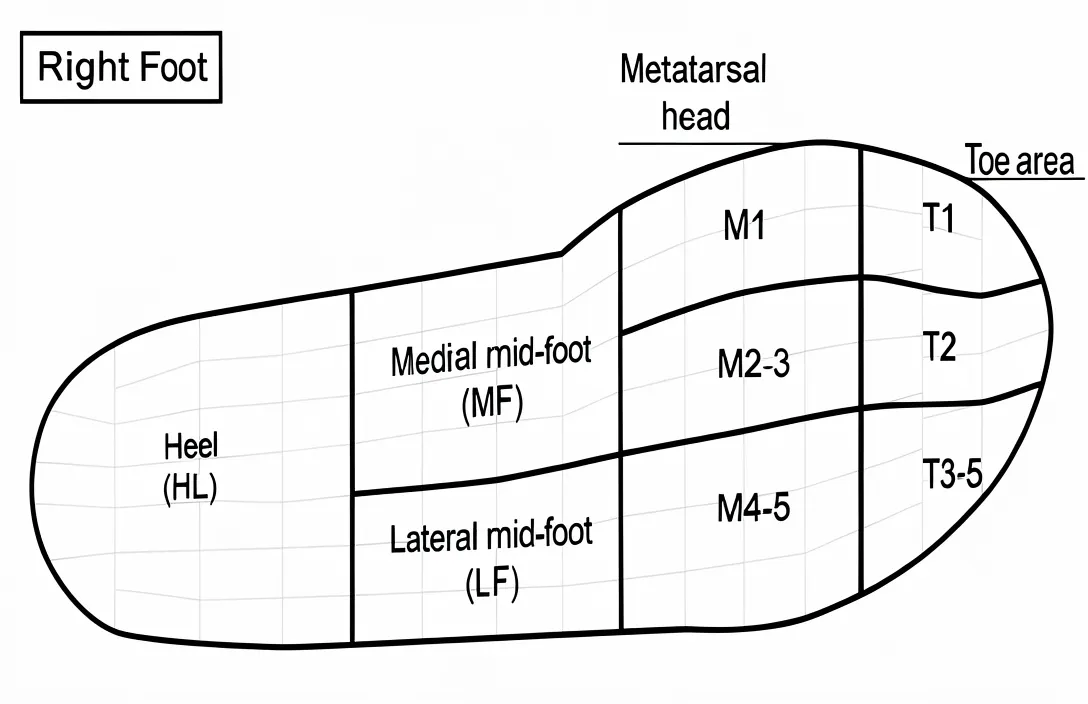
The research revealed that specialized socks reduced peak pressure and pressure impulse in high-load areas of the forefoot, particularly the big toe and first metatarsal head, while also shortening forefoot ground contact time. The five-toed sock showed pressure-reduction performance comparable to that of the specialized traditional sock, indicating that the split-toe design may offer a promising alternative approach to managing forefoot loading (source ID: 1). [1]
Running socks play a crucial role in comfort, impact protection, and injury prevention during running, as highlighted by researchers at The Hong Kong Polytechnic University. During running, the foot repeatedly experiences impact forces that may reach two to three times body weight, which over time can contribute to discomfort and common foot problems, including blisters, abrasions, and calluses (Source ID: 1). [1]
Advertisement
The study investigated the cushioning performance of commercially available running socks, including regular, specialized traditional, and five-toed designs. The research found that specialized socks reduced peak pressure and pressure impulse in high-load areas of the forefoot, particularly the big toe and first metatarsal head, while also shortening forefoot ground contact time. These findings suggest that specialized running socks offer better shock absorption than regular running socks (Source ID: 1). [1]
The study's impact test revealed clear differences between regular and specialized running socks. Specialized socks generally showed a higher peak force attenuation ratio, with the best-performing sock reducing peak force by nearly 30%. Wool-based running socks demonstrated relatively strong cushioning and compression recovery, which may be related to the natural elasticity of wool fibers (Source ID: 1). [1]
A notable finding was the performance of the five-toed running sock. Although its toe region was thinner than that of the traditional running socks due to the split-toe structure, it still reduced forefoot plantar loading effectively. Its pressure distribution was comparable to that of the specialized traditional sock, suggesting that the split-toe design may offer a promising alternative approach to managing forefoot loading (Source ID: 1). [1]
Researchers at The Hong Kong Polytechnic University investigated the cushioning performance of commercially available running socks, including regular, specialized traditional, and five-toed designs (source ID: 1). The study found that specialized running socks significantly reduce peak pressure and pressure impulse in high-load areas of the forefoot, particularly the big toe and first metatarsal head (source ID: 1). These socks also shorten the forefoot ground contact time, which can contribute to better comfort and injury prevention during running (source ID: 1). [1]
Advertisement
The research team examined both the mechanical properties of sock fabrics and their effects on plantar pressure distribution during running (source ID: 1). The study revealed that specialized socks generally showed a higher peak force attenuation ratio compared to regular socks, with the best-performing sock reducing peak force by nearly 30% (source ID: 1). This improvement in impact reduction is strongly linked to fabric thickness, terry length, and fabric mass (source ID: 1). [1]
Notably, the five-toed running sock demonstrated pressure-reduction performance comparable to that of the specialized traditional sock, despite having a thinner toe region due to its split-toe design (source ID: 1). This suggests that the split-toe design may help optimize load distribution, offering a promising alternative approach to managing forefoot loading (source ID: 1). The study emphasizes the importance of optimizing material selection, fabric structure, and sock design to enhance shock absorption and foot protection (source ID: 1). [1]
Running socks play an essential role in comfort, impact protection, and injury prevention, despite often being overlooked in favor of shoes and insoles (source ID: 1). During running, the foot repeatedly experiences impact forces that may reach two to three times body weight. Over time, this repeated loading can contribute to discomfort and common foot problems, including blisters, abrasions, calluses, and other mechanical skin injuries. Researchers at The Hong Kong Polytechnic University (PolyU) have highlighted the cushioning potential of advanced fibers and five-toed designs. [1]
While running shoes and insoles are often the main focus of performance and injury-prevention research, socks also influence how the foot interacts with footwear (source ID: 1). A well-designed sock can help reduce local pressure, absorb impact, and improve the distribution of plantar load. In contrast, regular running socks may offer limited protection if their material and structure are not optimized for high-impact activities. As a result, specialized running socks have become increasingly popular among recreational and competitive runners. [1]
Advertisement
The study's impact test revealed clear differences between regular and specialized running socks (source ID: 1). Specialized socks generally showed a higher peak force attenuation ratio, with the best-performing sock reducing peak force by nearly 30%. Notably, wool-based running socks demonstrated relatively strong cushioning and compression recovery, which may be related to the natural elasticity of wool fibers. In addition, the peak force attenuation ratio was found to be significantly correlated with fabric thickness, terry length, and fabric mass/unit. [1]
Sources
Prepared with AI assistance from the cited sources.
The Cali Reporter newsletter
The stories worth your time.
California, the country, and what comes next. Join our free newsletter for reporting that keeps you informed.
More in Health & Medicine
- Understanding Fascia and the Evidence Behind Fascia Release
Fascia is a connective tissue that plays a structural role in the human body, but evidence supporting specific exercises or tools for 'fascia release' remains limited.
- Antidepressant Effectiveness and Long-Term Use
A new review suggests that some antidepressants may be more effective than others in helping people manage depression symptoms over the long term, according to a study published in The Lancet Psychiatry.
- Experimental Weight-Loss Drug Shows Promise for Knee Osteoarthritis Pain
A new study suggests that an experimental weight-loss drug, retatrutide, may significantly reduce knee pain in people with osteoarthritis and obesity.