

The First Female Justice, The Man Who Bought Stonehenge, and 6 Other Historic Wins You Need to Know
Explore the stories that made September 21 a turning point in history.

Some days are just built for celebration. When you look back at the timeline of significant events, September 21 stands out as a day packed with firsts, gifts, and historic turning points. We are not just talking about small victories here. We are talking about moments that reshaped nations, changed literature forever, and connected people across centuries. This is the kind of good news that gives you a receipt for a better day. Let us break down exactly what happened 45, 100, or even 200 years ago today that you might have missed.
45 years ago, a landmark was erected in American law. Sandra Day O'Connor was sworn in as the first female Supreme Court Justice. Her approval by the Senate was a near-unanimous event, happening with a score of 99 to 0. There is one small, fascinating detail attached to this historical moment. One Montana Senator missed the vote but later sent her a copy of the book *A River Runs Through It* as a gesture of apology. In her very first year on the bench, she received over 60,000 letters from the public. This volume of correspondence is a record for any justice in history. Justice O'Connor began her career with a conservative, Reaganite approach to the law. However, the years saw her gradually move into a position of centrism.
Her journey on the Court was not without its critics. Her position did not ignite approval from the liberal justices nor did it satisfy right-wing commentators who often looked toward her for votes along their philosophy. However, there is one specific decision for which she received plenty of applause. In 1983, she wrote an opinion on whether drug-sniffing dogs violated Fourth Amendment protections. She argued that the needless humiliation of an individual is an important factor in determining Fourth Amendment reasonableness. This blend of legal pragmatism and human consideration is a hallmark of her legacy.

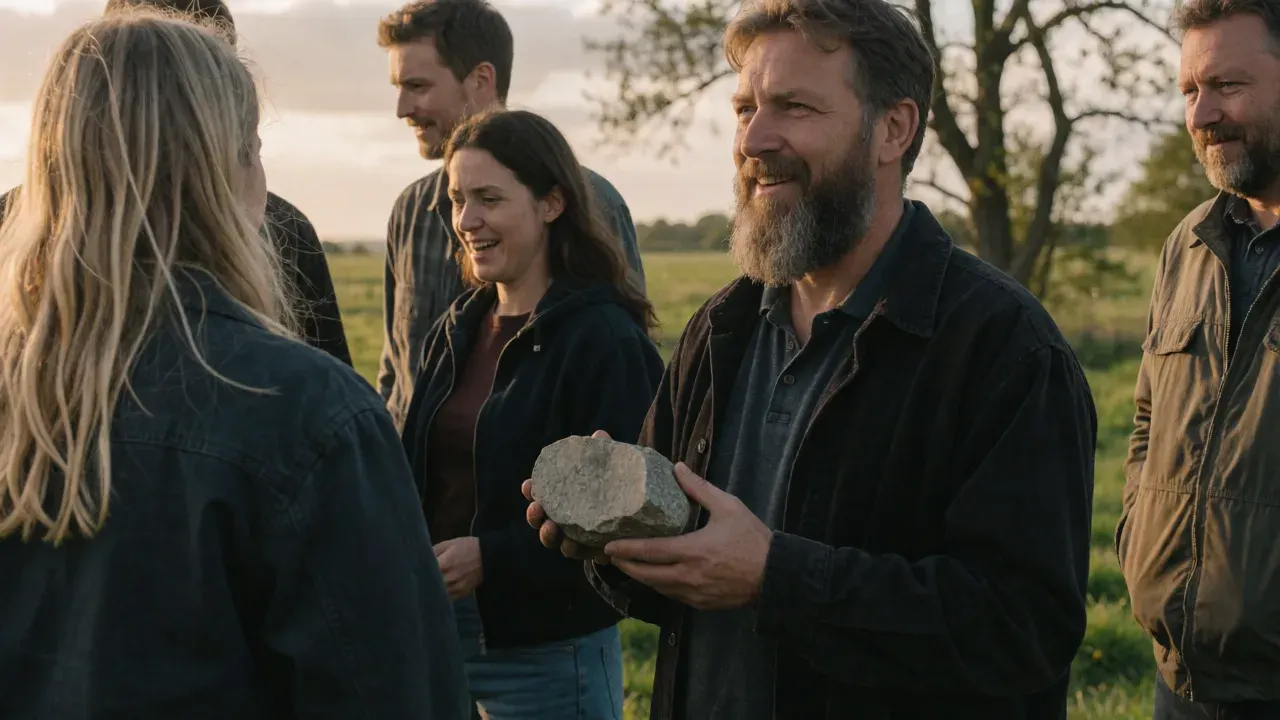
Jumping across the pond, we find a story that sounds like a movie script involving one of the world's most iconic landmarks. 89 years ago today, a man named Cecil Chubbs bought Stonehenge for £6,600. Chubbs was born in Shrewton, which is located four miles west of the iconic Neolithic monument. He grew up passing by the Salisbury Plain and admiring it. He believed that after amassing a personal fortune, a "Salisbury man" ought to be the owner of the stones. This local pride drove him to attend the auction sale.
The auction listing for the Stonehenge estate read like a simple land entry. It listed "Lot 15. Stonehenge with about 30 acres, 2 rods, 37 perches of adjoining downland." Chubbs had grown up in humble beginnings but made a small fortune by taking over his father-in-law's management of Old Manor Hospital. He also made money through horse racing and cattle breeding. It was his interest in Stonehenge as a local boy that led him to attend the sale. He had no intention of bidding. However, while he was in the room, he thought, "a Salisbury man ought to buy it" and that is how the purchase was done.
Chubbs remained its owner for three years. Then, on October 26, 1918, he formally handed it over to Sir Alfred Mond, who was the First Commissioner of Works. He received the property as a gift on behalf of the nation. Since the early 16th century, Stonehenge had been privately owned, first by the Nuns of Amesbury Abbey and then by a succession of blueblooded families. The Antrobus Family bought the Stonehenge estate in 1824. After the death of family head Edmund Antrobus, his son decided to sell. Chubbs bought it, but he did not keep it long. He wanted to ensure it served the public good. He conditioned the gift by saying the money from ticket sales should go to the Red Cross for the rest of the war. He also demanded free admission during normal hours for residents of his native parish and several surrounding areas. These parishes include Shrewton, Netheravon, Durrington, and Amesbury. This privilege was later widened and is still in force today.
Turning our eyes to the world of fantasy, we celebrate the publication of a book that would become a masterpiece. 89 years ago today, J.R.R. Tolkien’s *The Hobbit, or 'There and Back Again,'* was first published in London to wide critical acclaim. Tolkien was a linguist and scholar of Anglo-Saxon and German literature at Oxford. He actually wrote *The Hobbit* because he wanted something marvelous to read to his young children. However, upon its publication, so many letters arrived from readers wishing to continue exploring Tolkien’s "Middle Earth" that he slowly built up the manuscripts. This process continued through the dark years of World War II.
This effort eventually led to the masterful trilogy *The Lord of the Rings*. These books together have sold more copies than almost any other book in history. The story follows the quest of a hobbit named Bilbo Baggins. He sets out with 13 dwarves to win back a stolen treasure guarded by a fierce dragon. Bilbo’s adventure leads him from his light-hearted, rural homeland on a true Hero’s Journey and back again. The success of the book was so immense that in 2012, it became a series of films starring Martin Freeman and Iain McKellen. His friend C.S. Lewis reviewed the book in *The Times of London*. Lewis wrote that "The truth is that in this book a number of good things, never before united, have come together." He praised the fusion of the scholar’s grasp of mythology with the poet’s touch.
Before Tolkien created Middle Earth, another giant of literature was born in 1866. This was the prolific British writer and thinker H.G. Wells. He was born sometimes called The Father of Science Fiction. An accident in his young life that left him bedridden with a broken leg was the spark that fanned Herbert George’s love of books. This injury stimulated his desire to write. Wells wrote *The Time Machine* when he was 29 years old. He also authored *The Invisible Man* and *The War of the Worlds*. However, Wells was a trained scientist who wrote in many genres, including novels, history, politics, and social commentary. His frequent focus on class inequality made him a worthy successor to Charles Dickens.
Wells had religious views that were neither monotheistic nor doctrinaire. He was disdainful of America for not allowing African Americans to vote and for the overall treatment they received from society. In his later years, he apologized for earlier statements opposing the Jewish state and the Zionist movement. He did this partly because it was so antithetical to his vision of collective socialist solidarity and "one world" political model. A diabetic, Wells co-founded the charity Diabetes UK. He passed away from the disease at age 79.
Jumping forward to 1947, we celebrate the birthday of Stephen King. He is 79 years old today. King has written 56 bestselling horror, science fiction, and suspense novels. These include *Carrie*, *The Shining*, *The Stand*, and *Misery*. His path to success was not without struggle. King was abandoned by his father when he was two. He spent his childhood poring over horror books, comic books, and films. At age 26, before his first novel *Carrie* became a success, a discouraged King had thrown an early draft of the story into the trash. His wife retrieved it and encouraged him to finish the manuscript. Currently, the new film, *IT*, is on track to pass *The Exorcist* as the highest-grossing horror film of all time. King’s books have sold more than 350 million copies, and many have been adapted for films, including *The Shawshank Redemption*. His wife of 47 years, Tabitha, has written six novels, and both their sons are also published authors. His new book out this week is a collaboration with his son Owen, a story set in a women's prison, entitled *Sleeping Beauties: A Novel*.
We must also acknowledge the roots of modern journalism. 242 years ago today, *The Pennsylvania Packet and Daily Advertiser* became the first successful daily newspaper published in America. This was a massive leap for the free press. Exactly 12 years later, the paper was the first to publish George Washington’s Farewell Address. This paper proved that daily information could sustain a nation.
On this day, we also celebrate the United Nations’ International Day of Peace. It is a reminder that our world needs connection. Today we also remember the publication of the "Yes, Virginia, there is a Santa Claus" letter in the *New York Sun* from 1897. The letter answered the question from 8-year-old Virginia O'Hanlon. Furthermore, we look back on the broadcast of "America: A Tribute to Heroes" by over 35 network and cable channels in 2001. This broadcast raised over $200 million for victims of the September 11 attacks. We also note the independence days for Malta, Belize, Armenia, and the end of British rule in these nations. History shows us that progress is possible. Whether it is the law, a monument, a story, or a newspaper, good news is built by people who care enough to act. Take a moment to celebrate these wins today.
First reported by Good News Network.
More in Good News
- Historical Milestones: From Scientific Breakthroughs to Civil Rights Advancements
A retrospective look at significant global events occurring on October 7, spanning musical achievements, scientific discoveries, and social progress.
- October 3: Korean Foundation Day, Lincoln’s Thanksgiving, and TV Classics
Marking mythic descent, national unity, and cultural milestones across centuries.
- The Secret Sauce of the Best Food Pantries is Dignity
Why the best food banks treat hunger like a temporary pause not a permanent state