

South Korea’s Drone Squad Turns Mozambique Flood Disaster into a Zero Fatalities Success Story
Trainees from 30 African nations learned to fly drones during a crisis that saved over a thousand lives.

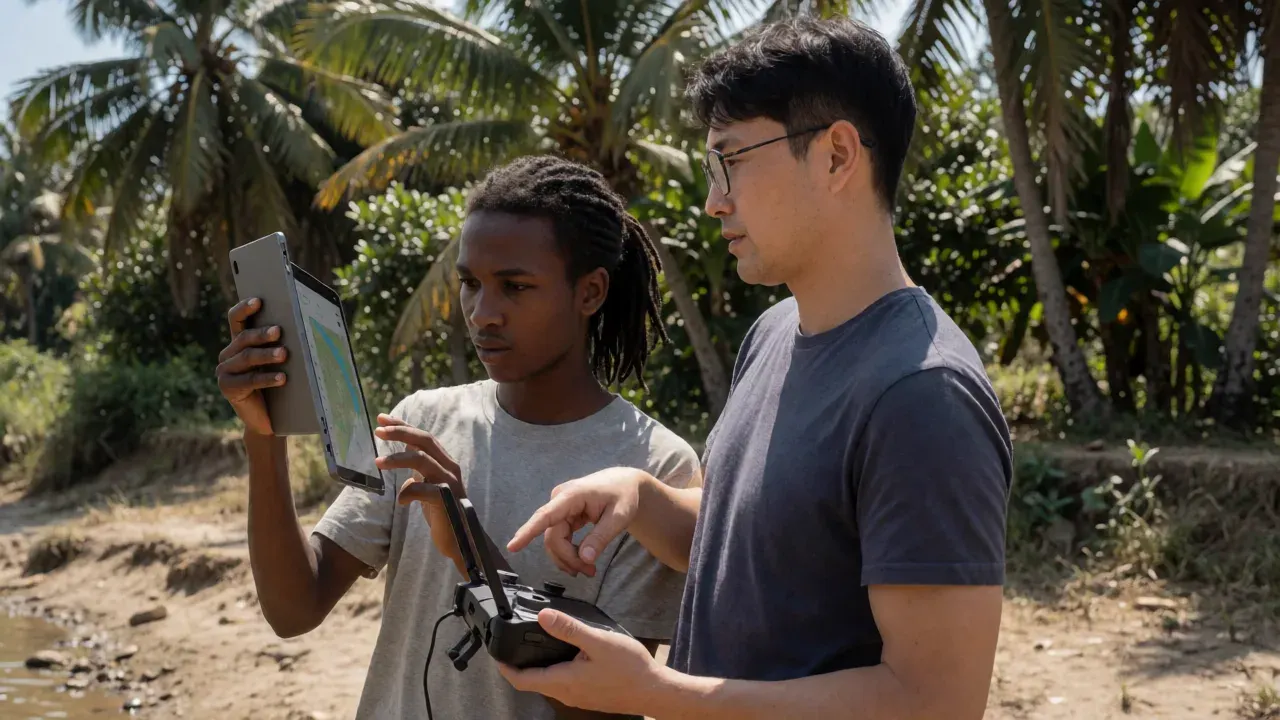
Imagine a community facing one of the worst floods in decades and yet losing zero lives. This is not a fantasy. It is a reality that occurred in Marracuene district just north of the capital. The Incomáti River burst its banks after weeks of heavy rainfall. The water rose and submerged hundreds of square miles. Yet the raging waters failed to claim a single soul. This miracle was made possible thanks to a small squadron of drones and their pilots. They used technology to inform search and rescue efforts in real time.
The story behind this success comes from the African Development Bank. It highlights a partnership between the continent and South Korea. In April, the South Korea, Africa Economic Cooperation KOAFEC Trust Fund launched the Drone-Based Disaster Management Project. Their goal was to train 30 public sector experts. These experts came from meteorology, road mapping, water management, and disaster response agencies. They were learning to use drones for emergency response. The January floods acted as a critical test for these trainees.
Before this project, many of these pilots had absolutely no experience with drones. Kátia Manjate is one of these new pilots. Under the guidance of South Korean instructors, she learned to run the entire data pipeline. She learned to operate everything from data collection to the final product. She learned how to process information and understand the results. This early expertise was vital when the Incomáti River completely lost its course. The river submerged vast areas beneath murky water. Incomáti became the equivalent of a final year exam for the students.

Just eight months before their training was set to finish, the government ordered the project team to the district. The pilots got to work immediately. They successfully located stranded families. They mapped washed-out roads. They streamed live imagery to rescue teams who had no other way to see the devastation. This real-time data is crucial. LiDAR imagery showed the depth of each brown pool in the floodwaters. This technology successfully guided rescue vehicles through door-high flood waters.
While search and rescue drones often target people, they can save other forms of life too. Drones are Saving Hundreds of Fawns From Mower Deaths in Germany (WATCH). This technology allows for a wider scope of safety. The work of these pilots ensured that there were no recorded fatalities among the population. It also ensured that there were no fatalities among the rescuers. By August, the 30 pilots graduated from the program. Ten of them even received licenses to train further drone operators. Local councilwoman Márcia Moiane noted the significance of this project. She spoke with a press team from the African Dev. Bank. She said this project marks a major leap forward for the region. It means they can act faster and smarter. It means they can save more lives in the future.
First reported by Good News Network.
More in Good News
- Historical Milestones: From Scientific Breakthroughs to Civil Rights Advancements
A retrospective look at significant global events occurring on October 7, spanning musical achievements, scientific discoveries, and social progress.
- October 3: Korean Foundation Day, Lincoln’s Thanksgiving, and TV Classics
Marking mythic descent, national unity, and cultural milestones across centuries.
- The Secret Sauce of the Best Food Pantries is Dignity
Why the best food banks treat hunger like a temporary pause not a permanent state