

90% Success Rate: New UK AI Tool Detects Heart Disease Markers in Routine ECGs, Fast-Tracking Care for High-Risk Patients
A revolutionary artificial intelligence model from the United Kingdom has proven capable of identifying life-threatening heart conditions during standard checkups, potentially saving thousands of lives.

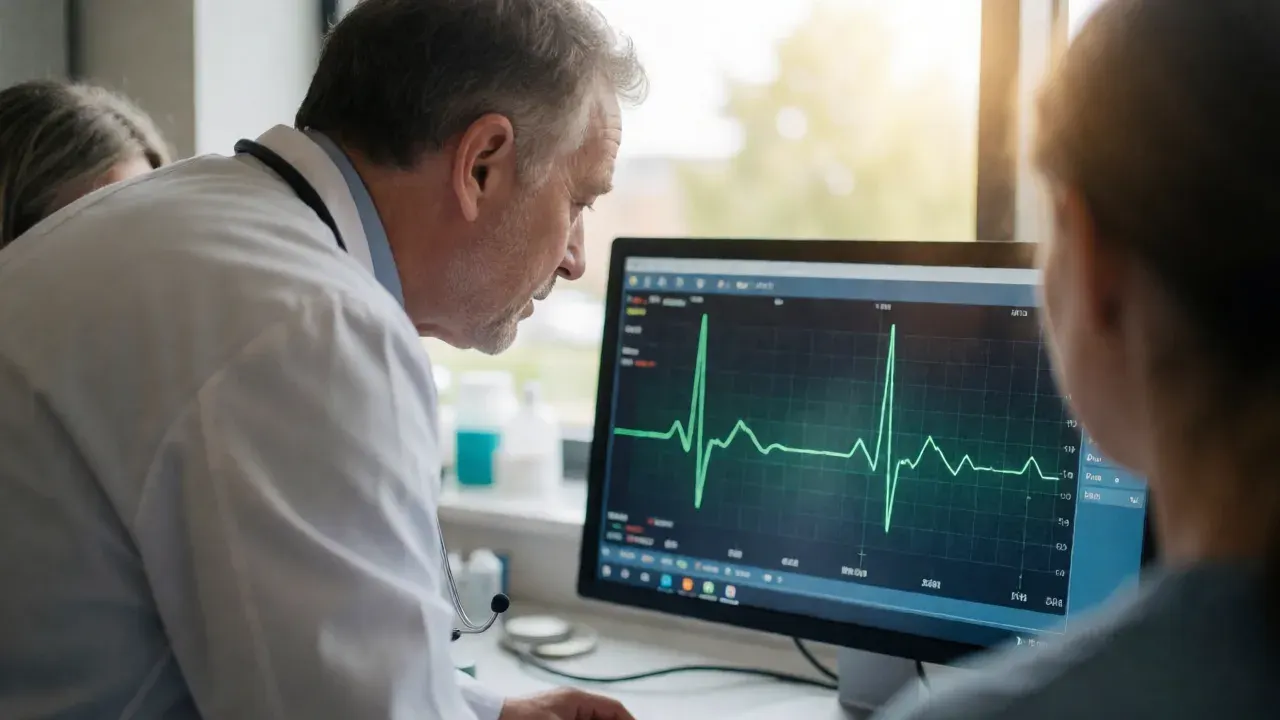
There is a profound joy in watching technology serve the human heart. We watch the news with a heavy heart when stories of heart disease break, but we feel a surge of optimism when innovation steps in to solve the problem. The human heart is a muscle that beats roughly 100,000 times every day. It pumps blood through 60,000 miles of blood vessels. Keeping it healthy is a massive logistical and medical challenge. However, artificial intelligence has brought about a revolution in medical screening practices. This technology is able to make detections across hundreds of scans in mere seconds. These scans are then forwarded to trained pairs of human eyes for final review. Now, from the United Kingdom comes another inspiring example in the form of heart disease diagnostics.
Trained on millions of patients, a new AI tool has been designed to detect minute abnormalities in traditional electrocardiogram or ECG readings. The ECG, which measures the natural electrical activity in the heart, has been a key part of diagnosing heart attack risk and heart arrhythmia for decades. Yet it has a frustrating blind spot. It is not able to detect the structural heart disease that leads to heart failure. For heart disease risk, a doctor must order an echocardiogram or a heart ultrasound. The problem is that these appointments are often months later. A patient waits, anxious and unknowingly at risk, for a scan that might take too long to arrive. This new AI tool changes that equation.
Details of this breakthrough, which could boost early diagnosis of heart disease, were presented at the European Society of Cardiology’s annual congress in Munich. The research highlights how AI can be a partner to human medicine rather than a replacement. The model is specifically designed to detect early signs of two of the most common forms of heart disease from ECG readings alone. These conditions are heart valve diseases and heart failure. For the general public, the outwardly visible symptoms of heart failure are often cardiac arrest or sudden cardiac death. Unless one is an experienced cardiologist, spotting the danger signs before it is too late is incredibly difficult. This AI offers a safety net.

We must look at the numbers to understand the rigor behind this breakthrough. In a clinical trial for the AI’s potential inclusion in cardiology departments and beyond, data from 67,000 patients in the United States who had received ECGs was analyzed. The results are genuinely impressive. The model detected 81 percent of heart failure cases. It even detected 90 percent of heart valve disease cases. This level of accuracy in a screening tool is not just good news. It is lifesaving news. It represents a massive improvement in how we can triage patients who need urgent care.
The British Heart Foundation, which funded the trial, understands the gravity of this. Dr. Sonya Babu-Narayan, a consultant cardiologist and clinical director of the foundation, shared her perspective. She noted that earlier diagnosis and treatment saves and improves lives. Technology like the AI ECG in this research has the potential to identify high-risk patients early. Dr. Babu-Narayan explained that this technology will not detect everyone with a heart condition. However, it could be a solution to help fast-track the patients who are most likely to have a heart abnormality. This is the essence of smart philanthropy. Using resources wisely to help those in greatest need.
The ECG is one of the most common tests conducted in cardiology, with approximately a billion ordered every year worldwide. The logistics of reviewing every single one manually are staggering. A potential case flagged by the AI would not be proof that a patient is about to sustain a heart attack. However, it would allow medical professionals to move them to the front of the line. The imagined workflow involves using the AI-analyzed ECG to receive priority access to echocardiogram appointments. This reduces the waiting period from months to days or weeks.
Professor Fu Siong Ng, a professor of cardiology at Imperial College London who was involved in the study, emphasized the patient experience. He noted that patients can often wait several months for a heart ultrasound scan after being referred for one by their doctor. This wait can be filled with anxiety. Prof. Ng said this makes it exciting that their technology could identify patients most at risk of heart failure and heart valve disease. The goal is to prioritize them for scans faster and more urgently. This addresses the bottleneck in the healthcare system with a technological solution.
Furthermore, Professor Ng highlighted a major benefit regarding inclusivity. People may have undergone ECG tests for other reasons, such as dizziness or general checkups. A major benefit of having the AI tool there is that it can just as easily include potential heart disease checks into any list of diagnostic markers for other conditions. It can reveal potential heart disease when none was thought to exist. This means that even if a patient goes to the hospital for a broken leg, the AI might catch a heart issue in the background. This creates a safety net that is both comprehensive and efficient.
This advancement is not just about detecting disease. It is about optimizing the allocation of limited medical resources. By identifying the high-risk patients early, the healthcare system can focus its expensive and time-consuming echocardiogram scans on those who need them most. We celebrate the researchers and the donors who made this possible. Their generosity fuels the science that protects the heart. As we continue to develop tools like these, the future of heart health looks brighter and more humane.
First reported by Good News Network.
More in Good News
- Historical Milestones: From Scientific Breakthroughs to Civil Rights Advancements
A retrospective look at significant global events occurring on October 7, spanning musical achievements, scientific discoveries, and social progress.
- October 3: Korean Foundation Day, Lincoln’s Thanksgiving, and TV Classics
Marking mythic descent, national unity, and cultural milestones across centuries.
- The Secret Sauce of the Best Food Pantries is Dignity
Why the best food banks treat hunger like a temporary pause not a permanent state