TeleAI Announces AI Camera with Privacy-Preserving Features
TeleAI, China Telecom's artificial intelligence institute, has announced the commercial rollout of a privacy-preserving camera designed to detect safety incidents while deleting original video frames after processing…

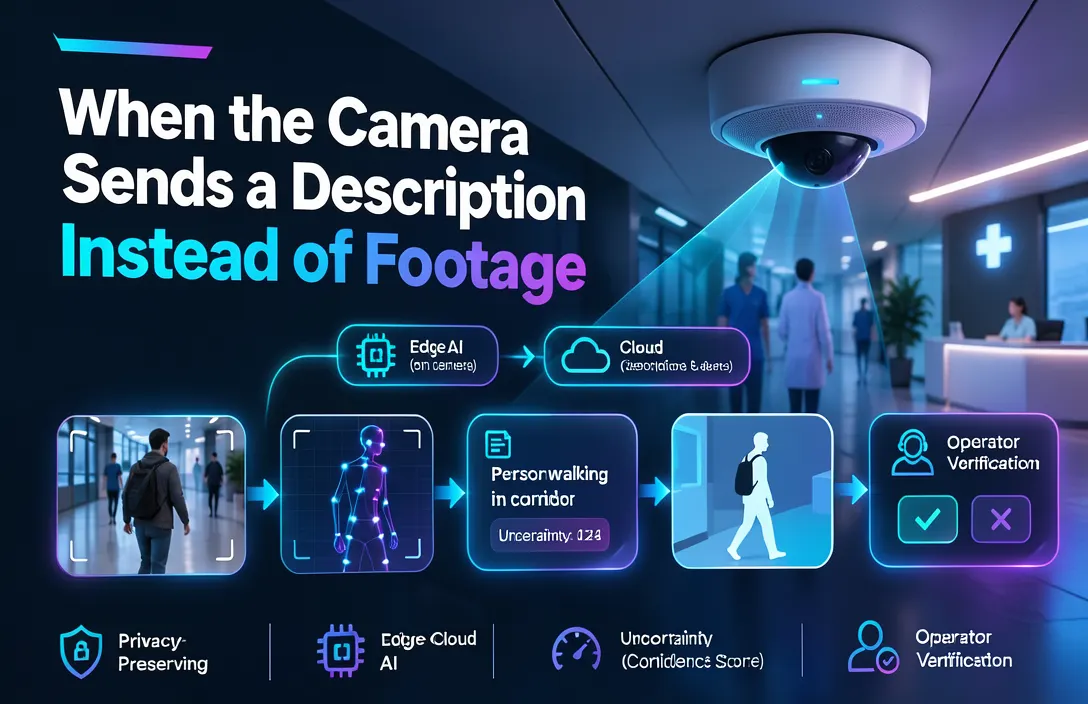

On November 5, TeleAI announced the commercial rollout of a camera designed to detect safety incidents while deleting original frames after processing them on the device. The company describes applications such as falls, smoking, and physical altercations, with staff receiving text or graphical alerts instead of conventional recorded video. TeleAI also says the camera is operating in municipal public facilities and healthcare institutions, although the announcement does not identify the sites, publish deployment results, or specify the production software version (Dev.to). [1]
The underlying technology was already described earlier in 2026, and the November release does not clearly explain what changed technically between the research work and the commercial rollout. The more interesting engineering change is therefore not simply that the camera uses AI. Instead, the operator may receive an interpretation of an event without the original image to inspect afterward (Dev.to). [1]
TeleAI has published at least two descriptions of privacy-preserving camera architectures in 2026, but they don't describe the same information flow. The January system paper describes optimized perturbations intended to suppress privacy-sensitive regions such as faces before the image is converted into feature representations and sent to cloud models. The cloud then produces structured information such as person counts and behavior flags (Dev.to). [1]
A March technical report describes another design. In that version, pixels belonging to people are removed from the environmental image, while body keypoints, a visual embedding, camera identity, frame identity, and timestamps are transmitted for cloud processing. The cloud can then produce behavior labels, confidence evaluations, and generated illustrations (Dev.to). [1]
Advertisement
On November 5, TeleAI announced the commercial rollout of a camera designed to detect safety incidents while deleting original frames after processing them on the device (Dev.to). The company describes applications such as falls, smoking, and physical altercations, with staff receiving text or graphical alerts instead of conventional recorded video. TeleAI also says the camera is operating in municipal public facilities and healthcare institutions, although the announcement does not identify the sites, publish deployment results, or specify the production software version. The underlying technology was already described earlier in 2026, and the November release does not clearly explain what changed technically between the research work and the commercial rollout. [1]
TeleAI has published at least two descriptions of privacy-preserving camera architectures in 2026, but they don't describe the same information flow (Dev.to). The January system paper describes optimized perturbations intended to suppress privacy-sensitive regions such as faces before the image is converted into feature representations and sent to cloud models. The cloud then produces structured information such as person counts and behavior flags. The paper describes a dome-like prototype installed in a public restroom, but presents it as a system demonstration rather than a quantitative evaluation. A March technical report describes another design. [1]
In that version, pixels belonging to people are removed from the environmental image, while body keypoints, a visual embedding, camera identity, frame identity, and timestamps are transmitted for cloud processing (Dev.to). The cloud can then produce behavior labels, confidence evaluations, and generated illustrations. Those differences matter because the information the system retains determines what can be reconstructed, reviewed, and debugged later. The November commercial announcement does not identify which of these research designs, if either, is implemented in the released product. It also does not provide a production data-flow specification resolving the differences between them. [1]
On November 5, TeleAI announced the commercial rollout of a camera designed to detect safety incidents while deleting original frames after processing them on the device (Dev.to). The underlying technology was already described earlier in 2026, and the November release does not clearly explain what changed technically between the research work and the commercial rollout (Dev.to). The more interesting engineering change is therefore not simply that the camera uses AI. Instead, the operator may receive an interpretation of an event without the original image to inspect afterward (Dev.to). [1]
Advertisement
TeleAI has published at least two descriptions of privacy-preserving camera architectures in 2026, but they don't describe the same information flow (Dev.to). In that version, pixels belonging to people are removed from the environmental image, while body keypoints, a visual embedding, camera identity, frame identity, and timestamps are transmitted for cloud processing (Dev.to). The differences in these architectures matter because the information the system retains determines what can be reconstructed, reviewed, and debugged later (Dev.to). [1]
The November commercial announcement does not identify which of these research designs, if either, is implemented in the released product (Dev.to). It also does not provide a production data-flow specification resolving the differences between them (Dev.to). That means a procurement or integration team should not design around the research papers alone (Dev.to). The production system needs its own inventory showing what is captured on the device, what is transformed, what leaves the device, what is retained in the cloud, and what ultimately reaches the operator (Dev.to). [1]
On November 5, TeleAI announced the commercial rollout of a camera designed to detect safety incidents while deleting original frames after processing them on the device (Dev.to). The company describes applications such as falls, smoking, and physical altercations, with staff receiving text or graphical alerts instead of conventional recorded video. TeleAI also says the camera is operating in municipal public facilities and healthcare institutions, although the announcement does not identify the sites, publish deployment results, or specify the production software version (Dev.to). The underlying technology was already described earlier in 2026, and the November release does not clearly explain what changed technically between the research work and the commercial rollout (Dev.to). [1]
TeleAI has published at least two descriptions of privacy-preserving camera architectures in 2026, but they do not describe the same information flow (Dev.to). In that version, pixels belonging to people are removed from the environmental image, while body keypoints, a visual embedding, camera identity, frame identity, and timestamps are transmitted for cloud processing (Dev.to). The January system paper describes optimized perturbations intended to suppress privacy-sensitive regions such as faces before the image is converted into feature representations and sent to cloud models (Dev.to). The paper describes a dome-like prototype installed in a public restroom, but presents it as a system demonstration rather than a quantitative evaluation (Dev.to). [1]
Advertisement
A March technical report describes another design. In that version, pixels belonging to people are removed from the environmental image, while body keypoints, a visual embedding, camera identity, frame identity, and timestamps are transmitted for cloud processing (Dev.to). The cloud can then produce behavior labels, confidence evaluations, and generated illustrations (Dev.to). The November commercial announcement does not identify which of these research designs, if either, is implemented in the released product (Dev.to). It also does not provide a production data-flow specification resolving the differences between them (Dev.to). [1]
Sources
Prepared with AI assistance from the cited sources.
The Cali Reporter newsletter
The stories worth your time.
California, the country, and what comes next. Join our free newsletter for reporting that keeps you informed.
More in Technology
- Modern Web Guidance 1.0 and Browser Compatibility
Modern Web Guidance 1.0, announced by Chrome for Developers on November 10, introduces browser compatibility data to assist coding agents in building web features. The initiative emphasizes the importance of fallback…
- Apache mod_http2 Vulnerability Detection with Nmap
A new Nmap scripting module has been developed to detect the Apache mod_http2 vulnerability (CVE-2026-119618), addressing the challenges of identifying affected systems accurately.
- Securing Remote Vendor Access in Industrial Networks
Best practices for managing remote vendor access in operational technology (OT) networks emphasize controlled access points, multifactor authentication, and time-bound sessions to reduce cybersecurity risks.