Study Links Ultraprocessed Diets to Brain Response Changes in Young Adults
A study conducted by Virginia Tech researchers reveals that young adults show altered brain responses to ultraprocessed foods, particularly in the orbitofrontal cortex, which is involved in decision-making and food…


A study published in the journal Obesity by Virginia Tech researchers found that young adults aged 18 to 21 showed altered brain responses to ultraprocessed foods, specifically in the orbitofrontal cortex, a region involved in food reward and decision-making (source ID: 1). This brain area is among the last to fully mature in the mid- to late 20s. The study involved 22 participants aged 18 to 25, with seven participants being 21 or younger, who were randomly assigned to two different diets for two weeks each. One diet was composed of 81% ultraprocessed foods, while the other contained none (source ID: 1). [1]
The study found that younger participants, aged 18 to 21, exhibited a decreased brain response to a rewarding food—a milkshake—after consuming a diet high in ultraprocessed food. In contrast, those aged 22 to 25 showed no significant changes in brain response across the two diets (source ID: 1). The researchers used functional MRI to examine brain activity before and after each diet period. During the scans, participants received either highly processed milkshakes or tasteless solutions through a strawlike device (source ID: 1). [1]
The findings suggest that younger individuals may be more vulnerable to the effects of ultraprocessed foods on brain function and eating behavior. Researchers noted that younger participants also consumed more calories at a buffet-style meal after the ultraprocessed diet, indicating a potential link between brain changes and increased food intake (source ID: 1). The study was conducted by researchers from the Fralin Biomedical Research Institute at VTC and the Department of Human Nutrition, Foods, and Exercise at Virginia Tech. Further research is needed to explore the long-term effects of ultraprocessed foods on brain function and eating behavior (source ID: 1). [1]
A study published in the journal Obesity by Virginia Tech researchers found that young adults aged 18 to 21 showed altered brain responses to ultraprocessed foods, specifically in the orbitofrontal cortex, a region involved in food reward and decision-making (source ID: 1). The study found that younger participants, aged 18 to 21, exhibited a decreased brain response to a rewarding food—a milkshake—after consuming a diet high in ultraprocessed food. The findings suggest that younger individuals may be more vulnerable to the effects of ultraprocessed foods on brain function and eating behavior. [1]
Advertisement
To investigate the effects of food processing on young adults, researchers recruited 22 participants ages 18 to 25. Of those, seven were 21 or younger. Participants were randomly assigned to each diet for two weeks, with a four-week break between diets. One diet drew 81% of its calories from ultraprocessed foods. The other had none. The diets had the same macronutrient composition—50% carbohydrates, 35% fat and 15% protein. They had the same amount of fiber, added sugars, saturated fat, sodium, energy density and overall nutritional quality and were balanced for each participant's calorie needs to keep their weight stable (source ID: 1). [1]
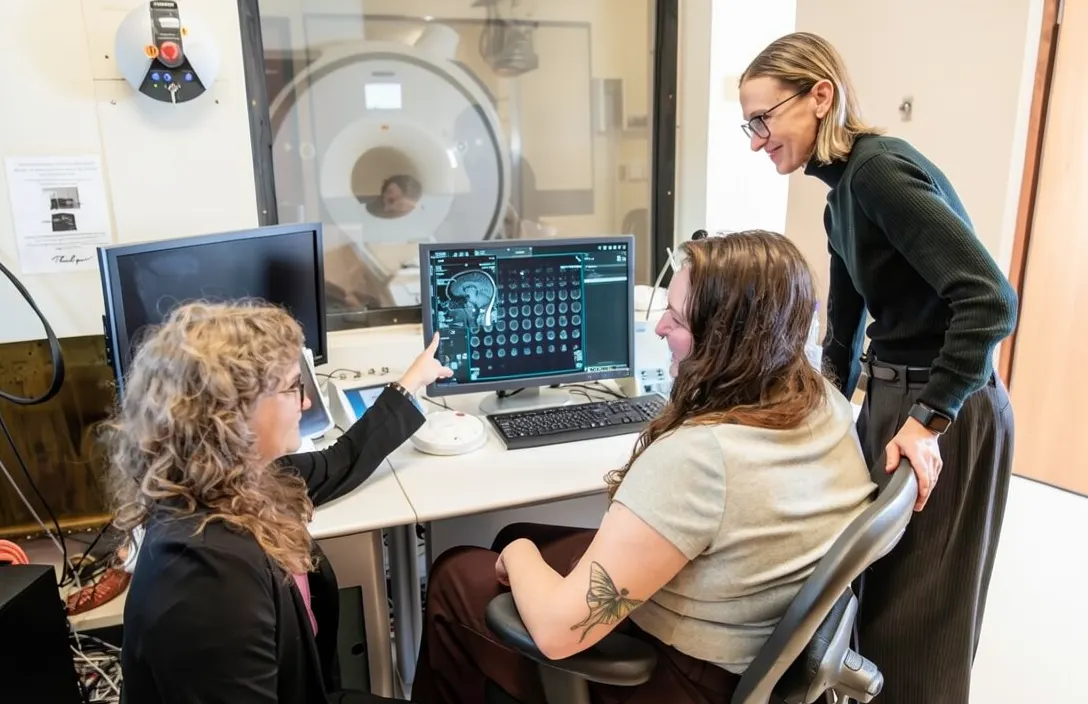
The team examined different outcomes—how much participants ate and how their brains responded to food—from the same experiment. Their earlier study showed that participants in the 18-to-21 age group ate more calories after the diet high in ultraprocessed food, even if they weren't hungry. The same was not true for those in the 22-to-25 age group. To examine what was happening in the brain, researchers used functional MRI before and after each two-week diet period (source ID: 1). [1]
A study published in the journal Obesity by Virginia Tech researchers found that young adults aged 18 to 21 showed altered brain responses to ultraprocessed foods, specifically in the orbitofrontal cortex, a region involved in food reward and decision-making (source ID: 1). The study found that younger participants, aged 18 to 21, exhibited a decreased brain response to a rewarding food—a milkshake—after consuming a diet high in ultraprocessed food. The findings suggest that younger individuals may be more vulnerable to the effects of ultraprocessed foods on brain function and eating behavior. [1]
To investigate the effects of food processing on young adults, researchers recruited 22 participants ages 18 to 25. Of those, seven were 21 or younger. Participants were randomly assigned to each diet for two weeks, with a four-week break between diets. One diet drew 81% of its calories from ultraprocessed foods. The other had none. The diets had the same macronutrient composition—50% carbohydrates, 35% fat and 15% protein. They had the same amount of fiber, added sugars, saturated fat, sodium, energy density and overall nutritional quality and were balanced for each participant's calorie needs to keep their weight stable (source ID: 1). [1]
Advertisement
The feeding trial was part of a collaboration between Alex DiFeliceantonio, an associate professor with the Fralin Biomedical Research Institute, and Brenda Davy, a professor with the university's Department of Human Nutrition, Foods, and Exercise. The team examined different outcomes—how much participants ate and how their brains responded to food—from the same experiment. Their earlier study showed that participants in the 18-to-21 age group ate more calories after the diet high in ultraprocessed food, even if they weren't hungry (source ID: 1). [1]
Sources
Prepared with AI assistance from the cited sources.
The Cali Reporter newsletter
The stories worth your time.
California, the country, and what comes next. Join our free newsletter for reporting that keeps you informed.
More in Health & Medicine
- Understanding Fascia and the Evidence Behind Fascia Release
Fascia is a connective tissue that plays a structural role in the human body, but evidence supporting specific exercises or tools for 'fascia release' remains limited.
- Antidepressant Effectiveness and Long-Term Use
A new review suggests that some antidepressants may be more effective than others in helping people manage depression symptoms over the long term, according to a study published in The Lancet Psychiatry.
- Experimental Weight-Loss Drug Shows Promise for Knee Osteoarthritis Pain
A new study suggests that an experimental weight-loss drug, retatrutide, may significantly reduce knee pain in people with osteoarthritis and obesity.