

Study Finds 4 In 10 Detroit And Flint Teens Feeling Hopeless Here’s Why Adults Are Struggling To Help
New research reveals the heavy backpacks of trauma and exhaustion plaguing southeast Michigan schools

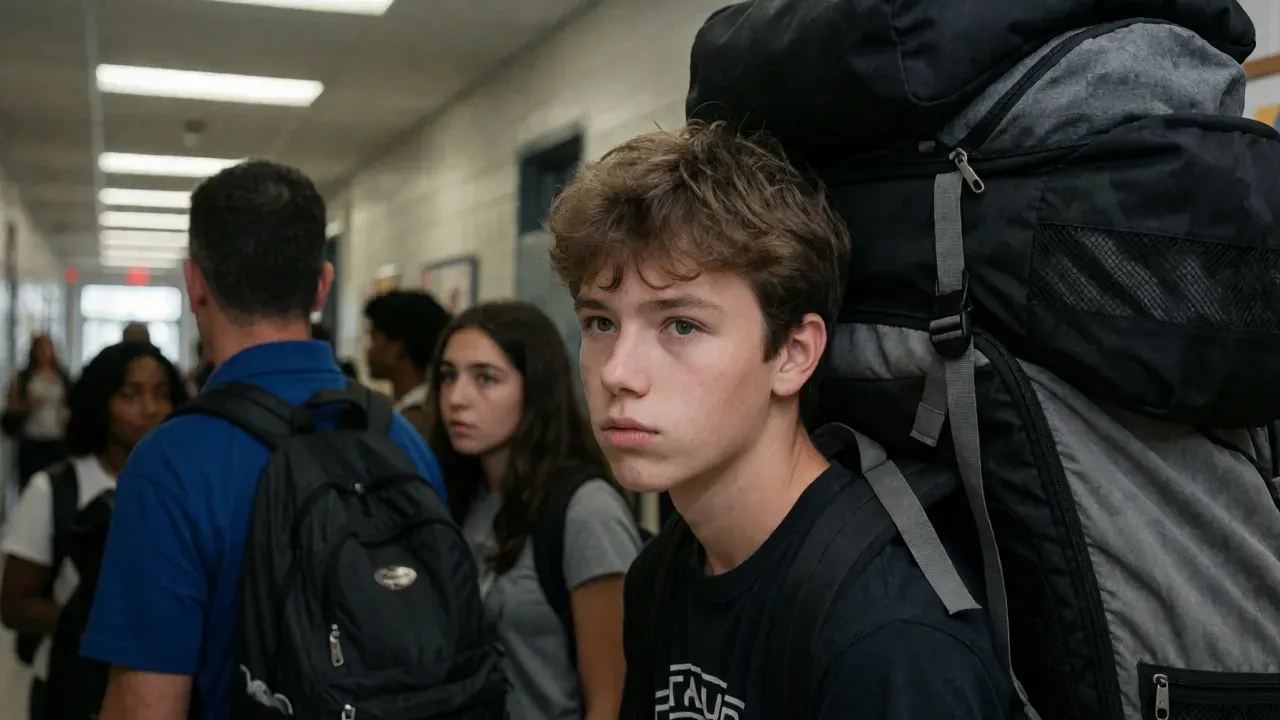
We often picture teenagers moving through the world with a heavy backpack filled with books and a water bottle. That physical weight is easy to see. The emotional and psychological weight carried by teens in southeast Michigan is often invisible to adults. But new research conducted in Detroit and Flint suggests that many young people are shouldering far more than academic requirements. They are carrying economic hardship exposure to adversity and discrimination family responsibilities and uncertainty about the future. A pediatric psychologist and researcher recently led focus groups in Detroit in 2024 and community advisory meetings in Flint in 2026 to understand this reality. The findings paint a picture of a generation feeling exhausted and overwhelmed by circumstances beyond their control.
The research team included members from Michigan State University Wayne State University and the University of Michigan. This collaborative effort involved five in-person focus groups with 25 school personnel at a Detroit public high school. The participants included teachers coaches administrators and support staff who see these students every day. Their insights were stark. They described students as often seeming physically and mentally worn down and checked out. One focus group attendee expressed a common sentiment when they said a lot of students feel exhausted. Every single day. The staff observed that even when a student has a bad day it is not an isolated event but a pattern that plays out every single day for months on end.
These observations are supported by national data from the Centers for Disease Control and Prevention. The CDC surveyed more than 20000 U.S. high school students in 2023 and found that nearly 4 in 10 experienced persistent sadness and hopelessness. Furthermore 1 in 5 high school students had seriously considered suicide. The local focus group data from Detroit mirrors these national findings. School personnel reported concerns about teens using substances like alcohol and marijuana getting into fights and having thoughts of suicide. These behaviors are frequently framed by the adults as consequences of unaddressed mental health challenges or as the students' best efforts to cope with stress.

It is important to note that not all teens are experiencing these challenges at the same rate. The CDC data highlights significant disparities based on gender and identity. Young women were about twice as likely as young men to have felt persistently sad and hopeless to have poor mental health to seriously consider suicide or to attempt suicide. Teens identifying as LGBTQ+ were two to three times more likely to experience these mental health challenges than their peers who identified as heterosexual and whose gender identity aligned with their sex assigned at birth. Additionally Black teens were less likely to report poor mental health but more likely to report attempting suicide than white teens. These statistics reveal that the mental health crisis is not uniform but hits specific communities with greater force.
Teens in these communities are navigating hardships that extend far beyond the classroom walls. Research suggests that by age 18 most youth will have been exposed to at least one potentially traumatic event or life circumstance that threatens their sense of safety stability or ability to form healthy relationships with others. These adverse childhood experiences or ACEs can include things like abuse witnessing or experiencing violence growing up in a household with substance use or mental health problems and experiencing instability due to parental separation or a family member being in prison. Detroit school personnel and Flint community-based advisory boards described how teen mental health concerns often stemmed from everyday life issues like housing instability serious financial strain and transportation difficulties. These challenges can be compounded by family stress such as parents working multiple jobs or extended hours to make ends meet caring for siblings or older family members or family conflict. Sometimes teens themselves work to support their families.
The weight of these realities is tangible. One educator told the research team They bring that baggage that drama that trauma to school with them. The people surrounding them all have similar situations. This shared environment creates a foundation of understanding but also perpetuates cycles of stress. The situation in Flint offers a stark reminder of these pressures. In August 2026 there were six shootings during a single weekend. Two were fatal and one victim was a teenage boy. Local leaders and community members including educators advocates and law enforcement remain concerned about youth gun violence in both Detroit and Flint. Ongoing efforts like the Community Safety Collaborative Dashboard are designed to prevent future incidents. Yet the trauma of these events lingers for the young people living through them.
The struggle is not limited to the students. Parents on advisory boards also talked about feeling overwhelmed by competing demands stress and concerns about teens' well-being. Educators in the focus groups discussed feeling responsible for supporting youth while lacking sufficient training and resources. Sometimes I feel like I'm helpless a participant shared. Others spoke about the lasting emotional toll of responding to student crises including suicide attempts. These findings mirror recent national data which indicates high levels of stress and burnout among parents and educators. There is a clear link between educator distress and poorer student mental health outcomes. When the adults are exhausted the system is less effective.
Addressing the mental health needs of teens requires more than just resources. It requires trust. In my role as a mom and my work with youth and caregivers in Michigan I regularly hear this sentiment from teens community members and parents: Create nothing for us without us. Their involvement is critical because young people often know best what gets in the way of seeking help. Teens do not always seek mental health help when they need it. They worry about being misunderstood lack the words to talk about difficult emotions and are not sure whom to trust or when to share their concerns. Research suggests that safe spaces where providers are trustworthy and affirm all aspects of teens identities and where teens feel seen and understood are the foundation for all other mental health supports.
Grounded in these ideas our team developed a model to train school staff. This model aims to help staff recognize and support students with physical and mental health concerns while connecting them to additional services when needed. However access to care in the community remains a significant challenge. A recent survey of Detroit residents identified a lack of mental health services a shortage of qualified professionals and too few mental health facilities as big reasons it is hard to find and access mental health care when it is needed. Building the infrastructure is only part of the solution. The design of the solution must include the people it is meant to serve.
What do teens say they actually need? In 2025 we organized an advisory board of 12- to 17-year-olds based in Flint. They meet every few months to help us develop a program to promote teen well-being. The members of this board gave clear and consistent feedback. They want programs that include food fun social connection and mentorship without lectures or judgment. They want spaces where they can speak openly around safe adults and conversations that focus on strengths rather than problems and shortcomings. Programs should be about life-bettering one teen told us.
These messages provide a crucial roadmap for adults and policymakers. Young people are not simply asking adults to prevent crises. They are asking for the relationships opportunities and supports needed to build healthy meaningful and thriving lives. The heavy backpacks are real and the load is heavy. But the path forward involves not just carrying the load but finding ways to lighten it through genuine connection and community investment. The mental health of Detroit and Flint teens is a systemic issue that requires systemic solutions grounded in the voices of those most affected.
First reported by Medical Xpress.
More in Health & Nutrition
- Long-term opioid use fails to alleviate chronic back pain, Northwestern University study suggests
Researchers identified distinct brain activity patterns and molecular markers that may guide future treatments for pain management and opioid tapering.
- Human tau seeds trigger disease-specific shapes in mouse brains, new study finds
Study in Nature shows that injectable human tau aggregates from Alzheimer’s and corticobasal degeneration template their 3D folds onto mouse tau, supporting the prion-like seeding model.
- Menopause Largely Missing from Electronic Health Records Despite Its Health Impact
study of nearly 240,000 women finds only 12% of electronic records include menopause status, even though over half reported being in transition.