

Ateneo Researchers Prove AI Cuts TB Screening Costs by 23% in Rural Philippines
AI reduces costs per patient but requires pilot testing before nationwide rollout.

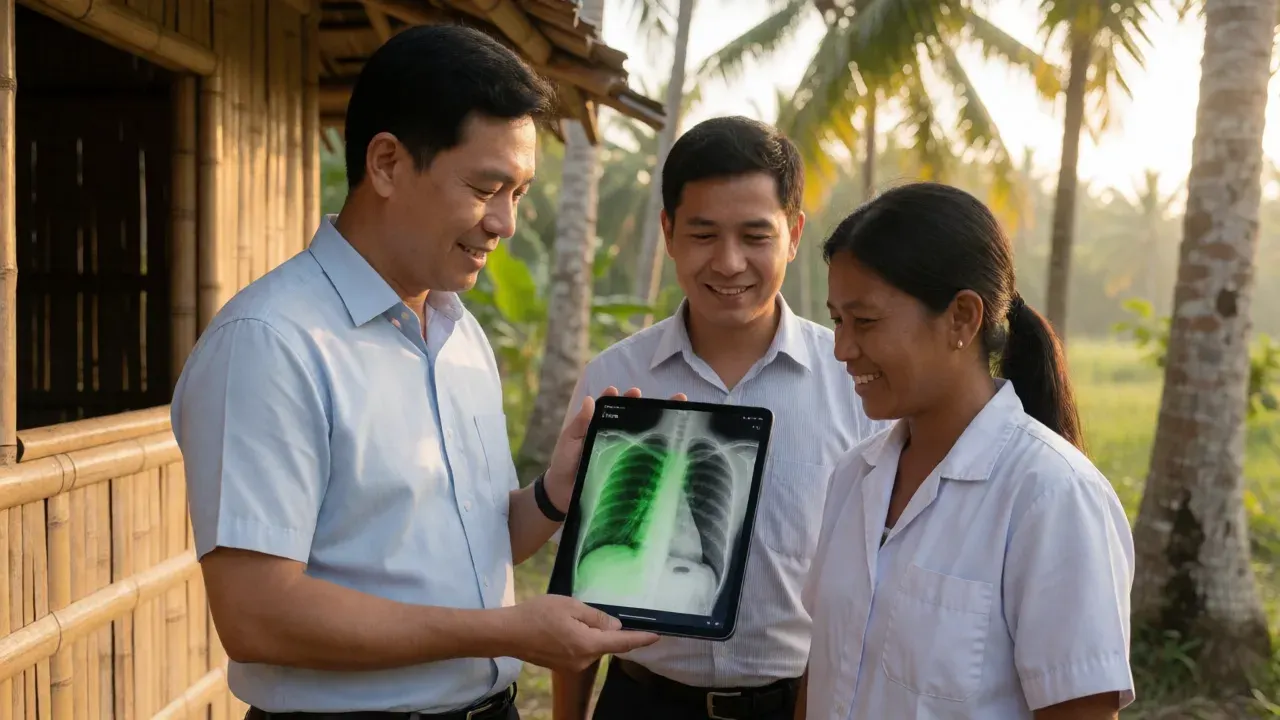
In the landscape of global public health, few diseases challenge systems quite like tuberculosis. The World Health Organization reports that in 2024 alone, an estimated 739,000 people in the Philippines developed tuberculosis. This figure accounts for 6.8 percent of the 10.8 million tuberculosis cases recorded worldwide. As a clinician, I view these numbers not merely as statistics but as a call to action. Early detection of tuberculosis is vital because identifying the disease early allows for treatment before it causes irreversible damage to the lungs or spreads to others. However, the infrastructure required to achieve this early detection is often unevenly distributed.
For patients residing in geographically isolated or disadvantaged communities, the gap is stark. Even when a patient manages to secure a chest radiograph, the interpretation process can become a bottleneck. In rural health units, waiting for a radiologist or utilizing teleradiology services can take significant time. This delay often forces patients to make another trip to a health facility. This adds financial strain and time away from work. For vulnerable populations, these logistical hurdles can mean missed opportunities for continuous care. This accessibility gap is the specific focus of a new study from Ateneo researchers.
The research team, led by Harold Henrison Chiu, Bryan Christopher Lao, and Gloanne C. Adolor, published their findings in the August 2026 issue of BMC Health Services Research. Their study, titled "Cost-effectiveness evaluation of artificial intelligence-assisted chest radiograph interpretation for tuberculosis screening in rural health units in the Philippines," utilizes a decision-analytic model. This is a standard method in health economics used to help clinicians and policymakers determine the value of a medical intervention. The researchers developed this model based on a theoretical annual cohort of 1,000 patients with suspected tuberculosis undergoing chest radiography. The analysis considered costs and outcomes over a five-year period. This timeframe is critical because tuberculosis treatment and monitoring are long-term processes.

When we examine the data from this model, the distinction between absolute and relative costs becomes clear. The study projected that the AI-assisted strategy would cost an estimated Php 877,330 annually. In contrast, the manual interpretation strategy cost Php 1.14 million. When we divide these figures across the 1,000 screened individuals, the cost per person becomes visible. The AI-assisted approach cost about Php 877 per person. The manual approach cost about Php 1,142 per person. The model indicates that the AI-assisted strategy was less expensive. While we must always be cautious with theoretical models, this suggests a tangible reduction in the financial burden of screening.
However, the significance of this technology extends beyond simple cost savings. The researchers emphasize that for resource-constrained communities, the most critical question is not whether AI can simply outperform or assist an expert reader. Instead, the question is whether it can extend expert-level support to places where expertise is scarce. The goal is to make healthcare affordable, sustainable, and equitable. The researchers suggest that AI could help bring TB screening closer to underserved communities. This requires integrating portable digital X-rays and systems that can operate with limited connectivity. The ultimate goal is to narrow existing geographic disparities rather than introduce another high-tech tool into the system.
We must also acknowledge the limitations of this specific study. The findings are based on a theoretical cohort and assumptions regarding costs and diagnostic accuracy. An AI-assisted finding is not a final diagnosis. It still requires confirmatory testing, such as GeneXpert. Therefore, the researchers recommend a phased approach. Rather than immediate nationwide adoption, they suggest starting with targeted pilot implementations in underserved rural health units. This approach allows for local validation, quality assurance, and budget assessment.
From a clinical and economic standpoint, the integration of AI in public health holds promise. It offers a potential pathway to make essential screening tools more accessible to those who need them most. However, technology must be deployed thoughtfully to ensure it serves the patient rather than complicating the workflow.
First reported by Swati Mestri and Robert Egan.
First reported by Medical Xpress.
More in Health & Nutrition
- Long-term opioid use fails to alleviate chronic back pain, Northwestern University study suggests
Researchers identified distinct brain activity patterns and molecular markers that may guide future treatments for pain management and opioid tapering.
- Human tau seeds trigger disease-specific shapes in mouse brains, new study finds
Study in Nature shows that injectable human tau aggregates from Alzheimer’s and corticobasal degeneration template their 3D folds onto mouse tau, supporting the prion-like seeding model.
- Menopause Largely Missing from Electronic Health Records Despite Its Health Impact
study of nearly 240,000 women finds only 12% of electronic records include menopause status, even though over half reported being in transition.