

States across the wildfire-prone Western US are using AI for early detection
AI cameras in California are beating 911 calls to wildfires, containing blazes before they explode, yet the state still can't outrun the climate-driven fires it helped fuel.
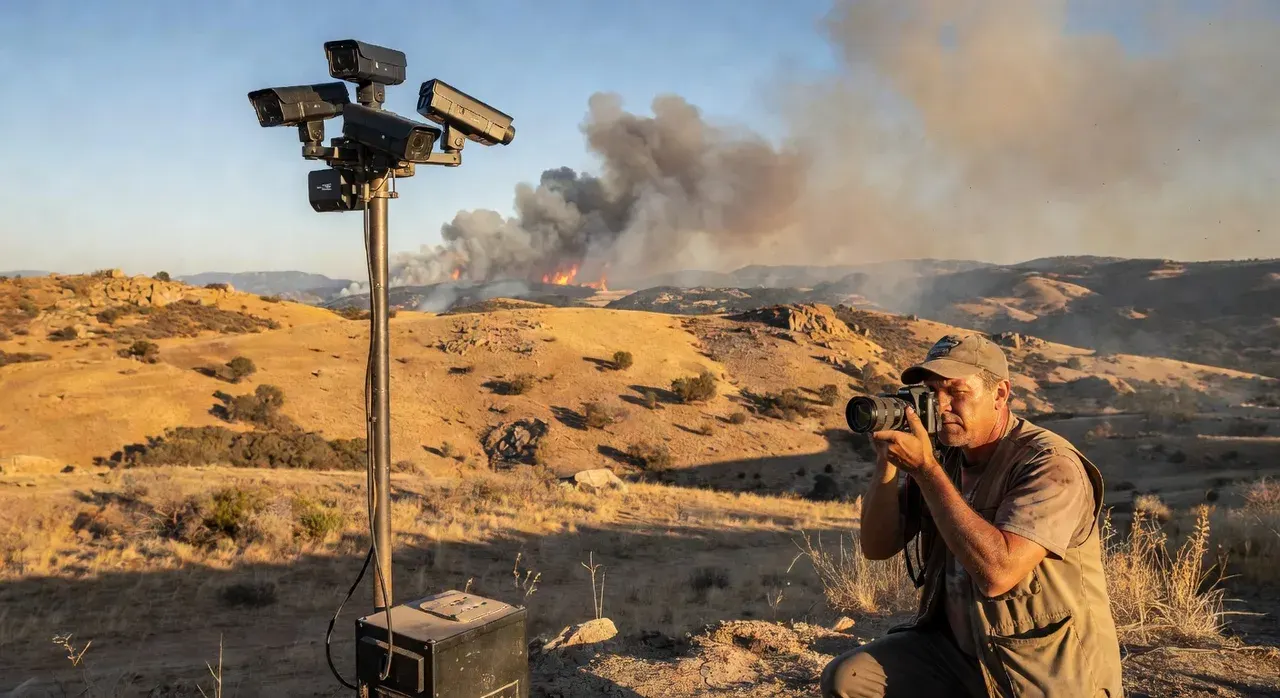
In March, an AI camera in Arizona’s Coconino National Forest spotted smoke that wasn’t a cloud or dust. Analysts confirmed it, alerts went out, and firefighters killed the Diamond Fire at under 7 acres. The same systems now blanket California’s high-risk zones, where 1,240 AI-enabled cameras routinely detect fires before residents pick up the phone.
California’s ALERTCalifornia network, built by UC San Diego’s Neal Driscoll, is outperforming human reporting. Battalion Chief Brent Pascua of Cal Fire says his teams have launched responses and extinguished blazes in remote areas “before 911 was even called,” sometimes never receiving a civilian report at all. Earlier detection, officials insist, means aircraft and crews can strike while fires remain small.
The technology’s spread is accelerating. Arizona Public Service runs nearly 40 AI smoke-detection cameras and will reach 71 by summer’s end; Xcel Energy has 126 installed across its territory. Pano AI, whose high-definition cameras and satellite feeds power much of this, reported detecting 725 U.S. wildfires last year. Its co-founder Arvind Satyam claims the visual intelligence often delivers a head start that prevents fires from reaching “hundreds if not thousands of acres.” An Arizona Public Service meteorologist puts the average advantage at 45 minutes faster than the first 911 call.

Yet the limitations are stark. Each Pano AI camera costs about $50,000 annually. False alarms drain time and attention, Patrick Roberts of RAND notes, and the system offers no tactical advice on whether to attack, monitor, evacuate, or where to send resources first. In dense urban areas or when hurricane-force winds whip flames, as in last year’s Los Angeles fires, the tech adds little. Pascua is blunt: “As the fire moves and shifts around, that’s where the human factor comes in. AI can only do so much.”
The push for AI arrives amid record heat, abysmal snowpack, and the very climate dynamics Satyam attributes to “burning oil, gas and coal.” California, which has spent years lecturing the nation on emissions, now relies on private tech to buy minutes against the infernos its policies failed to prevent. Driscoll says the AI is “actually beating 911 calls,” but beating 911 doesn’t stop the next megafire when vegetation management lags and extreme weather overrides every sensor.
The real test is coming. George Mason University’s Chaowei “Phil” Yang is building AI that forecasts burn paths and smoke plumes, promising real-time evacuation maps within three years. Roberts predicts AI will soon be everywhere, blurring into standard detection. The question California cannot yet answer: if cameras see the smoke first but the state still can’t keep fires from devouring hundreds of thousands of acres each season, how much have we actually gained?
Original reporting: KPBS.
More in California
- UC Berkeley Lab Proposes New Civic Framework for California’s Next Governor
A research-driven agenda calls for institutionalizing 'co-governance' to address low public trust and lack of resident influence in state decision-making.
- Five Tax Measures on California’s Ballot Aim to Reshape State Finances
Propositions 3, 40–43 would alter income, wealth and local taxation rules—marking the highest number of tax measures on a general election ballot since 1994.
- Catalina Helicopter Crash Highlights Risks of Island Medevac Flights
A medical evacuation chopper carrying Catalina Romero, pilot, and nurse Jessica Devries crashed into the ocean shortly after takeoff, killing all three; federal investigators are assessing causes including night flying, spatial disorientation, and the island’s challenging Pebbly Beach heliport.