SpaceX Dragon Mission Returns Cargo to Earth
A SpaceX Dragon spacecraft is set to return to Earth with thousands of pounds of scientific research and hardware, marking a significant milestone in the agency’s ongoing collaboration with NASA.

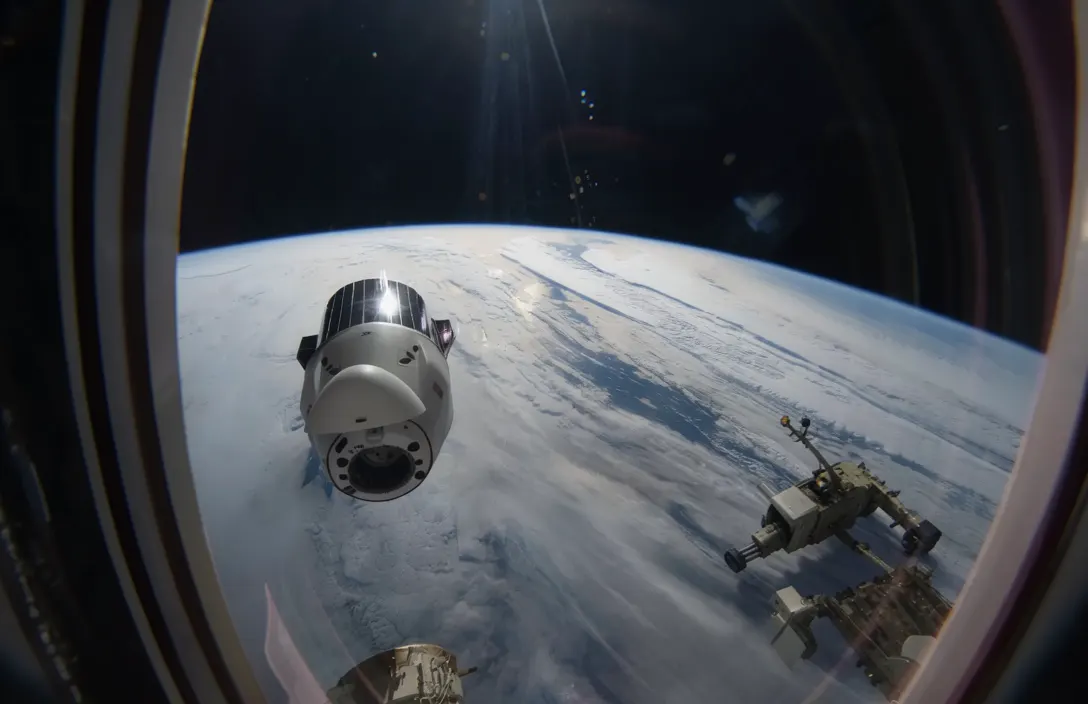
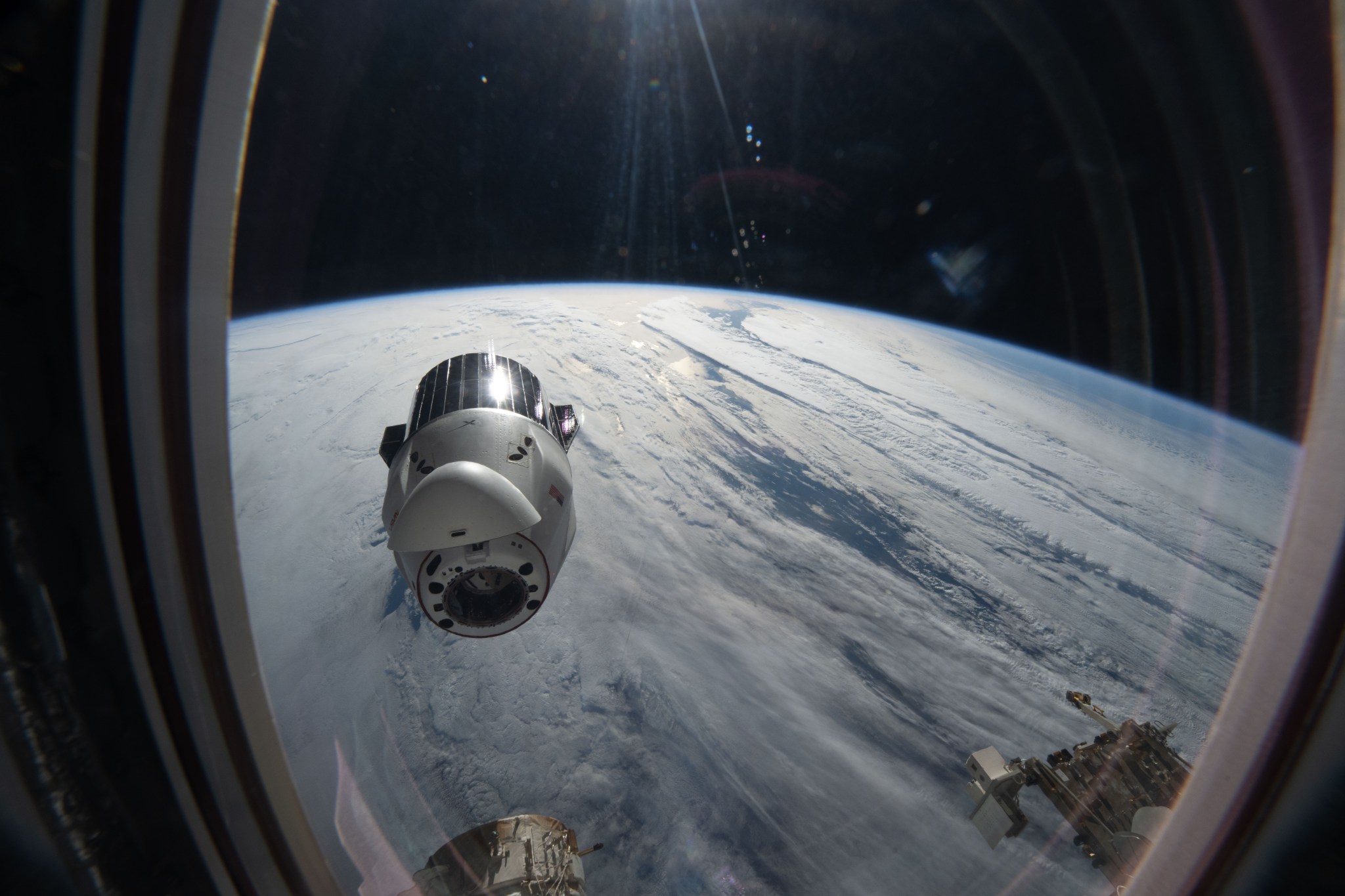
NASA and its international partners are set to receive scientific research samples and hardware as a SpaceX Dragon spacecraft departs the International Space Station no earlier than Wednesday, Nov. 18, for its return to Earth. Pending weather conditions, the Dragon spacecraft will undock from the Harmony module’s space-facing port at 11:05 a.m. EST, following a command sent by ground controllers at SpaceX’s facility in Hawthorne, California (Source ID: 1). [1]
NASA’s live coverage of undocking and departure begins at 10:45 a.m., streaming through a variety of platforms. Learn where to watch online: https://www.nasa.gov/live. Teams will adjust plans as needed based on splashdown conditions in the Dragon recovery area and will provide updates on splashdown timing when available (Source ID: 1). [1]
Thousands of pounds of cargo are returning from the space station, including research samples that could advance future space exploration and improve life on Earth. The returning research includes a 3D-bioprinted blood vessel construct scientists used to study vascular aging and cardiovascular disease in space and on Earth. Frozen tumor organoids treated aboard the station also will return, helping researchers identify new ways to improve cancer treatments and advance personalized medicine (Source ID: 1). [1]
NICER was installed near the International Space Station’s starboard solar array in 2017, a location chosen to optimize its view of the X-ray universe while minimizing interference from the station’s structures. The telescope has operated in this position for over eight years, during which it has conducted extensive observations of neutron stars, black holes, and other cosmic phenomena. The starboard solar array is a critical area of the station, housing essential power-generating components, and NICER’s placement there reflects a balance between scientific utility and operational constraints. This location has also allowed NICER to remain relatively stable, though the recent motor failure has limited its ability to reposition itself for optimal viewing angles. [4]
Advertisement
The project scope of NICER initially included an 18-month prime mission, with the primary goal of studying neutron stars and their extreme physical properties. However, the mission has far exceeded its planned duration, operating for over eight years and producing a vast archive of X-ray data. The telescope has contributed to advancements in astrophysics, including the study of pulsar-based navigation, which could enable future spacecraft to use pulsar signals for autonomous navigation in deep space. NICER’s extended operations have also allowed it to make groundbreaking discoveries, such as measuring the mass and radius of neutron stars with unprecedented precision, which has deepened scientific understanding of dense matter in the universe. [4]
The history of NICER includes several key milestones, including its launch in 2017, the initial 18-month mission, and subsequent extensions that have allowed it to make scientific contributions far beyond its original objectives. In 2023, a light leak was discovered, which led to a spacewalk in January 2025 to install patches on the telescope’s thermal shields. This repair was followed by a reconfiguration of its detectors to mitigate the effects of sunlight contamination. In June 2025, a motor failure caused NICER to lose its ability to swivel side-to-side, leading to a pause in science operations. Engineers are now working to determine whether the motor can be repaired or if the telescope will be decommissioned and detached from the station. [4]
Documented limits of NICER include the motor failure that has restricted its ability to move beyond its current orientation, which has limited its capacity to track cosmic objects effectively. Additionally, the light leak in 2023 resulted in a reduction of daytime observations, as sunlight entered the telescope’s sensitive detectors, overwhelming its systems. The team had to implement software updates and hardware repairs to mitigate these effects, though some limitations remain. The telescope’s current placement near the starboard solar array also restricts its field of view during certain times of the orbit, necessitating strategic planning of observations. NICER’s operations have been further constrained by the need to avoid interfering with station activities, which has required periodic stowage of the telescope. [4]
NASA and its international partners are set to receive scientific research samples and hardware as a SpaceX Dragon spacecraft departs the International Space Station no earlier than Wednesday, Nov. 18, for its return to Earth. Pending weather conditions, the Dragon spacecraft will undock from the Harmony module’s space-facing port at 11:05 a.m. EST, following a command sent by ground controllers at SpaceX’s facility in Hawthorne, California (Source ID: 1). [1]
Advertisement
NASA’s live coverage of undocking and departure begins at 10:45 a.m., streaming through a variety of platforms. Learn where to watch online: https://www.nasa.gov/live (Source ID: 1). [1]
Teams will adjust plans as needed based on splashdown conditions in the Dragon recovery area and will provide updates on splashdown timing when available. NASA will not stream the splashdown but will post updates on its space station blog (Source ID: 1). [1]
Thousands of pounds of cargo are returning from the space station, including research samples that could advance future space exploration and improve life on Earth. The returning research includes a 3D-bioprinted blood vessel construct scientists used to study vascular aging and cardiovascular disease in space and on Earth (Source ID: 1). [1]
NASA and its international partners are set to receive scientific research samples and hardware as a SpaceX Dragon spacecraft departs the International Space Station no earlier than Wednesday, Nov. 18, for its return to Earth. Pending weather conditions, the Dragon spacecraft will undock from the Harmony module’s space-facing port at 11:05 a.m. EST, following a command sent by ground controllers at SpaceX’s facility in Hawthorne, California (Source 1). [1]
Advertisement
NASA’s live coverage of undocking and departure begins at 10:45 a.m., streaming through a variety of platforms. Learn where to watch online: https://www.nasa.gov/live. Teams will adjust plans as needed based on splashdown conditions in the Dragon recovery area and will provide updates on splashdown timing when available. NASA will not stream the splashdown but will post updates on its space station blog (Source 1). [1]
Thousands of pounds of cargo are returning from the space station, including research samples that could advance future space exploration and improve life on Earth. The returning research includes a 3D-bioprinted blood vessel construct scientists used to study vascular aging and cardiovascular disease in space and on Earth. Frozen tumor organoids treated aboard the station also will return, helping researchers identify new ways to improve cancer treatments and advance personalized medicine (Source 1). [1]
Sources
Prepared with AI assistance from the cited sources.
The Cali Reporter newsletter
The stories worth your time.
California, the country, and what comes next. Join our free newsletter for reporting that keeps you informed.
More in Science
- Volcanic Eruption Reshapes Iwo Jima’s Coastline
A recent volcanic eruption near Iwo Jima has temporarily extended the island's black sand beaches, though the longevity of the new land remains uncertain.
- Galaxies in the NGC 7771 Group Engage in Cosmic Merger
Astronomers have observed a group of galaxies in the NGC 7771 Group, which is located approximately 200 million light-years away in the constellation Pegasus. These galaxies are in the process of merging, a phenomenon…
- NASA Awards Contract for NOAA’s Near Earth Orbit Network Program
NASA has awarded a contract to Northrop Grumman Systems Corporation for the Sounder for Microwave-Based Applications (SMBA) instruments on NOAA’s Near Earth Orbit Network (NEON) satellites. The contract includes a…