Galaxies in the NGC 7771 Group Engage in Cosmic Merger
Astronomers have observed a group of galaxies in the NGC 7771 Group, which is located approximately 200 million light-years away in the constellation Pegasus. These galaxies are in the process of merging, a phenomenon…

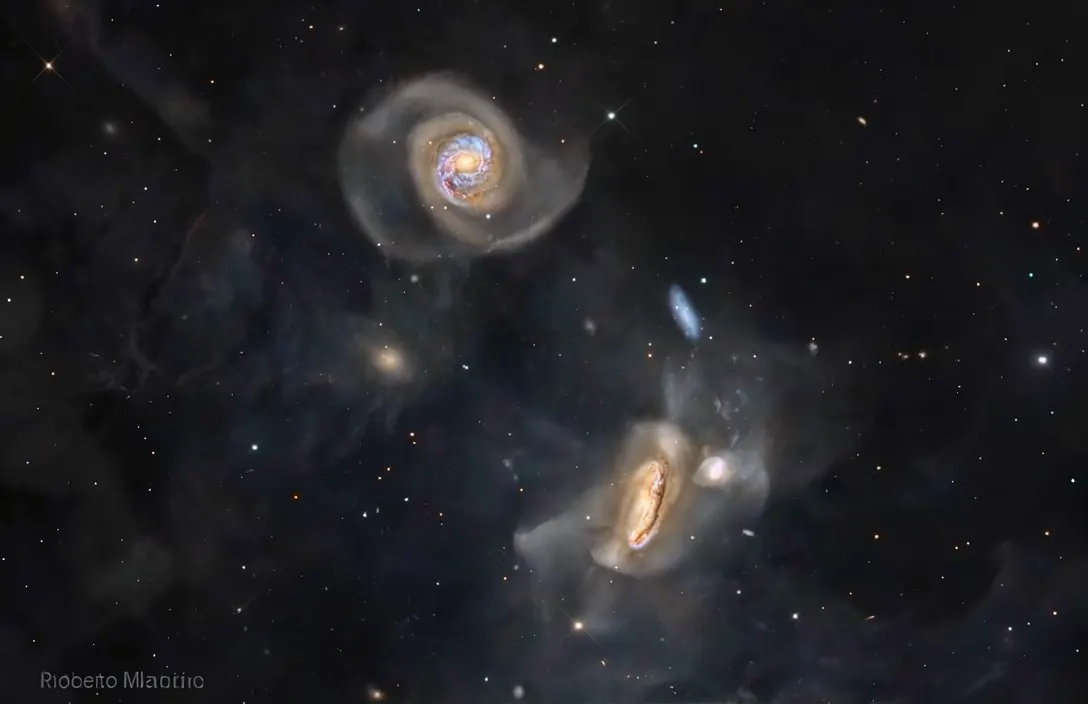
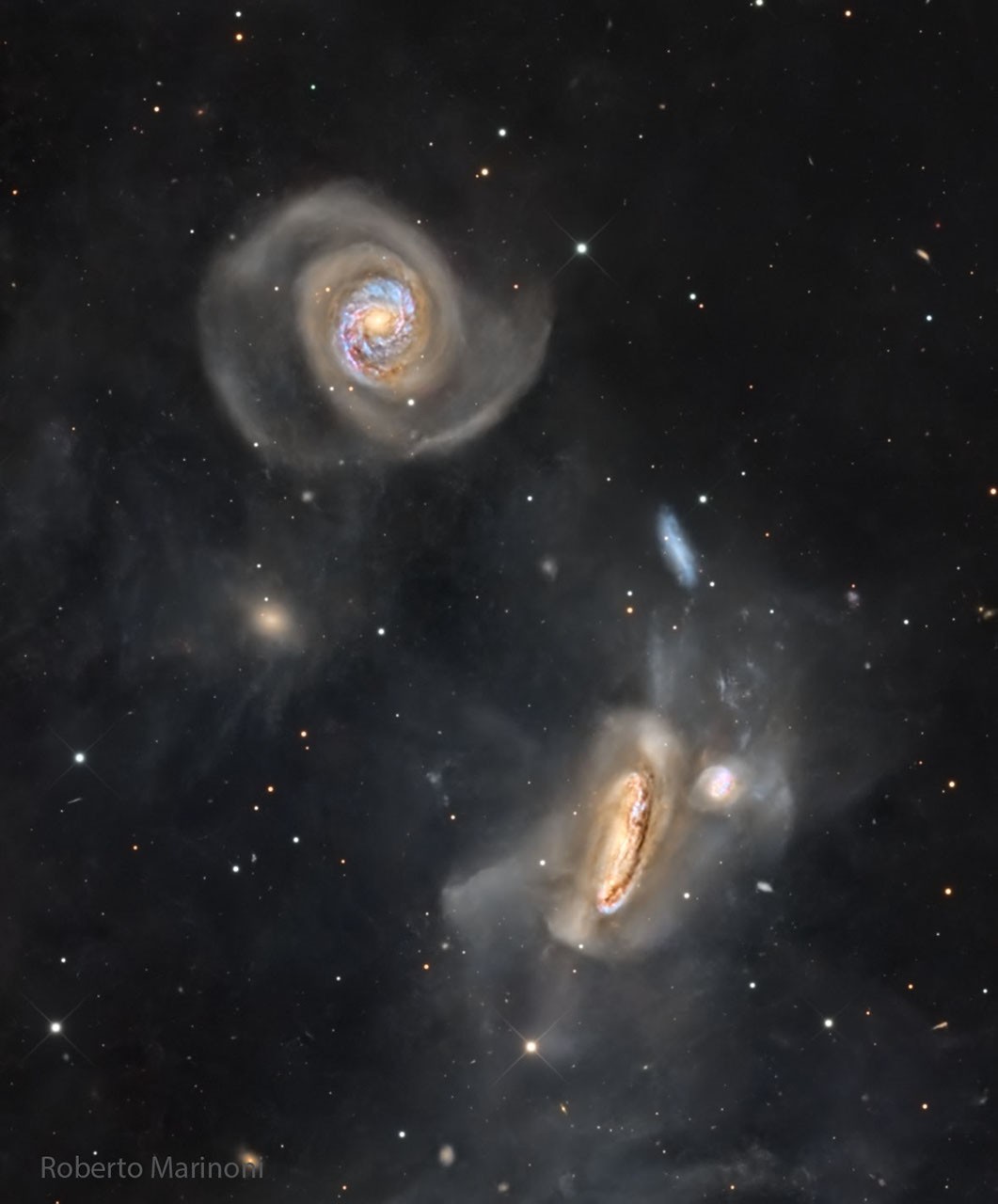
The NGC 7771 Group consists of multiple galaxies, including the barred spiral galaxy NGC 7771 and the spiral galaxy NGC 7769, which are both nearly 75,000 light-years across. These galaxies are engaged in gravitational interactions, as evidenced by the visible rings and faint star swirls in images captured by NASA. These features indicate past and ongoing encounters between the galaxies. The process of gravitational interaction is a normal part of galaxy evolution, as described in the explanation provided by NASA's Astronomy Picture of the Day (APOD) service. [1] [3]
The galaxies in the NGC 7771 Group are expected to merge over billions of years, eventually forming a single large galaxy. This process is similar to the potential future merger between the Milky Way and the Andromeda galaxies, which is also expected to occur over a very long timescale. The study of such galaxy mergers helps scientists better understand the dynamics of galaxy evolution and the formation of larger cosmic structures. This information is detailed in the APOD explanation provided by NASA. [1] [3]
The NGC 7771 Group is located in the constellation Pegasus and is approximately 200 million light-years away from Earth. The images and explanations about this group of galaxies are featured on NASA's APOD website, which provides daily images and explanations of astronomical phenomena. These resources are used by professional astronomers and are made available to the public through NASA's Science Activation program and Michigan Tech University. [1] [3]
The NGC 7771 Group includes the barred spiral galaxy NGC 7771 and the spiral galaxy NGC 7769, both of which are nearly 75,000 light-years across. These galaxies are part of a larger group that is expected to merge over billions of years, forming a single large galaxy (NASA, 2026). The group is located in the constellation Pegasus and is approximately 200 million light-years away from Earth (NASA, 2026). [1] [3]
Advertisement
The galaxies in the NGC 7771 Group are already showing signs of gravitational interactions, such as rings and faint star swirls from previous encounters. These interactions are part of the natural process of galaxy evolution, where repeated close passages between galaxies eventually lead to mergers (NASA, 2026). The merger process is understood to be a normal part of the evolution of galaxies (NASA, 2026). [1] [3]
Studying galaxy mergers like those in the NGC 7771 Group helps scientists better understand similar processes that may occur in our own Milky Way and the Andromeda galaxy. These observations provide insights into how galaxies evolve over time and how such mergers shape the structure of the universe (NASA, 2026). [1] [3]
The NGC 7771 Group consists of multiple galaxies, including the barred spiral galaxy NGC 7771 and the spiral galaxy NGC 7769, which are both nearly 75,000 light-years across (source ID 1). These galaxies are located in the constellation Pegasus and are approximately 200 million light-years away from Earth (source ID 1). [1]
The galaxies in the NGC 7771 Group are already showing signs of gravitational interactions, such as rings and faint star swirls from previous encounters (source ID 1). These interactions are expected to continue as the galaxies make repeated close passages, eventually merging into one large galaxy (source ID 1). [1]
Advertisement
Studying galaxy mergers like those in the NGC 7771 Group helps scientists better understand similar processes that may occur in our own Milky Way and the Andromeda galaxy (source ID 1). The merger process is understood to be a normal part of the evolution of galaxies (source ID 1). [1]
The NGC 7771 Group consists of multiple galaxies, including the barred spiral galaxy NGC 7771 and the spiral galaxy NGC 7769, both of which are nearly 75,000 light-years across (source ID 1). These galaxies are located in the constellation Pegasus and are approximately 200 million light-years away from Earth (source ID 1). [1]
The galaxies in the NGC 7771 Group are already showing signs of gravitational interactions, such as rings and faint star swirls from previous encounters (source ID 1). These interactions are a result of repeated close passages between the galaxies, which are expected to eventually lead to a merger (source ID 1). [1]
Studying galaxy mergers like those in the NGC 7771 Group helps scientists better understand similar processes that may occur in our own Milky Way and the Andromeda galaxy (source ID 1). This research is essential for understanding the long-term evolution of galaxies and the potential future of our own galaxy (source ID 1). [1]
Advertisement
The Cali Reporter newsletter
The stories worth your time.
California, the country, and what comes next. Join our free newsletter for reporting that keeps you informed.
More in Science
- Volcanic Eruption Reshapes Iwo Jima’s Coastline
A recent volcanic eruption near Iwo Jima has temporarily extended the island's black sand beaches, though the longevity of the new land remains uncertain.
- NASA Awards Contract for NOAA’s Near Earth Orbit Network Program
NASA has awarded a contract to Northrop Grumman Systems Corporation for the Sounder for Microwave-Based Applications (SMBA) instruments on NOAA’s Near Earth Orbit Network (NEON) satellites. The contract includes a…
- NASA Releases Documentary on Europa Clipper Mission
NASA has released a documentary detailing the development and launch of the Europa Clipper spacecraft, which is now two years into its journey to Jupiter’s moon Europa.