NASA Releases Documentary on Europa Clipper Mission
NASA has released a documentary detailing the development and launch of the Europa Clipper spacecraft, which is now two years into its journey to Jupiter’s moon Europa.


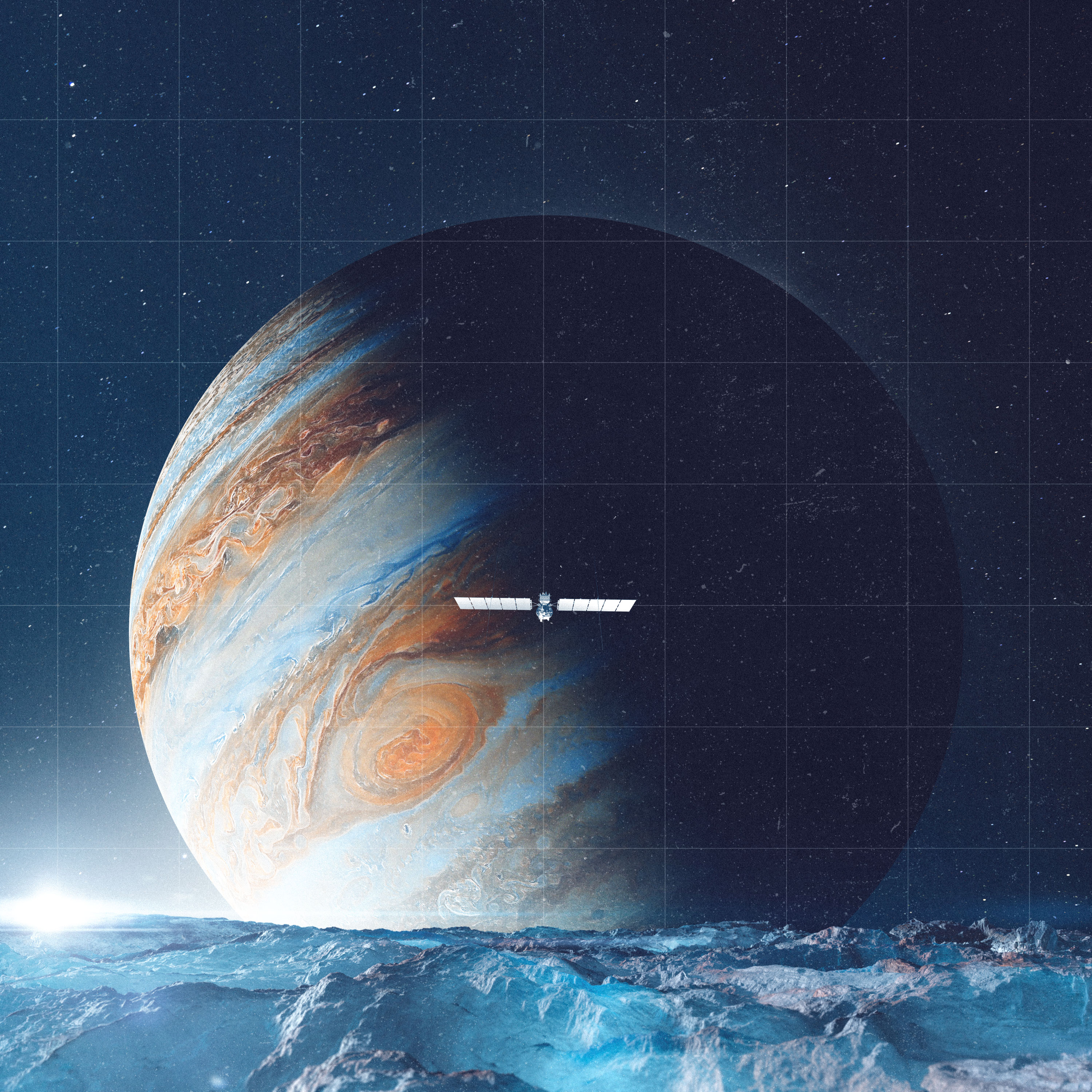
NASA has released a documentary titled “The Europa Concept” that chronicles the development of the Europa Clipper mission, which aims to explore Jupiter’s moon Europa for signs of life. The documentary, available on NASA+, the NASA app, and the agency’s website, highlights the decades of science and collaboration required to build the spacecraft, which launched in 2024. The mission is two years into its five-year, 1.8 billion-mile journey to the Jupiter system, where it will conduct flybys of Europa to investigate the potential for life in the moon’s subsurface ocean. Credit: NASA/JPL-Caltech (source ID: 1). [1]
The spacecraft, the largest NASA has ever sent into deep space, was developed over an 11-year period with contributions from multiple NASA centers and partners. The mission faced significant challenges, including a global pandemic and, just before launch, a Category 5 hurricane and tornadoes near NASA’s Kennedy Space Center in Florida. Despite these obstacles, the team successfully completed the spacecraft and launched it on October 14, 2024, aboard a SpaceX Falcon Heavy rocket. (source ID: 3). [3]
The documentary captures the journey of engineers and scientists who worked to design a spacecraft capable of surviving Jupiter’s harsh radiation environment, which may have contributed to creating a potentially habitable environment on Europa. The mission builds on data collected by previous NASA missions, including the Pioneer, Voyager, Galileo, Cassini, and Juno spacecraft, which provided early insights into Europa’s surface and potential subsurface ocean. (source ID: 1). [1]
Europa Clipper is equipped with nine science instruments, including radar antennas, a magnetometer, and plasma sensors, designed to investigate the moon’s surface and subsurface. The spacecraft will orbit Jupiter and perform nearly 50 flybys of Europa over the course of its mission, transmitting data back to Earth for analysis. The mission is expected to reach Jupiter in 2030 and will spend about a year adjusting its orbit before beginning its flybys. (source ID: 3). [3]
Advertisement
NASA has released a documentary titled “The Europa Concept” that chronicles the development of the Europa Clipper mission, which aims to explore Jupiter’s moon Europa for signs of life. The documentary, which will air on NASA+, the NASA app, and the agency’s website starting Monday, Nov. 23, highlights the journey of engineers and scientists who worked to design a spacecraft capable of surviving Jupiter’s harsh radiation environment. This environment, a product of Jupiter’s powerful magnetic field, may have contributed to creating a potentially habitable environment on Europa (source ID: 1). [1]
Europa Clipper, the largest spacecraft NASA has ever sent into deep space, is now two years into its five-year, 1.8 billion-mile (2.9 billion-kilometer) journey to the Jupiter system. The mission, which officially began at NASA’s Jet Propulsion Laboratory in 2013, faced numerous challenges over its 11-year development period, including a global pandemic and, just before launch on Oct. 14, 2024, a Category 5 hurricane and tornadoes near NASA’s Kennedy Space Center in Florida (source ID: 1). [1]
The spacecraft, which launched on a SpaceX Falcon Heavy rocket from Kennedy Space Center in Florida, will reach Jupiter in 2030. After beginning its orbit around Jupiter, Europa Clipper will spend about a year altering its trajectory to prepare for its first Europa flyby. The spacecraft will then conduct nearly 50 flybys of Europa over the course of its mission, sending data back to Earth (source ID: 3). [3]
The documentary also highlights the collaborative effort among multiple NASA centers and partners in developing the spacecraft. The main spacecraft body was designed by the Johns Hopkins Applied Physics Laboratory in collaboration with NASA’s Jet Propulsion Laboratory, Goddard Space Flight Center, Marshall Space Flight Center, and Langley Research Center. The Planetary Missions Program Office at NASA Marshall executes program management of the Europa Clipper mission (source ID: 1). [1]
Advertisement
Sources
Prepared with AI assistance from the cited sources.
The Cali Reporter newsletter
The stories worth your time.
California, the country, and what comes next. Join our free newsletter for reporting that keeps you informed.
More in Science
- Volcanic Eruption Reshapes Iwo Jima’s Coastline
A recent volcanic eruption near Iwo Jima has temporarily extended the island's black sand beaches, though the longevity of the new land remains uncertain.
- Galaxies in the NGC 7771 Group Engage in Cosmic Merger
Astronomers have observed a group of galaxies in the NGC 7771 Group, which is located approximately 200 million light-years away in the constellation Pegasus. These galaxies are in the process of merging, a phenomenon…
- NASA Awards Contract for NOAA’s Near Earth Orbit Network Program
NASA has awarded a contract to Northrop Grumman Systems Corporation for the Sounder for Microwave-Based Applications (SMBA) instruments on NOAA’s Near Earth Orbit Network (NEON) satellites. The contract includes a…