

Should grizzly bears roam California again?
California lawmakers want to reintroduce grizzly bears more than a century after the last one died, but rural communities that would face the risks aren't buying the symbolism.
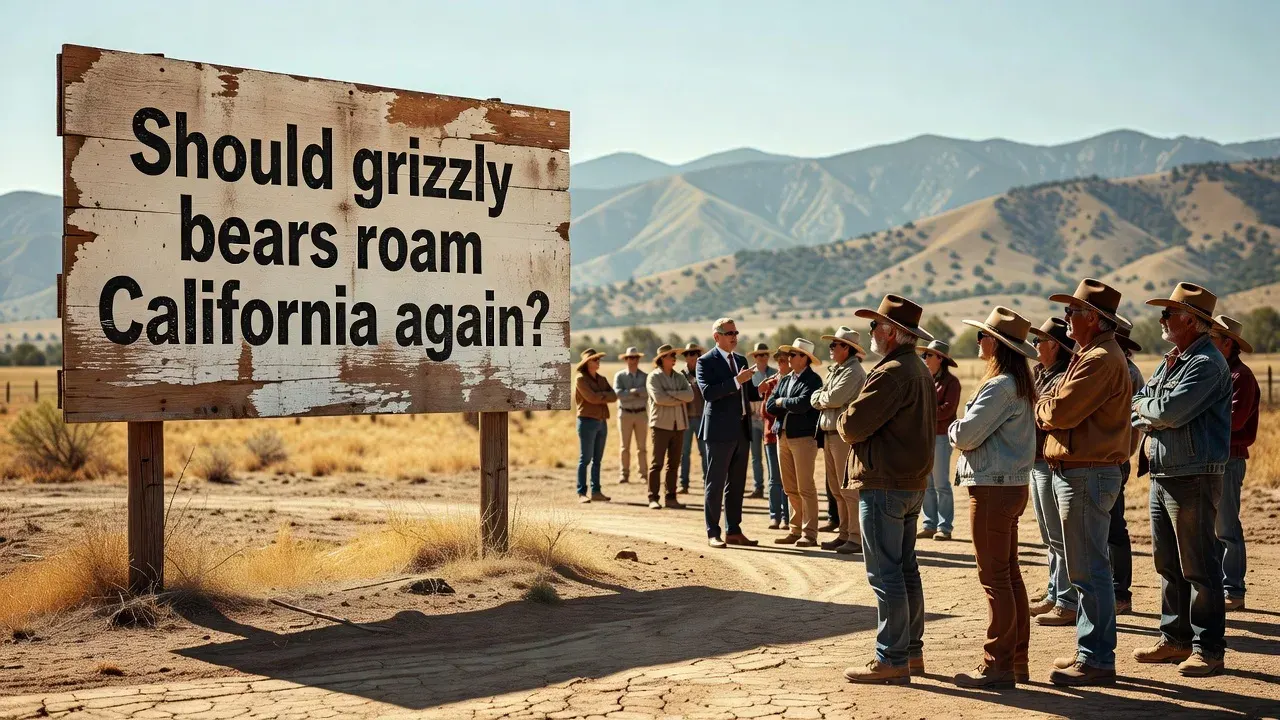
California's state flag still boasts a grizzly that hasn't walked its soil in 125 years, yet a coalition of Democratic legislators is now pushing to bring the bears back anyway. The move ignores clear warnings from the very communities that would live with the consequences of livestock losses, human injuries, and potential deaths.
The last California grizzly was killed in 1924. Since then the species has existed only as a romantic emblem on the flag and in tourist brochures. Reintroduction would mean importing bears from elsewhere, most likely placing them in the Sierra Nevada or other rural expanses where ranchers, hikers, and small towns already navigate black bears and mountain lions.
Opposition is not abstract. Counties and local officials in potential reintroduction zones have voiced strong reservations about the safety and economic fallout. One rancher near the proposed areas told reporters that "we're the ones who'd be dealing with the depredation and the danger," highlighting the disconnect between Sacramento's symbolic gestures and on-the-ground reality.

The lawmakers' proposal arrives at a moment when California's wildlife managers are already stretched thin managing existing predators. No detailed scientific plan, cost estimate, or mitigation strategy for human-bear conflict has been released, yet the political momentum continues. Rural voices are once again being treated as obstacles to overcome rather than stakeholders whose lives would change first and most.
Environmental groups frame the effort as ecological restoration and moral reckoning. But symbols do not pay veterinary bills for mauled cattle or calm parents whose children play in the woods. The lawmakers have scheduled hearings, yet the communities slated to host the experiment remain largely unheard.
The real test will come when legislators must confront the practical questions they have so far avoided: who pays when bears leave the wilderness, and whether Californians outside the Bay Area and Los Angeles are willing to accept the risks their representatives are eager to impose.
Original reporting: CalMatters.
More in California
- UC Berkeley Lab Proposes New Civic Framework for California’s Next Governor
A research-driven agenda calls for institutionalizing 'co-governance' to address low public trust and lack of resident influence in state decision-making.
- Five Tax Measures on California’s Ballot Aim to Reshape State Finances
Propositions 3, 40–43 would alter income, wealth and local taxation rules—marking the highest number of tax measures on a general election ballot since 1994.
- Catalina Helicopter Crash Highlights Risks of Island Medevac Flights
A medical evacuation chopper carrying Catalina Romero, pilot, and nurse Jessica Devries crashed into the ocean shortly after takeoff, killing all three; federal investigators are assessing causes including night flying, spatial disorientation, and the island’s challenging Pebbly Beach heliport.