Sensational Cave Bear Discovery in the Dolomites
A cave containing over 100 cave bear skeletons has been discovered in northern Italy, prompting an interdisciplinary scientific study to begin in the spring.

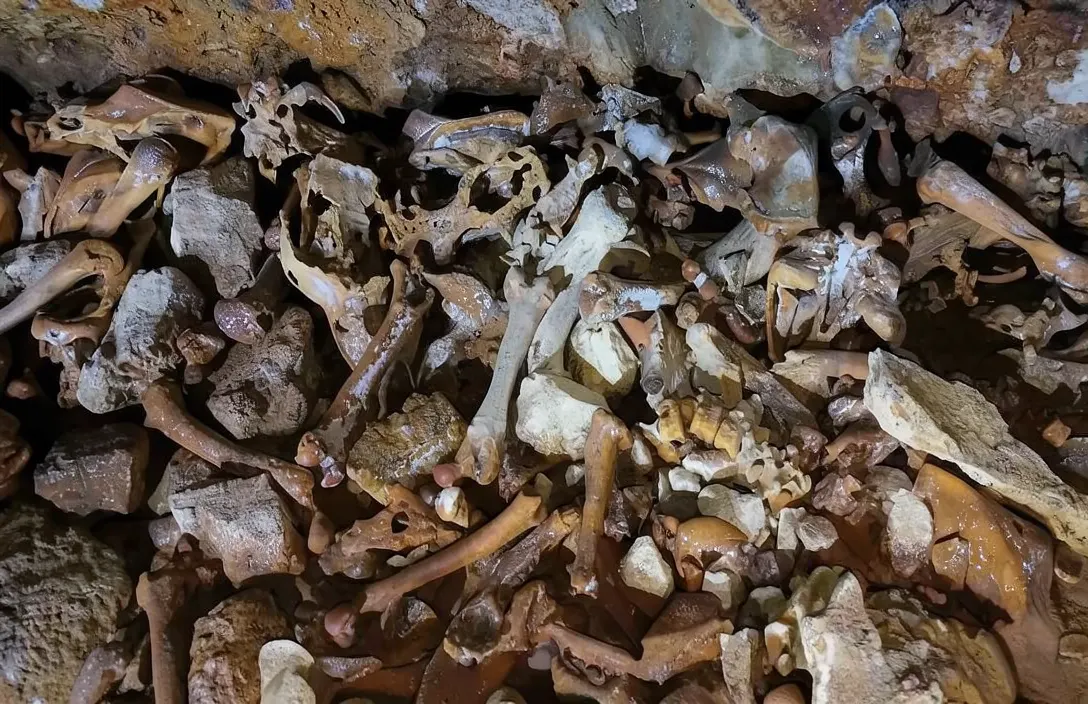
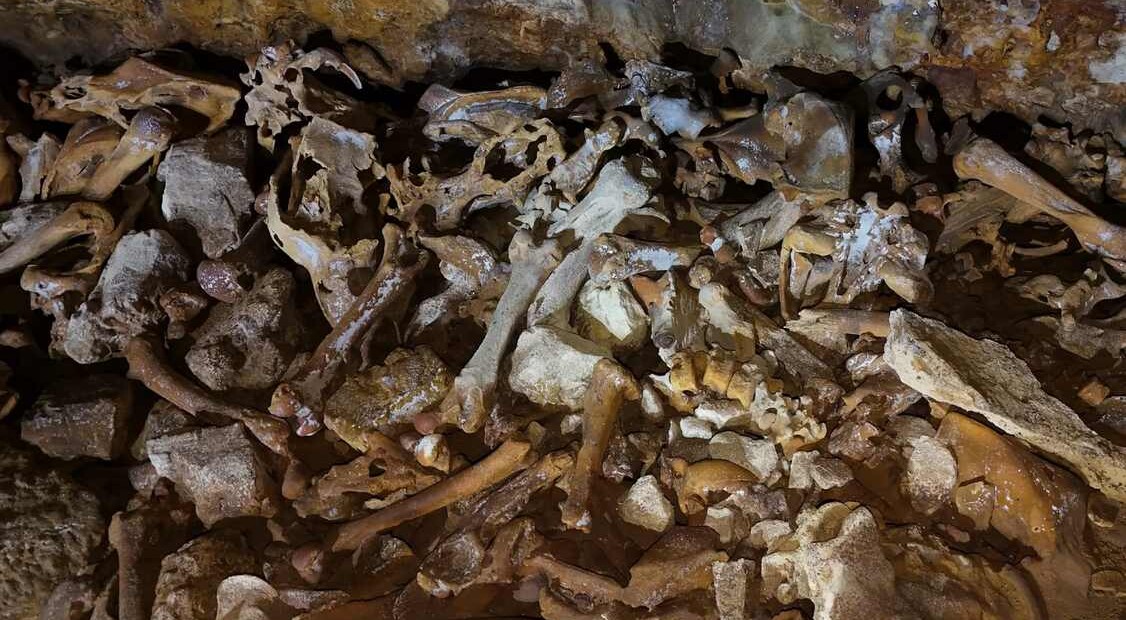
A sensational discovery of over 100 extinct cave bear skeletons has been revealed by local authorities in the Autonomous Province of South Tyrol, northern Italy. The cave, found in July by mountain guide Kurt Walde, is located around 9,100 feet above sea level on the side of an almost sheer cliff in the municipality of Enneberg (Good News Network, 1). The discovery was kept secret to prevent looting, and the site has been secured with a metal gate and protective tarp until the spring thaw, when scientists will begin studying the remains. [1]
The cave is situated near the Conturines cave, the highest in altitude where cave bear remains had ever been found, but that site was tragically looted before scientists could fully study it (Good News Network, 1). Director of the Archeological Heritage Office, Christian Terzer, noted the logistical challenges of managing the project on a vertical rock face at almost 3000 meters above sea level. Despite these challenges, the team successfully secured the site, which will remain locked until next June when the interdisciplinary research project will begin. [1]
The scientific team will include paleontologists, climate researchers, paleobotanists, speleologists, and specialists in ancient DNA. Provincial Councilor Philipp Achammer emphasized that the research will provide a more precise picture of how cave bears lived in the Dolomites (Good News Network, 1). It is still unclear whether the cave hosted Ursus spelaeus or Ursus spelaeus ladinicus, two species of large bear that lived during the Pleistocene and died out during the last Ice Age. [1]
The cave, located near the Conturines cave in the municipality of Enneberg, was discovered in July by a mountain guide named Kurt Walde. The cave is situated at an altitude of around 9,100 feet above sea level on the side of an almost sheer cliff (Good News Network, 1). Local authorities kept the discovery secret to prevent looting, and the site has been secured with a metal gate and protective tarp until the spring thaw (Good News Network, 1). [1]
Advertisement
The cave is part of a broader pattern of cave bear remains found across the Alps, according to Swiss outlet Tages Anzeiger. The discovery has prompted an interdisciplinary research project that will involve paleontologists, climate researchers, paleobotanists, speleologists, and specialists in ancient DNA (Good News Network, 1). The research team will work to determine whether the remains belong to Ursus spelaeus or Ursus spelaeus ladinicus, two species of large bear that lived during the Pleistocene (Good News Network, 1). [1]
The logistical challenges of managing the project on a vertical rock face at almost 3,000 meters above sea level were described as enormous by Christian Terzer, the Director of the Archeological Heritage Office (Good News Network, 1). Despite these challenges, the site has been successfully secured and will remain locked until next June, when the scientific team will begin their work (Good News Network, 1). [1]
To prevent looting and unauthorized access, a metal gate and protective tarp have been installed over the cave entrance. This action was taken after the discovery of the cave by mountain guide Kurt Walde in the municipality of Enneberg, near the Conturines cave, which had previously been looted before scientists could study it (Good News Network, 1). [1]
The cave, located on a vertical rock face at nearly 3,000 meters above sea level, presents significant logistical challenges for the research team. Christian Terzer, the Director of the Archeological Heritage Office, described the difficulties of managing the project in such a remote and high-altitude location (Good News Network, 1). [1]
Advertisement
The cave is expected to be studied by an interdisciplinary team of scientists, including paleontologists, climate researchers, paleobotanists, speleologists, and specialists in ancient DNA. The research is set to begin in the spring after the winter season, when the site will be accessible again (Good News Network, 1). [1]
Swiss outlet Tages Anzeiger reports that similar caves containing concentrations of cave bear remains have been found across the Alps, suggesting a broader pattern of cave bear habitation in the region (Good News Network, 1). [1]
A sensational discovery of over 100 extinct cave bear skeletons has been revealed by local authorities in the Autonomous Province of South Tyrol, northern Italy. The cave is situated near the Conturines cave, the highest in altitude where cave bear remains had ever been found, but that site was tragically looted before scientists could fully study it (Good News Network, 1). The scientific team will include paleontologists, climate researchers, paleobotanists, speleologists, and specialists in ancient DNA. [1]
The cave, located near the Conturines cave in the municipality of Enneberg, was discovered in July by a mountain guide named Kurt Walde. The cave is part of a broader pattern of cave bear remains found across the Alps, according to Swiss outlet Tages Anzeiger. The logistical challenges of managing the project on a vertical rock face at almost 3,000 meters above sea level were described as enormous by Christian Terzer, the Director of the Archeological Heritage Office (Good News Network, 1). [1]
Advertisement
The Cali Reporter newsletter
The stories worth your time.
California, the country, and what comes next. Join our free newsletter for reporting that keeps you informed.
More in Good News
- Black Mapmaking as a Tool for Reclaiming History and Fighting Injustice
Black mapmakers and artists are using cartography to counteract historical erasure and combat systemic racism, as evidenced by various projects across the United States.
- Observing Animal Behavior in the Intertidal Zone
A biology professor shares insights on how paying attention to natural sounds and movements can reveal animal secrets, particularly in the intertidal zone.
- Grandfather Rescues Lost Toddler in Arizona Desert
An Arizona grandfather played a pivotal role in rescuing a missing toddler during a cold desert night, according to local news reports.