Self-Adjusting EEG Helmet Improves Brainwave Monitoring
A new self-adjusting EEG helmet has been developed to enhance the reliability and ease of brainwave measurements in various applications.

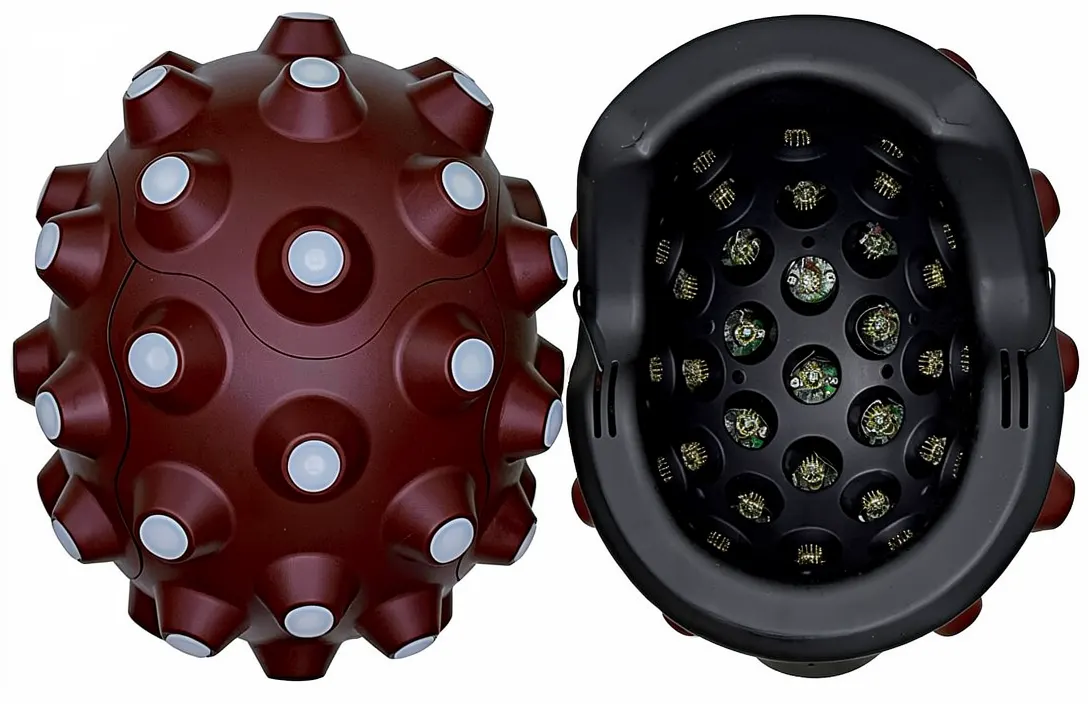

A self-adjusting electroencephalography (EEG) monitoring helmet has been developed to enable easier and more reliable brainwave measurements in various fields, including clinical settings, rehabilitation and brain–computer interfaces (BCIs). The helmet monitors electrode–scalp contact conditions in real time and automatically adjusts electrode positions to maintain stable contact. By reducing measurement variability caused by differences in users' head shapes and hair conditions, the technology is expected to improve the reliability of EEG measurements (Source ID 1). [1]
The system integrates electrode contact detection, mechanical position adjustment and contact verification into a single platform. The 32 channels enable simultaneous measurement of signals from multiple locations on the scalp, helping identify spatial patterns of brain activity, while the 500 Hz sampling rate allows precise recording of EEG signal changes over time (Source ID 1). [1]
The self-adjusting EEG monitoring helmet combines a 32-channel, 500 Hz EEG recording system with automatic electrode position adjustment technology. A weak test signal applied through a bias electrode is used to assess electrode–scalp contact conditions in real time, and electrodes with unstable contact are adjusted vertically to maintain appropriate contact (Source ID 1). [1]
The system employs closed-loop control, which stops the movement of each electrode once the target contact condition is reached, along with a real-time contact monitoring algorithm. This enables stable EEG signal acquisition across multiple channels despite differences in users' head shapes and hair conditions (Source ID 1). [1]
Advertisement
A self-adjusting electroencephalography (EEG) monitoring helmet has been developed to enable easier and more reliable brainwave measurements in various fields, including clinical settings, rehabilitation, and brain–computer interfaces (BCIs) (source ID 1). The system integrates electrode contact detection, mechanical position adjustment, and contact verification into a single platform. The helmet monitors electrode–scalp contact conditions in real time and automatically adjusts electrode positions to maintain stable contact. By reducing measurement variability caused by differences in users' head shapes and hair conditions, the technology is expected to improve the reliability of EEG measurements. [1]
The self-adjusting EEG monitoring helmet combines a 32-channel, 500 Hz EEG recording system with automatic electrode position adjustment technology. A weak test signal applied through a bias electrode is used to assess electrode–scalp contact conditions in real time, and electrodes with unstable contact are adjusted vertically to maintain appropriate contact. The system employs closed-loop control, which stops the movement of each electrode once the target contact condition is reached, along with a real-time contact monitoring algorithm (source ID 1). [1]
Many conventional EEG systems using wet or dry electrodes require trained operators to manually adjust individual electrode positions and check their contact with the scalp. The newly developed technology addresses these limitations by analyzing the contact condition of each electrode in real time and automatically adjusting only those requiring correction, helping maintain more consistent signal quality across multiple channels (source ID 1). [1]
A self-adjusting electroencephalography (EEG) monitoring helmet has been developed to enable easier and more reliable brainwave measurements in various fields, including clinical settings, rehabilitation, and brain–computer interfaces (BCIs) (source ID 1). The helmet monitors electrode–scalp contact conditions in real time and automatically adjusts electrode positions to maintain stable contact. This technology is expected to improve the reliability of EEG measurements by reducing variability caused by differences in users' head shapes and hair conditions. [1]
Advertisement
The self-adjusting EEG monitoring helmet combines a 32-channel, 500 Hz EEG recording system with automatic electrode position adjustment technology. A weak test signal applied through a bias electrode is used to assess electrode–scalp contact conditions in real time, and electrodes with unstable contact are adjusted vertically to maintain appropriate contact (source ID 1). The system employs closed-loop control, which stops the movement of each electrode once the target contact condition is reached, along with a real-time contact monitoring algorithm. [1]
Many conventional EEG systems using wet or dry electrodes require trained operators to manually adjust individual electrode positions and check their contact with the scalp. Changes in user movement or helmet fit during measurement have also required repeated adjustments (source ID 1). The newly developed technology addresses these limitations by analyzing the contact condition of each electrode in real time and automatically adjusting only those requiring correction, helping maintain more consistent signal quality across multiple channels. [1]
The self-adjusting EEG monitoring helmet offers a significant advancement in brainwave measurement by integrating electrode contact detection, mechanical position adjustment, and contact verification into a single platform (source ID 1). The helmet uses a 32-channel, 500 Hz EEG recording system combined with automatic electrode position adjustment technology. It employs closed-loop control, which stops the movement of each electrode once the target contact condition is reached, ensuring stable contact and reducing variability in measurements. [1]
Unlike conventional EEG systems, which require trained operators to manually adjust electrode positions and check their contact with the scalp, the self-adjusting helmet automatically monitors and adjusts electrode contact in real time (source ID 1). A weak test signal applied through a bias electrode is used to assess electrode–scalp contact conditions, and electrodes with unstable contact are adjusted vertically to maintain appropriate contact. This real-time adjustment helps maintain more consistent signal quality across multiple channels, even with differences in users' head shapes and hair conditions. [1]
Advertisement
The technology is particularly useful in settings requiring repeated EEG measurements, such as rehabilitation training and brain–computer interface (BCI) applications (source ID 1). The system also adjusts electrode positions in real time when contact conditions change during measurement, limiting unnecessary pressure on the scalp and improving wearing comfort. These features may expand the use of EEG monitoring to environments involving physical movement or repeated measurements, though further performance evaluations and field demonstrations are needed before widespread adoption. [1]
Sources
Prepared with AI assistance from the cited sources.
The Cali Reporter newsletter
The stories worth your time.
California, the country, and what comes next. Join our free newsletter for reporting that keeps you informed.
More in Health & Medicine
- Understanding Fascia and the Evidence Behind Fascia Release
Fascia is a connective tissue that plays a structural role in the human body, but evidence supporting specific exercises or tools for 'fascia release' remains limited.
- Antidepressant Effectiveness and Long-Term Use
A new review suggests that some antidepressants may be more effective than others in helping people manage depression symptoms over the long term, according to a study published in The Lancet Psychiatry.
- Experimental Weight-Loss Drug Shows Promise for Knee Osteoarthritis Pain
A new study suggests that an experimental weight-loss drug, retatrutide, may significantly reduce knee pain in people with osteoarthritis and obesity.