

Sacramento created California’s doctor shortage, here’s how to fix it
Sacramento's doctor pipeline pours millions into training new physicians while thousands walk out the back door, burned by prior authorization and private equity takeovers.
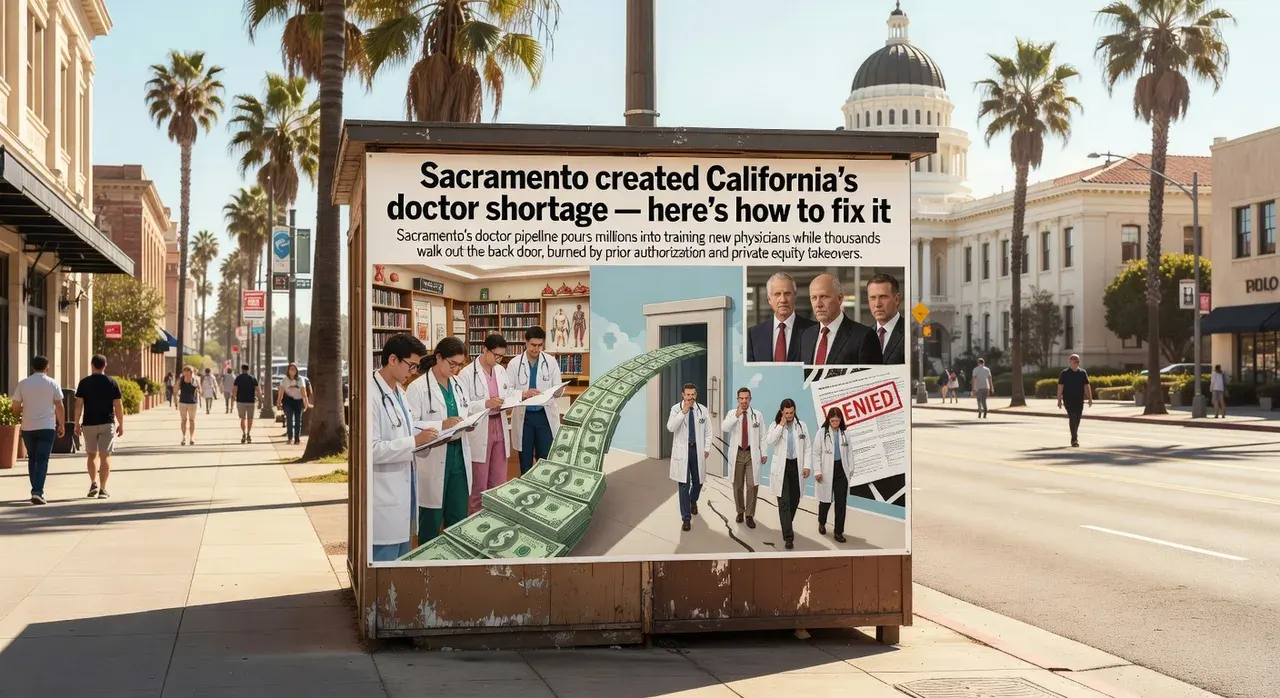
California now leads the country in doctor shortages, with 6 million residents stuck in Primary Care Health Professional Shortage Areas where fewer than half the needed services are available. Inland Empire ratios sit at 35 primary care physicians per 100,000 people; the San Joaquin Valley fares only slightly better at 39. The federal benchmark is 60 to 80.
Sacramento's reflex is always more pipeline: extra medical school seats, expanded residencies, fresh loan-forgiveness deals. Yet the state's own Legislative Analyst’s Office reported in February that flagship programs Song-Brown and CalMedForce have delivered only limited gains in actual resident slots. The problem is not supply. It is retention, and the data make that unmistakable.
A 2025 Annals of Internal Medicine study led by UC San Francisco researchers, with Yale and UCLA collaborators, followed more than 712,000 physicians and documented clinical attrition climbing from 3.5 percent in 2013 to 4.9 percent in 2019, a 40 percent rise. The culprits were administrative burden, electronic health records, prior authorization, and chronic understaffing. Pipeline shortfalls did not appear on the list. A MedCentral survey this year found 35 percent of more than 1,100 physicians had considered leaving clinical medicine since January.

Ear, nose, and throat surgeon Frances Mei Hardin built her own practice after five years of residency, then walked away at the peak of her career. She is one of thousands. The American Medical Association’s 2024 prior-authorization survey revealed that each physician and their staff lose the equivalent of 12 hours a week battling insurers. Ninety-five percent of doctors say it fuels burnout; 40 percent now keep staff whose only job is filing paperwork against companies that already collected premiums.
Private equity has accelerated the exit. Health Affairs research shows PE-acquired physician practice sites exploded from 816 in 2012 to 5,779 by 2021, with one firm controlling more than 50 percent market share in 50 specialty-and-metro markets. In ophthalmology alone, physician turnover jumped 13 percentage points post-acquisition, a 265 percent increase. Governor Newsom vetoed AB 3129, which would have subjected such deals to attorney-general review. The modest prior-auth reform he signed barely touches the volume.
Reform with hard turnaround caps on prior authorization and real penalties for denying medically necessary care. Apply antitrust scrutiny to private-equity roll-ups. Enact whistleblower protections so doctors reporting unsafe staffing are not punished into silence. Without these, new graduates will keep walking out the back door while farmworkers in Tulare, seniors in Fresno, and families in San Bernardino wait months or drive hours for care. The retention crisis is theirs, and Sacramento still refuses to name it.
Original reporting: New York Post.
More in California
- UC Berkeley Lab Proposes New Civic Framework for California’s Next Governor
A research-driven agenda calls for institutionalizing 'co-governance' to address low public trust and lack of resident influence in state decision-making.
- Five Tax Measures on California’s Ballot Aim to Reshape State Finances
Propositions 3, 40–43 would alter income, wealth and local taxation rules—marking the highest number of tax measures on a general election ballot since 1994.
- Catalina Helicopter Crash Highlights Risks of Island Medevac Flights
A medical evacuation chopper carrying Catalina Romero, pilot, and nurse Jessica Devries crashed into the ocean shortly after takeoff, killing all three; federal investigators are assessing causes including night flying, spatial disorientation, and the island’s challenging Pebbly Beach heliport.