Running a Rootless Debian Workstation on Samsung DeX
A recent experiment explored the feasibility of running a rootless Debian 13 (Trixie) workstation on Samsung DeX without compromising hardware performance or battery health.

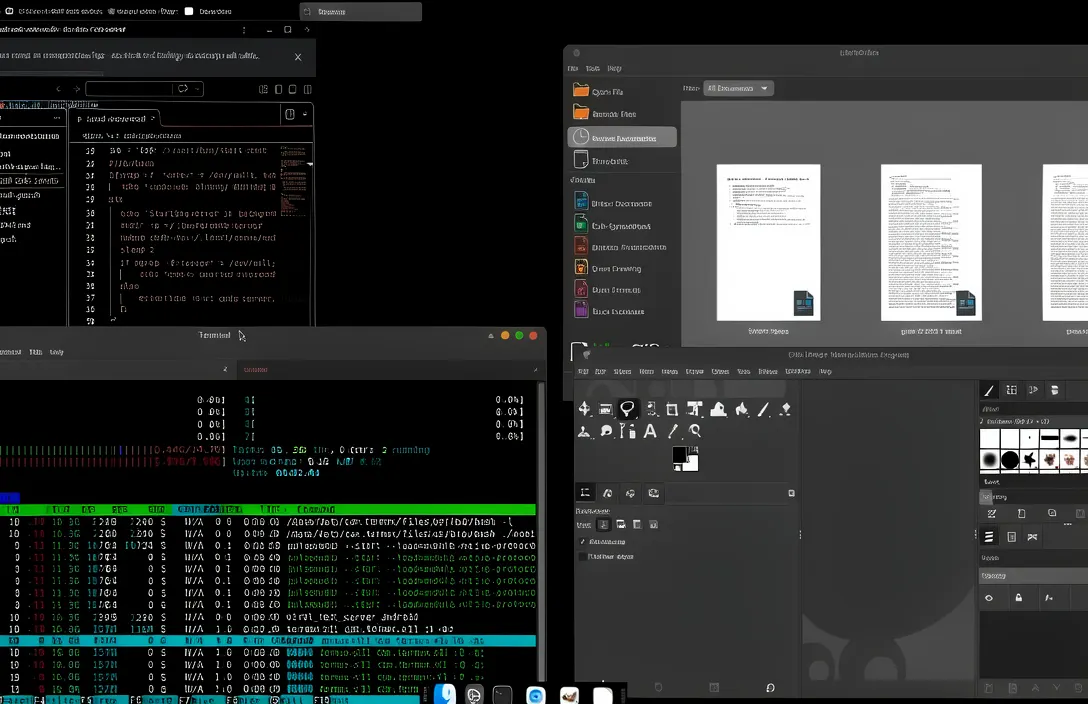

A recent experiment explored the feasibility of running a rootless Debian 13 (Trixie) workstation on Samsung DeX without compromising hardware performance or battery health. The setup involved using Termux, PRoot, and Termux:X11 to create a low-latency XFCE4 desktop environment. This approach eliminated network-loopback display protocols and utilized local UNIX domain sockets for zero-copy display transport. Additionally, hardware-accelerated OpenGL was achieved through an Android EGL / VirGL bridge, supporting both Qualcomm Adreno and ARM Mali/Immortalis GPUs. The setup also employed low-latency audio and memory optimization techniques to prevent Android's Low Memory Killer from terminating processes (ID: 1). [1]
The test involved a 4.26-hour continuous workload on a Samsung Galaxy S26 Ultra connected to a 32-inch monitor via USB-C with a 65W Power Delivery dock. The results showed that the SoC temperature remained stable at a median of 36.0 °C, with battery temperature decreasing to a median of 26.7 °C. The battery level remained constant at 80% throughout the test, indicating that USB-C Power Delivery bypass was successfully implemented. These findings suggest that the system can handle sustained workloads without significant thermal or battery degradation (ID: 1). [1]
An additional 32-minute unplugged compiler workload test was conducted, compiling Redis from source nine times consecutively. The test achieved a 9/9 success rate with an average build time of 3 minutes and 30 seconds. The system demonstrated resilience against Android's Phantom Process Killer, with no process terminations recorded. Battery temperatures remained between 30.0 °C and 34.3 °C, and the average power draw was approximately 2.2 W. These results indicate that the setup is capable of handling real-world developer workloads on battery power (ID: 1). [1]
A recent experiment explored the feasibility of running a rootless Debian 13 (Trixie) workstation on Samsung DeX without compromising hardware performance or battery health. The test involved a 4.26-hour continuous workload on a Samsung Galaxy S26 Ultra connected to a 32-inch monitor via USB-C with a 65W Power Delivery dock. The setup used a modular 2-step installer that turned Termux, PRoot, and Termux:X11 into a low-latency XFCE4 desktop. This approach eliminated network-loopback display protocols and used local UNIX domain sockets for zero-copy display transport. The experiment also tested hardware-accelerated graphics using an Android EGL / VirGL bridge, enabling OpenGL across both Qualcomm Adreno and ARM Mali/Immortalis GPUs (source ID: 1). [1]
Advertisement
During the 4.26-hour docked soak test, the system ran a continuous 4-core stress-ng (matrixprod) workload inside Debian 13 PRoot. Key findings from the telemetry data showed that the SoC temperature remained stable, with a median of 36.0 °C and a mean of 37.6 °C. Battery temperature was even cooler, with a median of 26.7 °C and a mean of 27.2 °C. Notably, the battery level remained constant at 80% throughout the test, confirming 100% USB-C Power Delivery bypass (source ID: 1). [1]
An additional 32-minute unplugged compiler workload test was conducted, compiling Redis from source nine times consecutively. All nine builds were completed successfully with no failures or process kills. The mean build time was 3 minutes and 30 seconds, with only an 8.3% slowdown between the first and ninth builds due to thermal variance. The average power draw during the unplugged test was ~2.2 W, with battery temperatures ranging between 30.0 °C and 34.3 °C (source ID: 1). [1]
The experiment aimed to assess the feasibility of running a rootless Debian 13 (Trixie) workstation on Samsung DeX without compromising hardware performance or battery health. The test involved a 4.26-hour continuous workload on a Samsung Galaxy S26 Ultra connected to a 32-inch monitor via USB-C with a 65W Power Delivery dock. An additional 32-minute unplugged compiler workload test was conducted, compiling Redis from source nine times consecutively (Evidence ID: 1). [1]
During the 4.26-hour docked soak test, the system ran a continuous 4-core stress-ng (matrixprod) workload inside Debian 13 PRoot. The test confirmed that the SoC temperature remained stable at a median of 36.0 °C, and battery temperature stayed within a range of 25.0–30.3 °C, indicating no significant degradation in battery health (Evidence ID: 1). [1]
Advertisement
The 32-minute unplugged compiler workload test demonstrated that Redis could be compiled successfully nine times consecutively without triggering Android's Phantom Process Killer. The average build time was 3 minutes and 30 seconds, with battery temperatures ranging between 30.0 °C and 34.3 °C (Evidence ID: 1). [1]
Sources
Prepared with AI assistance from the cited sources.
The Cali Reporter newsletter
The stories worth your time.
California, the country, and what comes next. Join our free newsletter for reporting that keeps you informed.
More in Technology
- Modern Web Guidance 1.0 and Browser Compatibility
Modern Web Guidance 1.0, announced by Chrome for Developers on November 10, introduces browser compatibility data to assist coding agents in building web features. The initiative emphasizes the importance of fallback…
- Apache mod_http2 Vulnerability Detection with Nmap
A new Nmap scripting module has been developed to detect the Apache mod_http2 vulnerability (CVE-2026-119618), addressing the challenges of identifying affected systems accurately.
- Securing Remote Vendor Access in Industrial Networks
Best practices for managing remote vendor access in operational technology (OT) networks emphasize controlled access points, multifactor authentication, and time-bound sessions to reduce cybersecurity risks.