Research Collaboration Identifies New Targets for Leishmaniasis Treatment
A collaborative study between Texas Tech University Health Sciences Center and Texas Tech University has identified six genes that may contribute to drug tolerance in Leishmania parasites, offering potential…

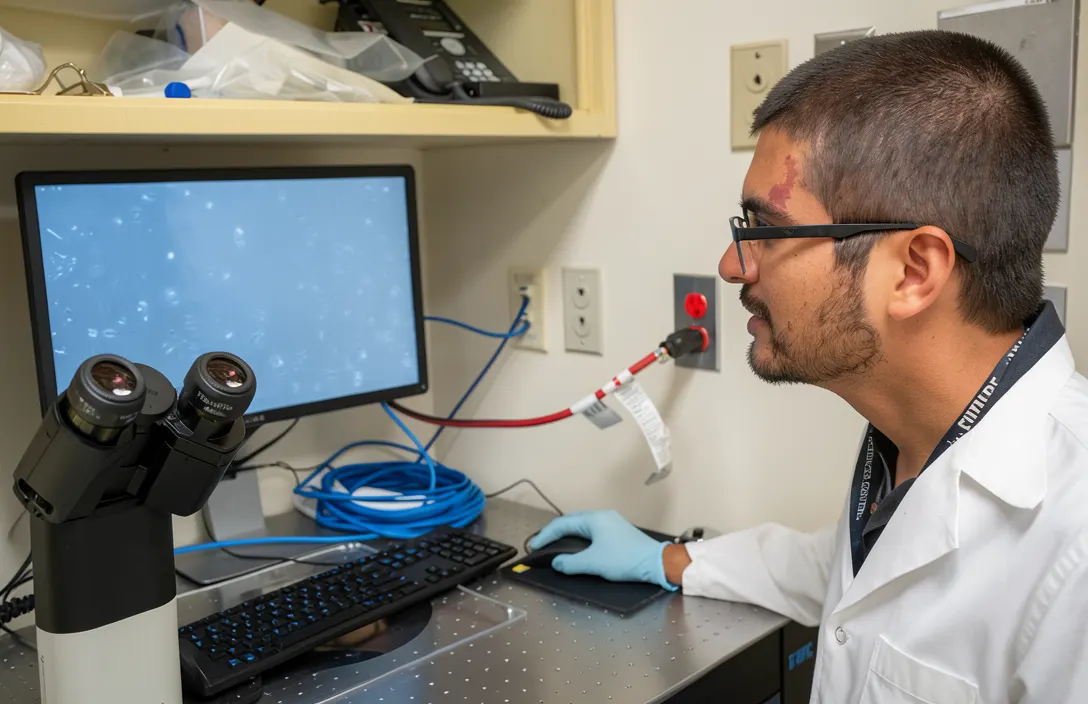

A team of researchers from Texas Tech University Health Sciences Center and Texas Tech University has identified six genes that may contribute to drug tolerance in Leishmania parasites, which cause leishmaniasis (Evidence 1). The study, published in the October issue of PLOS Pathogens, details how the parasites form persisters—dormant, slow-growing cells that survive high drug concentrations or environmental stress without exhibiting genetic resistance (Evidence 1). The discovery is an important step in understanding persistence, which can lead to full drug resistance (Evidence 1). [1]
The team used bioinformatics analysis to compare drug-sensitive Leishmania parasites with those considered persisters. They found that persisters exhibit distinct drug response profiles compared to parental parasites by rapidly implementing a highly conserved, coordinated survival reprogramming (Evidence 1). Among many unique changes present in persisters, the researchers identified six genes that could contribute to increased drug tolerance (Evidence 1). Three genes are turned down to block drug entry, and three are turned up to pump the drug out (Evidence 1). [1]
The study was supported by the Institute for One Health Innovation, a collaboration among Texas Tech University System institutions that promotes cross-disciplinary teamwork among experts in human, animal, and environmental health (Evidence 1). The collaboration included researchers from both universities, as well as students who gained technical training in advanced bioinformatics tools (Evidence 1). The findings are expected to lead to new and effective treatments for leishmaniasis, a disease that affects an estimated 12 million people worldwide (Evidence 1). [1]
A team of researchers from Texas Tech University Health Sciences Center and Texas Tech University has identified six genes that may contribute to drug tolerance in Leishmania parasites, which cause leishmaniasis (Evidence 1). The study was supported by the Institute for One Health Innovation, a collaboration among Texas Tech University System institutions that promotes cross-disciplinary teamwork among experts in human, animal, and environmental health (Evidence 1). [1]
Advertisement
Leishmaniasis is a parasitic disease transmitted through the bite of an infected sand fly. The disease affects an estimated 12 million people worldwide and is among the top 10 neglected tropical diseases, according to the Pan American Health Organization (Evidence 1). In the United States, the number of new leishmaniasis cases is rising, with most human cases occurring in Texas (Evidence 1). [1]
The researchers used bioinformatics analysis to compare drug-sensitive Leishmania parasites with those considered persisters. Persisters are a small subpopulation of dormant, slow-growing cells that survive high drug concentrations or environmental stress without exhibiting genetic resistance (Evidence 1). [1]
The team discovered that persisters exhibit distinct drug response profiles compared to parental parasites by rapidly implementing a highly conserved, coordinated survival reprogramming. Among many unique changes present in persisters, they found six very interesting genes that could contribute to increased drug tolerance (Evidence 1). [1]
A team of researchers from Texas Tech University Health Sciences Center and Texas Tech University has identified six genes that may contribute to drug tolerance in Leishmania parasites, which cause leishmaniasis (Evidence 1). The team used bioinformatics analysis to compare drug-sensitive Leishmania parasites with those considered persisters. The study was supported by the Institute for One Health Innovation, a collaboration among Texas Tech University System institutions that promotes cross-disciplinary teamwork among experts in human, animal, and environmental health (Evidence 1). [1]
Advertisement
Leishmaniasis is a parasitic disease transmitted through the bite of an infected sand fly. The researchers used bioinformatics analysis to compare drug-sensitive Leishmania parasites with those considered persisters. The team discovered that persisters exhibit distinct drug response profiles compared to parental parasites by rapidly implementing a highly conserved, coordinated survival reprogramming (Evidence 1). [1]
According to the Pan American Health Organization, leishmaniasis is among the top 10 neglected tropical diseases, affecting an estimated 12 million people worldwide. There are three main types of leishmaniases: visceral (affecting internal organs and almost always lethal without treatment), cutaneous (causing skin ulcers) and mucocutaneous (affecting the mouth, nose and throat). Cutaneous leishmaniasis is the most common form of the disease (Evidence 1). [1]
Visceral leishmaniasis is the most life-threatening, ranking second only to malaria as the most fatal of parasitic infections. In the United States, the number of new leishmaniasis cases is rising. The Centers for Disease Control and Prevention reported that most human cases occur in Texas. Driving factors behind the increase include climate changes, which expand the sand fly's habitat, plus population growth and more international travel, which increase the chance of people encountering the fly (Evidence 1). [1]
A team of researchers from Texas Tech University Health Sciences Center and Texas Tech University has identified six genes that may contribute to drug tolerance in Leishmania parasites, which cause leishmaniasis (Evidence 1). The team used bioinformatics analysis to compare drug-sensitive Leishmania parasites with those considered persisters. This discovery highlights a potential avenue for developing new treatments for leishmaniasis, a disease that affects millions of people globally. [1]
Advertisement
Leishmaniasis is a parasitic disease transmitted through the bite of an infected sand fly. According to the Pan American Health Organization, leishmaniasis is among the top 10 neglected tropical diseases, affecting an estimated 12 million people worldwide. The researchers found that persisters exhibit distinct drug response profiles compared to parental parasites by rapidly implementing a highly conserved, coordinated survival reprogramming. This survival mechanism could explain why some parasites survive drug treatments and lead to relapses. [1]
In the United States, the number of new leishmaniasis cases is rising. The Centers for Disease Control and Prevention reported that most human cases occur in Texas. Driving factors behind the increase include climate changes, which expand the sand fly's habitat, plus population growth and more international travel, which increase the chance of people encountering the fly. With no approved human vaccine and growing concerns about drug resistance and treatment persistence, the team is working to identify new potential targets to combat the disease. [1]
Sources
Prepared with AI assistance from the cited sources.
The Cali Reporter newsletter
The stories worth your time.
California, the country, and what comes next. Join our free newsletter for reporting that keeps you informed.
More in Health & Medicine
- Understanding Fascia and the Evidence Behind Fascia Release
Fascia is a connective tissue that plays a structural role in the human body, but evidence supporting specific exercises or tools for 'fascia release' remains limited.
- Antidepressant Effectiveness and Long-Term Use
A new review suggests that some antidepressants may be more effective than others in helping people manage depression symptoms over the long term, according to a study published in The Lancet Psychiatry.
- Experimental Weight-Loss Drug Shows Promise for Knee Osteoarthritis Pain
A new study suggests that an experimental weight-loss drug, retatrutide, may significantly reduce knee pain in people with osteoarthritis and obesity.