Rare Mutation in SCN1B Gene Linked to Severe Dravet Syndrome
A rare mutation in the SCN1B gene has been found to cause a particularly severe form of Dravet syndrome, leading to a 100% risk of sudden unexplained death in epilepsy (SUDEP), according to a study published in the…

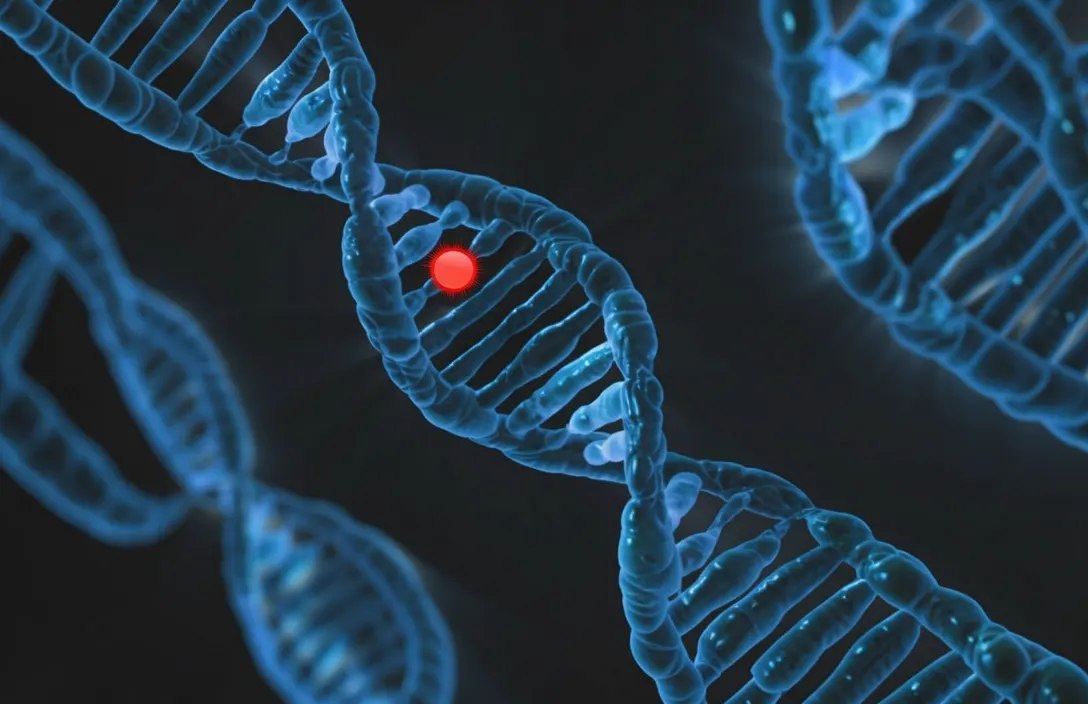

Dravet syndrome is a rare developmental disease that causes epileptic seizures, movement and balance disorders, intellectual disability, cognitive delay, and other issues in children. The condition is associated with a high risk of sudden unexplained death in epilepsy (SUDEP), with a 20% rate generally, but a specific mutation in the SCN1B gene, SCN1B c.449-2A>G, has been found to increase this risk to 100% (Medical Xpress, 2026). [1]
This mutation affects an intron, which is typically removed during the DNA to RNA to protein translation process. Previously, introns were regarded as 'junk DNA,' but the study highlights their critical role in proper gene function. The SCN1B c.449-2A>G variant disrupts the removal of the intron, leading to incorrect splicing and the production of no functional protein (Medical Xpress, 2026). [1]
The research team, led by Lori Isom and Shreeya Bakshi, found that the inclusion of the intron results in a nonsense-mediated decay–sensitive mRNA, which is linked to developmental and epileptic encephalopathy. The study also notes that in mouse models bred to lack the SCN1B gene, neurons and heart muscle cells cannot control their excitability, resulting in severe epilepsy, cardiac arrhythmia, and death (Medical Xpress, 2026). [1]
Potential therapies are being explored, including gene therapy that replaces the mutated SCN1B gene with the wild-type gene and antisense oligonucleotides, a type of RNA therapy that can fix how a gene is being expressed. These approaches are still in early stages, but they offer hope for addressing the underlying genetic issues in Dravet syndrome (Medical Xpress, 2026). [1]
Advertisement
Dravet syndrome is a rare developmental disease that causes epileptic seizures, movement and balance disorders, intellectual disability, cognitive delay, and other issues in children. This condition is particularly severe in patients with the SCN1B c.449-2A>G variant, which is associated with a 100% risk of sudden unexplained death in epilepsy (SUDEP), according to Lori Isom, professor of pharmacology, neurology, and molecular and integrative physiology. The mutation affects an intron, which is typically removed during the DNA to RNA to protein translation process. Previously, scientists regarded introns as junk DNA, but the team discovered that their proper removal had enormous consequences. The variant in question, SCN1B c.449-2A>G, stood out because it affected an intron, said Shreeya Bakshi, a postdoctoral fellow. Because the intron isn't removed, the gene is spliced incorrectly, and no functional protein is produced (source ID: 1). [1]
The study highlights the critical role of intron removal in the proper functioning of the SCN1B gene. In mouse models bred to lack the SCN1B gene, neurons and heart muscle cells cannot control their excitability, resulting in severe epilepsy, cardiac arrhythmia, and death. This was the first time the team observed this severe type of Dravet syndrome in a patient. The finding suggests that the retention of the intron disrupts protein production, leading to the severe neurological and cardiac complications associated with this variant (source ID: 1). [1]
Potential therapies are being explored, including gene therapy that replaces the mutated SCN1B gene with the wild-type gene and antisense oligonucleotides, a type of RNA therapy that can fix how a gene is being expressed. The study emphasizes the importance of understanding the role of introns in gene regulation and the potential for developing targeted treatments for Dravet syndrome. The research team is hopeful that further studies will lead to effective interventions for patients with this rare and deadly mutation (source ID: 1). [1]
Dravet syndrome is a rare developmental disease that causes epileptic seizures, movement and balance disorders, intellectual disability, cognitive delay, and other issues in children. The study highlights the critical role of intron removal in the proper functioning of the SCN1B gene. A mutation in the SCN1A gene accounts for around 90% of cases, while other rarer variants of the SCN1B gene can cause a particularly severe form of Dravet syndrome (Source ID: 1). [1]
Advertisement
The variant in question, SCN1B c.449-2A>G, affects an intron, which is typically removed during the DNA to RNA to protein translation process. Previously, scientists regarded introns as junk DNA. But the team discovered their proper removal had enormous consequences. Essentially, because the intron isn't removed, the gene is spliced incorrectly, and no functional protein is produced (Source ID: 1). [1]
Potential therapies are being explored, including gene therapy that replaces the mutated SCN1B gene with the wild-type gene and antisense oligonucleotides, a type of RNA therapy that can fix how a gene is being expressed. The finding hints at a way of fixing the problem: removing the intron. If you have the intron included in there, you're going to have less protein. If you could somehow increase intron removal for this variant, you'd increase the amount of functional protein (Source ID: 1). [1]
A mutation in the SCN1B gene, specifically the variant SCN1B c.449-2A>G, has been found to cause a particularly severe form of Dravet syndrome, with a 100% risk of sudden unexplained death in epilepsy (SUDEP) (Source ID: 1). This variant affects an intron, which is typically removed during the DNA to RNA to protein translation process. Previously, scientists regarded introns as junk DNA, but the study highlights their critical role in proper gene function. The variant disrupts the normal splicing process, leading to the retention of the intron and the production of non-functional protein (Source ID: 1). [1]
The research team, led by Lori Isom and Shreeya Bakshi, discovered that the inclusion of the intron results in a nonsense-mediated decay–sensitive mRNA, which is linked to developmental and epileptic encephalopathy (Source ID: 1). This finding provides insight into why this particular variant is so lethal, as it leads to the complete absence of functional protein. In previous work, Isom's lab demonstrated that in mouse models bred to lack the SCN1B gene, neurons and heart muscle cells cannot control their excitability, resulting in severe epilepsy, cardiac arrhythmia, and death (Source ID: 1). [1]
Advertisement
Potential therapies are being explored to address the issue caused by the SCN1B c.449-2A>G variant. One approach involves gene therapy that replaces the mutated SCN1B gene with the wild-type gene, allowing cells to create the correct protein (Source ID: 1). Another approach involves antisense oligonucleotides, a type of RNA therapy that can fix how a gene is being expressed. These therapies are still in early stages, but they offer hope for patients with this severe form of Dravet syndrome (Source ID: 1). [1]
Sources
Prepared with AI assistance from the cited sources.
The Cali Reporter newsletter
The stories worth your time.
California, the country, and what comes next. Join our free newsletter for reporting that keeps you informed.
More in Health & Medicine
- Understanding Fascia and the Evidence Behind Fascia Release
Fascia is a connective tissue that plays a structural role in the human body, but evidence supporting specific exercises or tools for 'fascia release' remains limited.
- Antidepressant Effectiveness and Long-Term Use
A new review suggests that some antidepressants may be more effective than others in helping people manage depression symptoms over the long term, according to a study published in The Lancet Psychiatry.
- Experimental Weight-Loss Drug Shows Promise for Knee Osteoarthritis Pain
A new study suggests that an experimental weight-loss drug, retatrutide, may significantly reduce knee pain in people with osteoarthritis and obesity.