Quilting as a Medium for Historical Commemoration in Alabama
A collaborative art initiative in Alabama seeks to preserve the legacies of formerly enslaved individuals through quilting, highlighting a broader effort to recognize and celebrate Black history in the region.

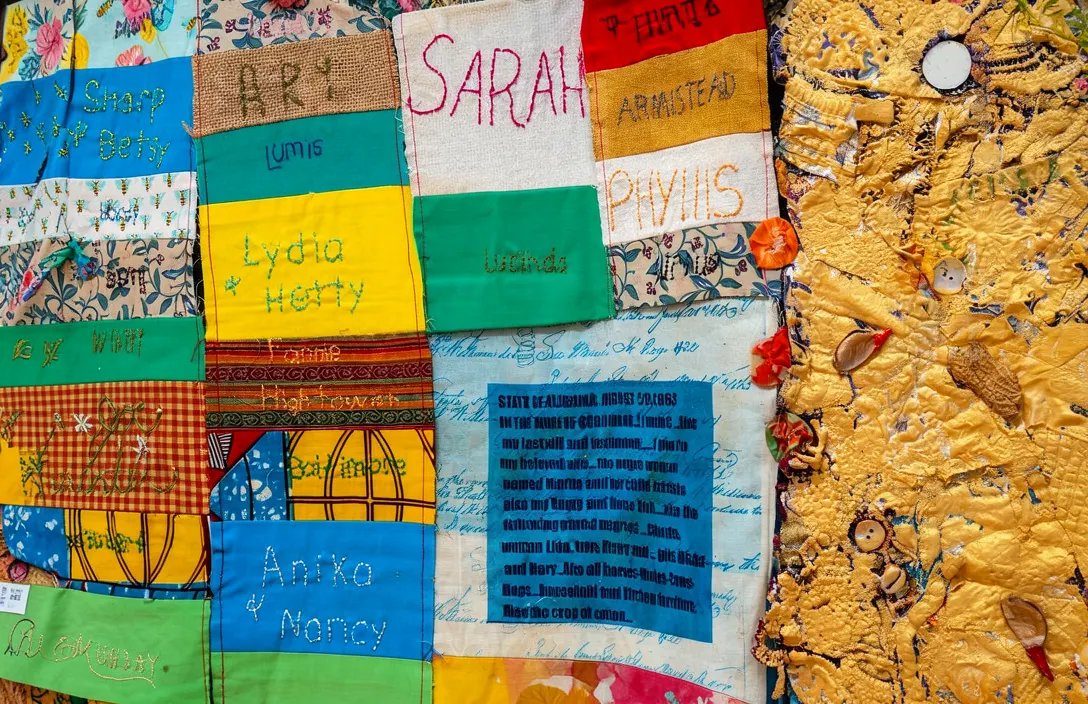
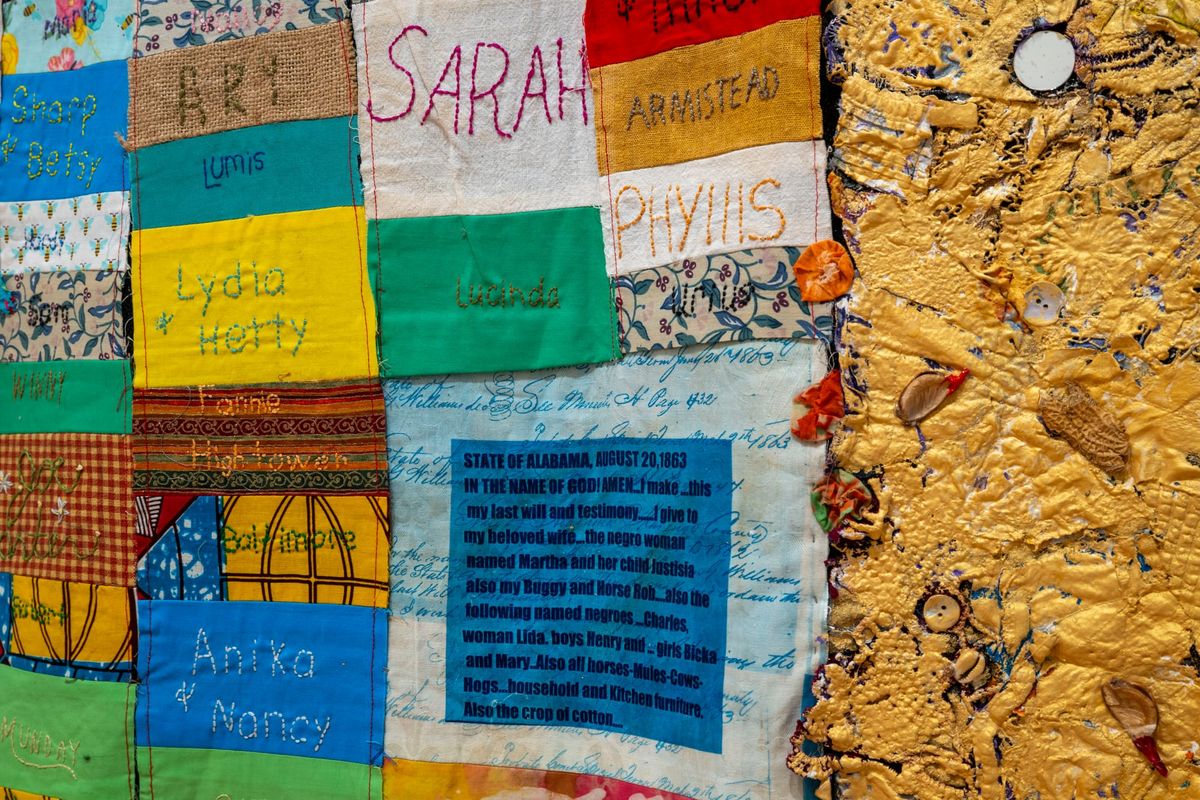
In Lowndes County, Alabama, a group of women has been meeting weekly to quilt in a community center across from Mt. Willing Baptist Church. Starting in 2021, they began incorporating the names of formerly enslaved congregation members into their quilts. This project, titled 'Sew Their Names: Quilting, Creativity, and Activism,' is part of a three-year partnership between Auburn University and the Hopewell Project. The initiative aims to preserve and commemorate the forgotten figures of history in the region (Hyperallergic). [1]
The exhibition at the Jule Collins Smith Museum of Fine Art at Auburn University showcases handmade quilts by artists such as Yvonne Wells, Wini McQueen, and Mercedes Braxton, alongside works by other Lowndes County artists including Bill Traylor, Noah Purifoy, and Charlie Lucas. These quilts are displayed alongside historical artifacts, such as a poster from the Lowndes County Freedom Organization, which fought to empower Black voters during a time of extreme violence and intimidation (Hyperallergic). [1]
The 'Sew Their Names' exhibition has traveled across Alabama, including stops at Newbern Library, Sumac Cottage, and the Safe House Black History Museum. It also reached the Project Threadways Symposium in Florence, Alabama, where a quilt-making workshop was held. The initiative emphasizes community involvement, with workshops allowing local residents to participate in the quilt-making process (Hyperallergic). [1]
In Lowndes County, Alabama, a group of women meets weekly to quilt in a community center across from Mt. Willing Baptist Church, stitching the names of formerly enslaved congregation members into their work. This project, 'Sew Their Names: Quilting, Creativity and Activism,' began in 2021 and has grown into a broader collaboration across Alabama (Hyperallergic). The initiative is part of a three-year partnership between Auburn University and the Hopewell Project, culminating in an exhibition at the Jule Collins Smith Museum of Fine Art at Auburn University. [1]
Advertisement
The exhibition showcases handmade quilts by artists such as Yvonne Wells, Wini McQueen, and Mercedes Braxton, alongside works by other Lowndes County artists including Bill Traylor, Noah Purifoy, and Charlie Lucas. The 'Sew Their Names' exhibition has traveled across Alabama, including stops at Newbern Library, Sumac Cottage, and the Safe House Black History Museum (Hyperallergic). These venues were part of a 'quilt trail' that highlighted the exhibition’s focus on historical reckoning and community engagement. [1]
Supported by resources from the Jule Collins Smith Museum of Fine Art, the exhibition included a series of workshops that allowed community members to participate in the quilt-making process. The first workshop took place in November 2024 in Hale County, where Auburn University's Rural Studio is located (Hyperallergic). The quilts were displayed at various local venues, emphasizing the collaborative nature of the project and the integration of local history into the artistic process. [1]
In Lowndes County, Alabama, a group of women has been meeting weekly to quilt in a community center across from Mt. Willing Baptist Church. The project, which began in 2021, involves stitching the names of formerly enslaved congregation members into their quilts, preserving and commemorating these forgotten figures of history (Hyperallergic). This initiative, known as 'Sew Their Names,' has evolved into a broader collaboration across Alabama, highlighting the region's rich artistic tradition and historical significance. [1]
The 'Sew Their Names: Quilting, Creativity, and Activism' exhibition, hosted at the Jule Collins Smith Museum of Fine Art at Auburn University, showcases handmade quilts by artists such as Yvonne Wells, Wini McQueen, and Mercedes Braxton, alongside works by other Lowndes County artists including Bill Traylor, Noah Purifoy, and Charlie Lucas. This exhibition is part of a three-year partnership between the university and the Hopewell Project, aiming to highlight the region's artistic and cultural heritage (Hyperallergic). [1]
Advertisement
Supported by resources from the Jule Collins Smith Museum of Fine Art, the 'Sew Their Names' exhibition included a series of workshops that allowed community members to participate in the quilt-making process. The exhibition traveled across Alabama, including stops at Newbern Library, Sumac Cottage, and the Safe House Black History Museum, where it emphasized the historical reckoning and political nature of these artistic practices (Hyperallergic). [1]
Sources
Prepared with AI assistance from the cited sources.
The Cali Reporter newsletter
The stories worth your time.
California, the country, and what comes next. Join our free newsletter for reporting that keeps you informed.
More in Culture
- Trump Meme Recasts Nvidia CEO as Butler Incident Survivor
President Donald Trump shared a meme reimagining Nvidia CEO Jensen Huang as the hero of his own assassination attempt in Butler, Pennsylvania, according to Hyperallergic.
- Venice Biennale Concludes with High Attendance Despite Challenges
The 61st Venice Biennale concluded with a record number of visitors despite challenges including political disputes and the curator's sudden passing.
- Artist Residencies as a Strategy for Navigating Precarity
Artists are increasingly relying on residencies as a means of coping with economic instability, commercial pressures, and the demands of sustained artistic production.