Python Script Extracts Italian Business Leads from PagineGialle
A Python script, using the Apify API, can extract structured data from PagineGialle's Italian business listings, including names, phone numbers, and addresses.

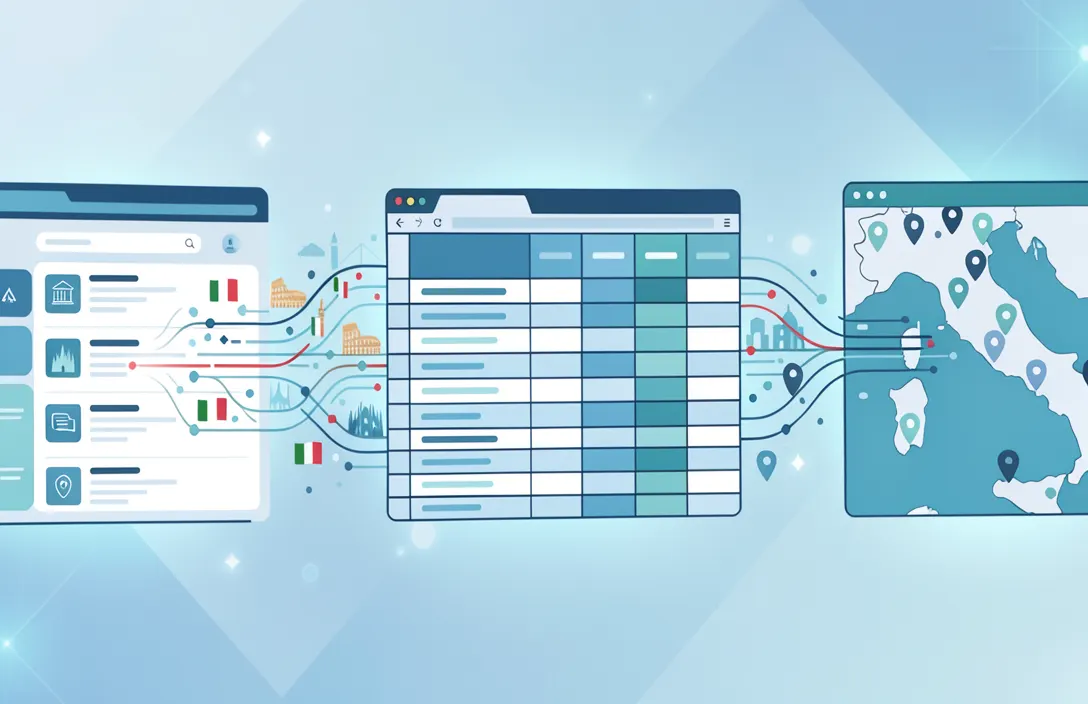

The PagineGialle Scraper, accessible via the Apify platform, extracts data from paginegialle.it into structured rows containing details such as name, category type, phone, public email, street address, city, postal code, region, and coordinates. This tool is designed to run on Apify's infrastructure and requires a free Apify account and an API token for execution. The script is compatible with Python 3.11 or newer and utilizes the Apify API client for data extraction (source ID 1). [1]
The scraper can be configured with search queries specifying a category and location, such as 'lazio/roma/ristoranti' for restaurants in Rome. The user can define parameters such as maxItems and maxPages to control the number of results and pages processed. The script uses the Actor slug 'reventadata/paginegialle-scraper' on Apify to execute the scraping process (source ID 1). [1]
When executed, the tool returns structured data, including 18 fields per business entry such as id, name, type, telephone, email, street address, and coordinates. The example run on 14 November 2026 for 'lazio/roma/ristoranti' returned 20 businesses, including details such as contact information, address, and location data. Some entries may have missing email fields or different localities due to the way data is structured on the website (source ID 1). [1]
The PagineGialle Scraper, accessible via the Apify platform, extracts data from paginegialle.it into structured rows containing details such as name, category type, phone, public email, street address, city, postal code, region, and coordinates (Dev.to, 2026). The scraper can be configured with search queries specifying a category and location, such as 'lazio/roma/ristoranti' for restaurants in Rome. When executed, the tool returns structured data, including 18 fields per business entry such as id, name, type, telephone, email, street address, and coordinates (Dev.to, 2026). [1]
Advertisement
To use the PagineGialle Scraper, users must have Python 3.11 or newer, a free Apify account, and an API token from the Apify Console. The tool runs on the Apify platform, requiring no local browser, proxy credentials, or scraping code on the user's machine (Dev.to, 2026). The scraper can be configured with searchQueries, maxItems, and maxPages inputs, which determine the scope of the data extraction (Dev.to, 2026). [1]
When executed, the PagineGialle Scraper returns structured data, including 18 fields per business entry such as id, name, type, telephone, email, street address, and coordinates (Dev.to, 2026). A sample run for 'lazio/roma/ristoranti' returned 20 rows with details such as name, type, telephone, and email. Some entries had missing email fields, while others had full contact information, including street addresses, postal codes, and coordinates (Dev.to, 2026). [1]
The PagineGialle Scraper, accessible via the Apify platform, extracts data from paginegialle.it into structured rows containing details such as name, category type, phone, public email, street address, city, postal code, region, and coordinates (Dev.to, 2026). To use the scraper, users must have Python 3.11 or newer, a free Apify account, and an API token from the Apify Console (Dev.to, 2026). These prerequisites ensure compatibility with the Apify API client and allow users to interact with the Apify platform effectively. [1]
The scraper can be configured with search queries specifying a category and location, such as 'lazio/roma/ristoranti' for restaurants in Rome. The Actor takes three input fields: searchQueries (required), maxItems, and maxPages (Dev.to, 2026). The searchQueries field accepts a list of category-and-location paths or full listing URLs, while maxItems and maxPages control the number of businesses and pages to process, respectively. These configurations allow users to tailor the scraper's output to their specific needs. [1]
Advertisement
When executed, the PagineGialle Scraper returns structured data, including 18 fields per business entry such as id, name, type, telephone, email, street address, and coordinates (Dev.to, 2026). Each dataset item contains 18 fields, with missing values remaining null rather than empty strings. Latitude and longitude are parsed as floats, and the searchQuery field records which input query produced the row. This structured format facilitates downstream processing and analysis of the extracted data. [1]
Sources
Prepared with AI assistance from the cited sources.
The Cali Reporter newsletter
The stories worth your time.
California, the country, and what comes next. Join our free newsletter for reporting that keeps you informed.
More in Technology
- Modern Web Guidance 1.0 and Browser Compatibility
Modern Web Guidance 1.0, announced by Chrome for Developers on November 10, introduces browser compatibility data to assist coding agents in building web features. The initiative emphasizes the importance of fallback…
- Apache mod_http2 Vulnerability Detection with Nmap
A new Nmap scripting module has been developed to detect the Apache mod_http2 vulnerability (CVE-2026-119618), addressing the challenges of identifying affected systems accurately.
- Securing Remote Vendor Access in Industrial Networks
Best practices for managing remote vendor access in operational technology (OT) networks emphasize controlled access points, multifactor authentication, and time-bound sessions to reduce cybersecurity risks.