Putin's Push for Arctic Shipping Route Faces Realistic Challenges
Russian President Vladimir Putin has emphasized the potential of the Northern Sea Route (NSR) as a year-round shipping corridor, but experts highlight significant obstacles to its viability as a major global trade route.

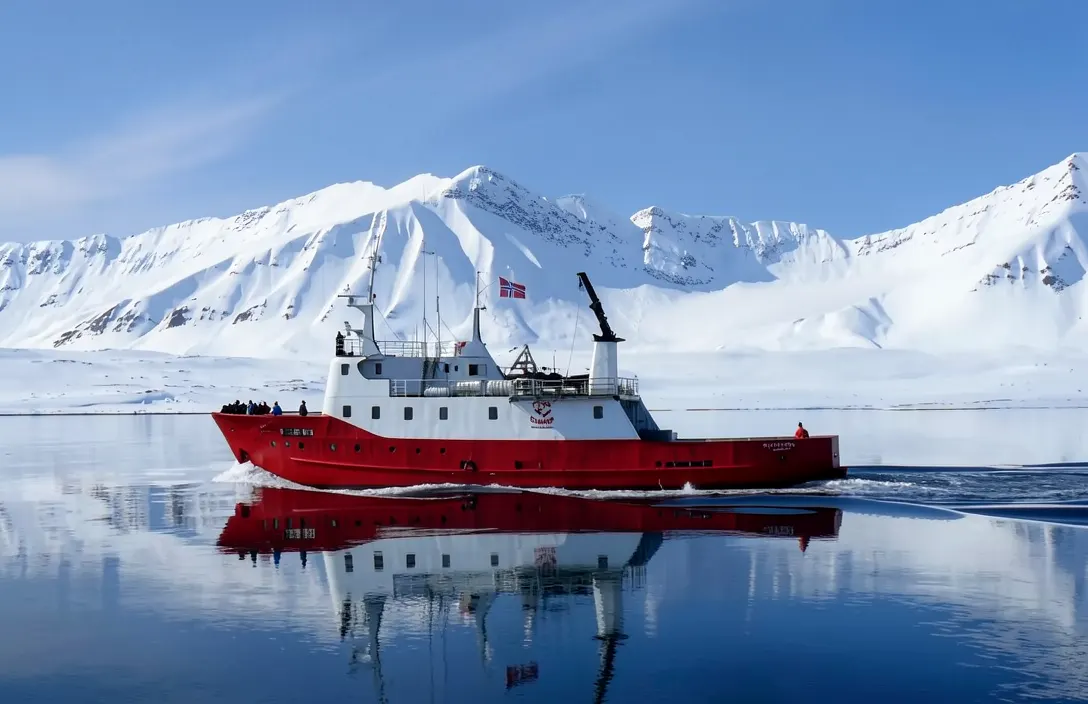

Russian President Vladimir Putin has used his speech at the Asia-Pacific Economic Cooperation (APEC) summit to pitch investments in the country’s Arctic regions, as Moscow hopes to develop the Northern Sea Route (NSR) for year-round navigation. Putin highlighted the opportunities for investors from APEC economies, citing tax breaks, reduced payroll contributions, and preferential leases as incentives to support the project (source ID 1). [1]
The Arctic shipping lane, which runs approximately 5,600 km along Russia’s northern coast, is currently navigable only for a few weeks during the summer when the ice melts. Putin’s efforts to expand the NSR are partly motivated by the Middle East crisis, which has disrupted critical global waterways, including the Suez Canal and the Strait of Hormuz, increasing interest in alternative shipping corridors (source ID 1). [1]
Experts, however, caution that the NSR faces significant challenges, including harsh climate conditions, low visibility, and limited navigation windows. Andrey Todorov, a researcher at the Netherlands Institute for the Law of the Sea (NILOS), stated that the route is unlikely to become a major commercial artery, with navigation expected to remain limited to transporting Arctic resources rather than large-scale trade (source ID 1). [1]
Environmental concerns also loom large. A 2024 review by the Ocean & Coastal Management journal found that increased Arctic shipping could exacerbate climate change, pollution, and biodiversity loss in the region. Meanwhile, geopolitical tensions are rising as Russia and China strengthen cooperation on the NSR, while the United States seeks to increase its presence in the Arctic through agreements with Greenland (source ID 1). [1]
Advertisement
Russian President Vladimir Putin has used his speech at the Asia-Pacific Economic Cooperation (APEC) summit to pitch investments in the country’s Arctic regions, as Moscow hopes to develop the Northern Sea Route (NSR) for year-round navigation (1). The Arctic shipping lane, which runs approximately 5,600 km along Russia’s northern coast, is currently navigable only for a few weeks during the summer when the ice melts (1). Experts, however, caution that the NSR faces significant challenges, including harsh climate conditions, low visibility, and limited navigation windows (1). [1]
Environmental concerns also loom large, as increased shipping activity could exacerbate the effects of climate change, pollution, and biodiversity loss in the fragile Arctic (1). A 2024 review by the Ocean & Coastal Management journal on the impact of Arctic shipping on the region’s environment showed a negative impact on water bodies, air emissions and wildlife (1). The melting ice is also exposing a new geopolitical fault line, with much of the NSR running through Russia’s economic zone, where it regulates navigation (1). [1]
Russia and China are strengthening cooperation to develop the route, while United States President Donald Trump has repeatedly said that Washington must take over Greenland to prevent Moscow and Beijing from dominating the Arctic (1). In September, the US, Denmark and Greenland signed a deal on the sidelines of the United Nations General Assembly in New York, granting Washington a greater military presence on the continent-sized Arctic island (1). [1]
Russian President Vladimir Putin has emphasized the potential of the Northern Sea Route (NSR) during his speech at the Asia-Pacific Economic Cooperation (APEC) summit, proposing tax breaks and other incentives to attract investment in the Arctic region (1). Putin's goal is to make the NSR a year-round shipping corridor, which currently is only navigable for a few weeks during the summer when the ice melts (1). However, experts highlight that the route faces significant challenges, including harsh climate conditions, low visibility, and limited navigation windows (1). [1]
Advertisement
Environmental concerns are a major factor in the debate over the NSR's development. Increased shipping activity could exacerbate the effects of climate change, pollution, and biodiversity loss in the fragile Arctic region (1). A 2024 review by the Ocean & Coastal Management journal found that Arctic shipping has a negative impact on water bodies, air emissions, and wildlife (1). Additionally, the melting ice has exposed a new geopolitical fault line, with Russia and China strengthening cooperation to develop the route, while the United States has expressed concerns over potential Russian and Chinese dominance in the Arctic (1). [1]
Experts caution that while climate change is making the NSR more navigable, the region remains largely impervious to large-scale commercial traffic due to harsh conditions (1). Andrey Todorov, a researcher at the Netherlands Institute for the Law of the Sea (NILOS), stated that the route will likely remain 'very niche and limited,' serving mainly Russia's goal of transporting Arctic resources to global markets (1). Ksenia Vakhrusheva of the Bellona Environmental Transparency Center noted that while China is interested in the Arctic, turning the NSR into a global trade route is not realistic due to Russia's control over the route (1). [1]
Russian President Vladimir Putin has used his speech at the Asia-Pacific Economic Cooperation (APEC) summit to pitch investments in the country’s Arctic regions, as Moscow hopes to develop the Northern Sea Route (NSR) for year-round navigation (1). The Arctic shipping lane, which runs approximately 5,600 km along Russia’s northern coast, is currently navigable only for a few weeks during the summer when the ice melts (1). Experts, however, caution that the NSR faces significant challenges, including harsh climate conditions, low visibility, and limited navigation windows (1). [1]
Russia has been developing the Arctic shipping corridor which connects its northern ports to the Pacific region (1). But Putin’s efforts to turn the NSR into an important artery of global trade have raised concerns about geopolitical and security challenges, as well as environmental risks for the fragile Arctic environment (1). Climate change, which has contributed to major melting in the Arctic, is making the route more navigable for longer stretches of the year, raising its prospects as a viable alternative to existing shipping corridors (1). [1]
Advertisement
The layer of frozen seawater that caps the Arctic Ocean, which melts through the summer to its annual low in September, has reached record lows (1). This year, according to NASA, it shrank to its lowest on satellite record (1). However, experts say the region remains largely impervious to large-scale commercial traffic due to harsh conditions (1). [1]
Sources
Prepared with AI assistance from the cited sources.
The Cali Reporter newsletter
The stories worth your time.
California, the country, and what comes next. Join our free newsletter for reporting that keeps you informed.
More in World
- Myanmar Found Guilty of Genocide Against Rohingya
The International Court of Justice has ruled that Myanmar committed genocide against the Rohingya minority, marking a historic first in international law.
- Anthropic's Record-Breaking IPO Tests Investor Confidence in AI
Anthropic's initial public offering (IPO) has drawn significant attention as it marks the first major AI company to go public, raising $81 billion and valuing the firm at $2 trillion on its first day of trading.
- Glampsite Owner Challenges Legal Costs After Neighbors' Parking Dispute
A glampsite owner is appealing a court ruling that requires her to pay £135,000 in legal costs after a dispute with her neighbors over a shared driveway and parking rights.