Phase 2 Trial Shows Immune-Targeting Drug May Improve Health in Down Syndrome
A phase 2 clinical trial found that a medication targeting immune overactivity in people with Down syndrome reduced inflammation and improved skin conditions, according to a study published in Cell Reports Medicine.

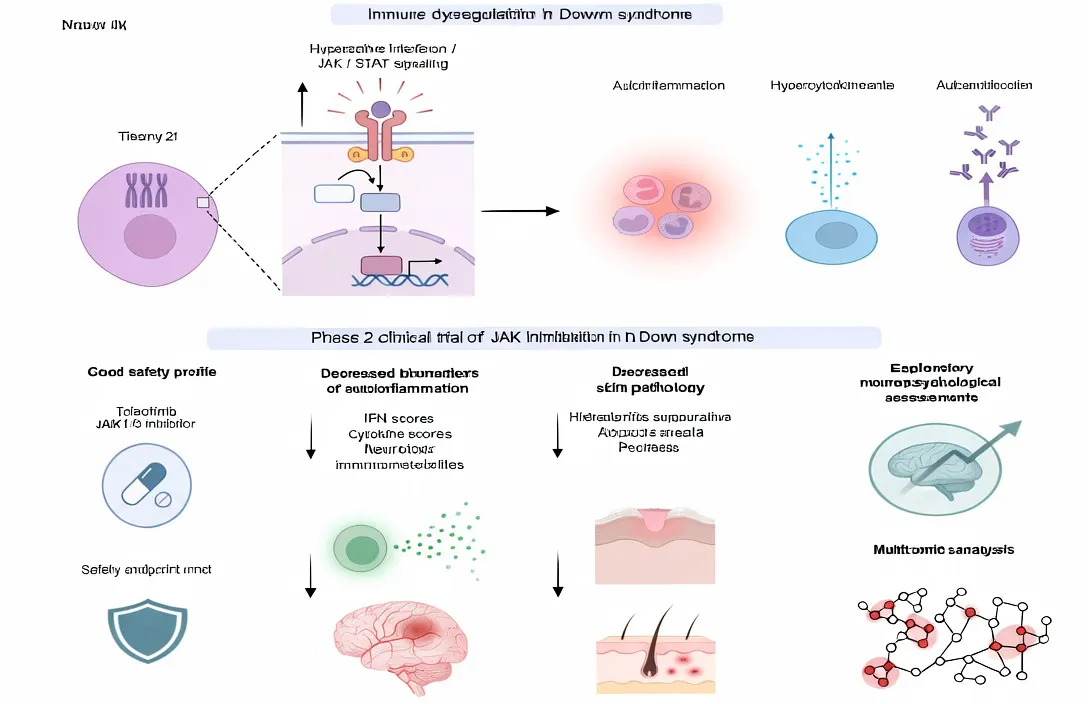

Researchers at the Linda Crnic Institute for Down Syndrome at the University of Colorado Anschutz conducted a phase 2 clinical trial to evaluate the effects of tofacitinib, a JAK inhibitor, on immune overactivity in individuals with Down syndrome (ID: 1). The study found that the medication reduced underlying inflammation and was associated with improvements in inflammatory skin conditions such as hidradenitis suppurativa and alopecia areata (ID: 1). The trial involved adolescents and adults with Down syndrome who received tofacitinib twice daily for 16 weeks, with an optional extension to 40 weeks (ID: 1). [1]
Blood analyses from the trial showed significant reductions in interferon activity, inflammatory cytokine scores, and metabolites associated with inflammation, including quinolinic acid (ID: 1). The study also found that tofacitinib modified specific inflammatory pathways without completely shutting down immune responses (ID: 1). Participants demonstrated improvements in skin conditions, as documented through standardized clinical scores and measures of dermatology-related quality of life (ID: 1). [1]
The study also observed preliminary improvements in neurobehavioral outcomes, including attention, memory, vocabulary, and behaviors, along with favorable changes in participant- and caregiver-reported measures of well-being (ID: 1). However, researchers emphasized that these findings are preliminary and cannot be attributed definitively to the medication due to the absence of a placebo comparison group (ID: 1). The authors called for further randomized, placebo-controlled studies to evaluate clinical benefits, optimal participant selection, and long-term safety (ID: 1). [1]
Researchers at the Linda Crnic Institute for Down Syndrome at the University of Colorado Anschutz conducted a phase 2 clinical trial to evaluate the effects of tofacitinib, a JAK inhibitor, on immune overactivity in individuals with Down syndrome (ID: 1). The study found that the medication reduced underlying inflammation and was associated with improvements in inflammatory skin conditions, including hidradenitis suppurativa and alopecia areata (ID: 1). The trial included adolescents and adults with Down syndrome who received tofacitinib twice daily for 16 weeks, with an optional extension to 40 weeks (ID: 1). [1]
Advertisement
Blood analyses from the trial showed significant reductions in interferon activity, inflammatory cytokine scores, and metabolites associated with inflammation, including quinolinic acid (ID: 1). Extensive analyses of gene expression, circulating proteins, and metabolites showed that tofacitinib modified specific inflammatory pathways rather than completely shutting down immune responses (ID: 1). The study met its predefined safety endpoint, with a safety profile similar to that observed in the general population (ID: 1). [1]
The investigators also observed improved performance on selected tests of attention, memory, vocabulary, and behaviors, along with favorable changes in some participant- and caregiver-reported measures of well-being (ID: 1). These findings are preliminary, as the study had no placebo comparison group, and researchers cannot determine whether the observed changes were caused by tofacitinib rather than practice effects or other factors (ID: 1). [1]
A phase 2 clinical trial conducted by researchers at the Linda Crnic Institute for Down Syndrome at the University of Colorado Anschutz found that tofacitinib, a JAK inhibitor, reduced immune overactivity in individuals with Down syndrome (ID: 1). The study, published in Cell Reports Medicine, showed significant reductions in interferon activity, inflammatory cytokine scores, and metabolites associated with inflammation, including quinolinic acid (ID: 1). These findings suggest that targeting immune dysregulation may offer a new therapeutic approach for addressing multiple health conditions associated with Down syndrome (ID: 1). [1]
The trial enrolled adolescents and adults with Down syndrome who also had inflammatory skin conditions such as hidradenitis suppurativa and alopecia areata. Participants received tofacitinib twice daily for 16 weeks, with an optional extension to 40 weeks. The study included extensive safety monitoring, dermatological evaluations, blood-based molecular analyses, and neuropsychological assessments (ID: 1). The results met the predefined safety endpoint, with a safety profile similar to that observed in the general population (ID: 1). [1]
Advertisement
Participants showed improvements in inflammatory skin conditions, particularly hidradenitis suppurativa and alopecia areata, as documented through standardized clinical scores and measures of dermatology-related quality of life (ID: 1). The investigators also observed preliminary improvements in neurobehavioral outcomes, including attention, memory, vocabulary, and behaviors, along with favorable changes in participant- and caregiver-reported measures of well-being (ID: 1). These findings are preliminary and require further study to determine the causal relationship between tofacitinib and observed improvements (ID: 1). [1]
A phase 2 clinical trial conducted by researchers at the Linda Crnic Institute for Down Syndrome at the University of Colorado Anschutz found that tofacitinib, a JAK inhibitor, reduced immune overactivity in individuals with Down syndrome (ID: 1). The trial enrolled adolescents and adults with Down syndrome who also had inflammatory skin conditions such as hidradenitis suppurativa and alopecia areata. Participants showed improvements in inflammatory skin conditions, particularly hidradenitis suppurativa and alopecia areata, as documented through standardized clinical scores and measures of dermatology-related quality of life (ID: 1). [1]
Blood analyses from the trial showed significant reductions in interferon activity, inflammatory cytokine scores, and metabolites associated with inflammation, including quinolinic acid (ID: 1). The investigators also observed improved performance on selected tests of attention, memory, vocabulary, and behaviors, along with favorable changes in some participant- and caregiver-reported measures of well-being (ID: 1). [1]
The study met its predefined safety endpoint, with a safety profile similar to that observed in the general population. The findings do not eliminate the known risks of JAK inhibitors, and larger studies will be needed to assess long-term safety in Down syndrome (ID: 1). The research team emphasized that tofacitinib is not approved specifically for Down syndrome and that the study does not establish a general treatment recommendation (ID: 1). [1]
Advertisement
The Cali Reporter newsletter
The stories worth your time.
California, the country, and what comes next. Join our free newsletter for reporting that keeps you informed.
More in Health & Medicine
- Understanding Fascia and the Evidence Behind Fascia Release
Fascia is a connective tissue that plays a structural role in the human body, but evidence supporting specific exercises or tools for 'fascia release' remains limited.
- Antidepressant Effectiveness and Long-Term Use
A new review suggests that some antidepressants may be more effective than others in helping people manage depression symptoms over the long term, according to a study published in The Lancet Psychiatry.
- Experimental Weight-Loss Drug Shows Promise for Knee Osteoarthritis Pain
A new study suggests that an experimental weight-loss drug, retatrutide, may significantly reduce knee pain in people with osteoarthritis and obesity.