

Oxytocin Might Not Be The Secret To Love Here’s What Really Makes You Instantly Bond With New Friends
A new UC Berkeley study reveals the cuddle hormone isn't essential for romance but is critical for making friends, according to research on prairie voles.

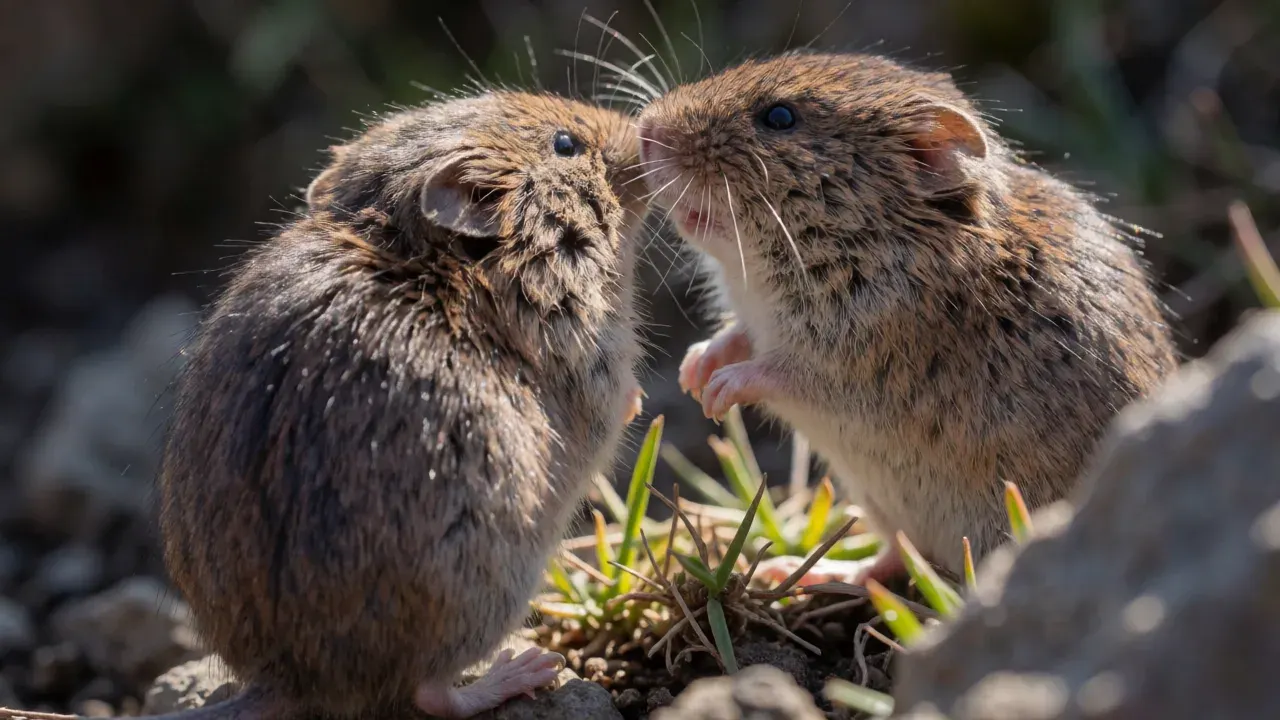
Have you ever met someone and felt an instant, inexplicable connection? You probably blamed the chemistry, specifically the mysterious substance known as oxytocin. We call it the cuddle hormone or the happy hormone. It pops up in sex and childbirth. It is supposed to be the magic sauce for feeling close to others. Yet a new study from UC Berkeley suggests we might be misunderstanding this biological miracle. The research from the Beery lab does not paint oxytocin as the villain of romance, but it certainly complicates the idea that it is the universal key to all social bonds.
We tend to think of oxytocin as the great connector. It is released during social interactions. It contributes to feelings of attachment and trust. We are told to touch our friends and loved ones to boost our levels. We listen to music and exercise to keep the oxytocin flowing. This narrative is comforting. It suggests that if we are lonely, all we need is a little more social touch and we will be happy. However, recent studies involving the prairie vole have called this association into question. The prairie vole is a tiny rodent that lives on the grasslands of North America. These creatures might look unassuming, but they are actually the star subjects of a major scientific debate about the nature of love and friendship.
Prairie voles are special because they allow us to get at the neurobiology of friendship and how it is similar to and different from other types of relationships. Unlike their mouse cousins, which prefer to be alone or interact with strangers, prairie voles form stable and selective relationships. This makes them the perfect proxy for understanding human social lives. A study published Aug. 8 in the journal Current Biology sheds light on this dynamic. The lead researcher is Annaliese Beery. She is an associate professor of integrative biology and neuroscience at UC Berkeley. She and her team have been digging into why some relationships click instantly while others take time to develop.

Beery and integrative biology graduate student Alexis Black conducted a fascinating experiment. They focused on prairie voles that lack oxytocin receptors. These are genetically modified creatures. They live in the UC San Francisco laboratory of collaborator Dr. Devanand Manoli. These voles are often called "null mutants." In a previous study, Manoli and his team showed that these receptor-deficient voles could still form long-term bonds. They could still be good parents. The oxytocin system was not strictly required for these things. However, the new study reveals that while oxytocin is not essential for the *existence* of a relationship, it is absolutely critical for the *selection* of that relationship.
The results are surprising. When the researchers placed a normal prairie vole and a null mutant vole in the same cage, the normal vole would try to snuggle and groom its partner almost immediately. The vole with the missing oxytocin receptors was slower to warm up. It took a lot longer to establish a preference for its roommate. Normal voles typically form an incredibly robust preference within 24 hours of close proximity. They choose their partner over a stranger. The null mutants showed no sign of a relationship after 24 hours. It took them up to a week to establish a peer preference. By the end of a week, their lifetime partners looked no different from each other. This suggests that oxytocin is not required to have a relationship, but it is really important in those early phases of a relationship to facilitate it happening quickly and efficiently.
This delay has real consequences for how voles handle social gatherings. The researchers created a party-like scenario for the voles. They placed long-term pair-bonded voles in an enclosure with other voles and many rooms connected by tubes. This setup allows the animals to separate, come together, or hang out in any combination they want. It is basically the rodent equivalent of a crowded cocktail party. In this environment, wild-type voles would keep track of who they know. They would stand near their friend for the first part of the party and then eventually start to mingle. The voles that lack oxytocin receptors just mixed. They did not show any preference for their original partner. It was as if they didn't even have a partner in there with them.
Furthermore, the study found that these receptor-deficient voles lacked the social rewards that normally come from selective attachments. The researchers tested the strength of both peer and mate bonding using a machine that required the voles to press levers. The levers controlled access to either a friend or a mate or a stranger. Female wild-type voles typically press more to get their partner than to get a stranger, in both peer and mate relationships. This makes sense. We expect our partners to be more rewarding than a stranger. However, the oxytocin receptor deficient mutants also press more to get to their mating partner, but not for peer relationships. This finding is crucial. It highlights that oxytocin signaling changes the regulation of oxytocin availability and release in the brain. The voles did not work very hard to snuggle up with their friends. They were less avoidant of and less aggressive towards strangers. This implies that oxytocin is playing a crucial role not so much in how social they are, but more in who they are social with. It is about selectivity.
Annaliese Beery has long been interested in social relationships in rodents. She focuses primarily on the animals' seldom-studied peer or friendship relationships. She believes studying similar behaviors across multiple species is key to determining what is species-specific versus generalizable across species. To complement her laboratory research, she has conducted field studies comparing social behavior and oxytocin receptor distribution in the brain within and across species. She looked at a group of South American rodents and North American Belding's ground squirrels. These animals vary in whether or not they live in groups. This field work helps explain why some animals are social and others are not.
She suspects that in rodents such as voles, and perhaps in other mammals, the formation of peer relationships may have preceded the evolution of monogamous mating relationships. While most rodents prefer to interact with unfamiliar individuals, the majority of vole species form peer-partner preferences. This is what we call these selective friendships. There seems to be this widespread tendency to bond. But only a couple of those species are also monogamous. Beery thinks this familiarity preference is deeply rooted. Someday she hopes to be able to tell you, "Do selective peer relationships precede the development of monogamy? Is that why monogamy has evolved so many times in this genus?" The answer might be that instant friendships are a biological imperative that predates true romantic love.
The research team also used a novel oxytocin nanosensor. They collaborated with postdoctoral fellow Natsumi Komatsu and Markita Landry, a UC Berkeley professor of chemical and biomolecular engineering. The sensor helped them understand the feedback consequences of lacking the receptor. They documented how oxytocin signaling was altered in the brain. This technology allows scientists to see exactly what is happening inside the brain at a microscopic level. It confirms that lack of oxytocin signaling thus not only delays the formation of relationships but also alters the reward system.
What does all of this mean for us humans? We know that oxytocin is commonly referred to as the "cuddle" or "happy" hormone. People are encouraged to boost their oxytocin levels for better well-being by touching friends and loved ones. While oxytocin is not essential for long-term mate bonding, it is still associated with aggression and feelings of attachment. The study suggests that if you are struggling to form friendships, it might not be a character flaw. It could be a neurochemical issue. If you are looking for that instant click with a new friend, your brain might need a little more help than just a hug.
The study published in Current Biology is a significant step forward. It helps us understand human psychiatric conditions such as autism and schizophrenia. These conditions interfere with a person's ability to form or maintain social bonds. By understanding how oxytocin works in the prairie vole, we can better understand how it works in the human brain. We are learning that friendship is a complex biological process. It requires specific neural pathways and hormonal support to work correctly.
So the next time you meet someone and feel that spark of connection, remember the prairie vole. You are witnessing a biological miracle in real time. It is not just about love. It is about the chemistry of choosing your people. And while you cannot rely on oxytocin to solve all your social problems, knowing this science gives us a better understanding of how we relate to the world around us. We are social animals, and our brains are wired to connect, even if it takes a little time to find the right match.
First reported by ScienceDaily: Relationships.
More in Love & Relationships
- Clear requests and respectful boundaries belong in everyday relationships
NIH guidance highlights honest conversation, listening and limits as parts of supportive connections.
- How Eye-Tracking Revealed Hidden Social Skills in Severely Disabled Youth
A new study finds that personalized training can unlock social abilities in people often considered untestable.
- Sleep matters: Duration, timing, quality and more may affect cardiovascular disease risk
Healthy sleep includes multiple components, such as number of hours of sleep per night, how long it takes to fall asleep, daytime functionin