Opening New Grocery Stores Doesn't Increase Food Access in Low-Income Areas
A study finds that new grocery stores in low-income areas do not significantly increase local patronage, challenging common assumptions about food desert solutions.

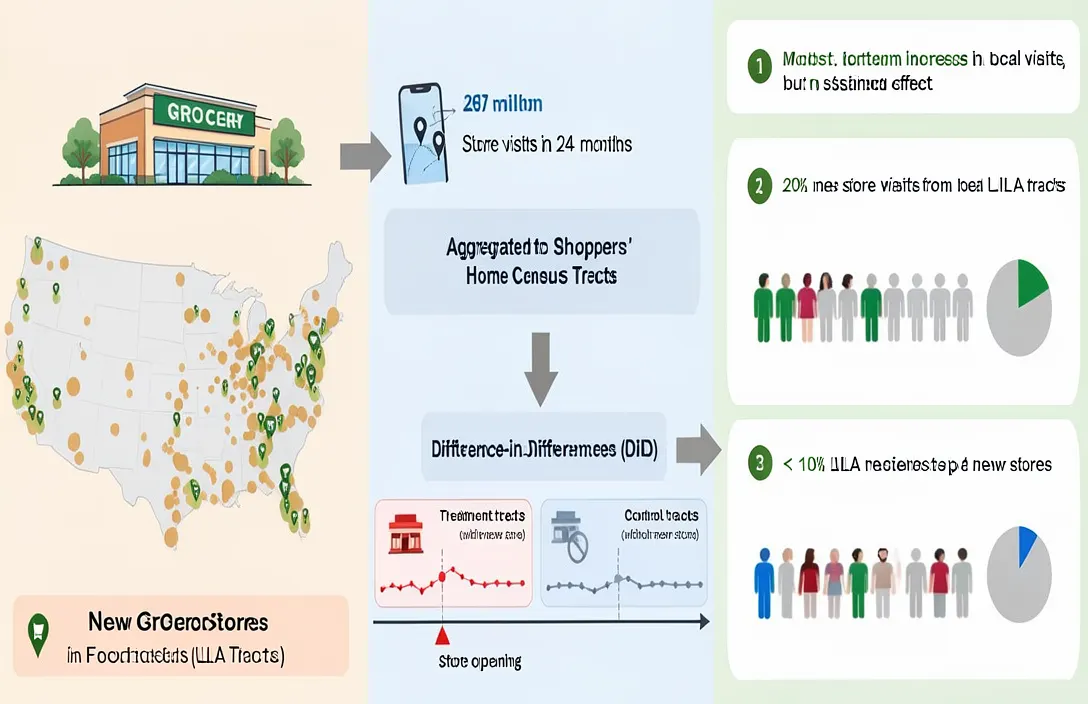

Food deserts, defined as low-income neighborhoods with limited access to healthy and affordable food, have long been addressed by proposals to open new grocery stores. However, a nationwide study reveals that residents of these areas account for less than 20% of visits to newly opened stores. The research, conducted by Binghamton University and the University of Connecticut, suggests that simply adding new stores may not be an adequate solution to the food access crisis in low-income areas (Source ID: 1). [1]
The study used a quasi-experimental design to evaluate the impact of new grocery stores. It compared 112 low-income, low-access (LILA) areas with newly opened stores to 336 comparable areas without new store openings. The findings show that visits to new stores peaked during their first month but then declined, stabilizing at a level where local residents made up less than 20% of the customer base (Source ID: 1). [1]
Researchers highlight that the issue of healthy food access is not merely geographic. Affordability, dietary habits, and cultural preferences are significant barriers that prevent residents from utilizing new stores. The study suggests that federal investment should focus on addressing structural barriers, such as high food prices, rather than relying solely on the addition of new stores (Source ID: 1). [1]
While new stores may not be effective as a standalone solution, they could be more effective when combined with other strategies. Researchers emphasize that improving food access requires understanding residents' needs and preferences, including making healthy food more affordable and educating people about healthy diets (Source ID: 1). [1]
Advertisement
Food deserts, defined as low-income neighborhoods with limited access to healthy and affordable food, have long been addressed by proposals to open new grocery stores. A nationwide study published in the journal Applied Geography reveals that residents of low-income areas account for less than 20% of visits to newly opened stores in food deserts (source ID: 1). This suggests that simply adding new stores may not be an adequate solution to the food access crisis in these areas. [1]
The study used a quasi-experimental design to evaluate the impact of new grocery stores. Researchers compared 112 low-income, low-access (LILA) areas with newly opened grocery stores to 336 comparable areas without new store openings. They then evaluated residents' grocery shopping trips before and after the new store opening, comparing changes between the two groups (source ID: 1). The findings indicate that visits to the new store peaked during their first month, then declined before stabilizing. [1]
The researchers highlight that the issue of healthy food access is not merely geographic. For some residents, affordability remains an obstacle, while others may stick with their current food sources, such as convenience stores, out of dietary habit or cultural preference (source ID: 1). The study suggests that new stores may bring other benefits to a neighborhood besides food access, but they are not effective as a standalone solution. [1]
A nationwide study conducted by researchers from Binghamton University and the University of Connecticut found that residents of low-income, low-access (LILA) areas account for less than 20% of visits to newly opened grocery stores in food deserts (Source ID: 1). The study used a quasi-experimental design, comparing 112 LILA areas with newly opened grocery stores to 336 comparable areas without new store openings. The findings indicate that simply adding new stores is not an adequate solution to the food access crisis in low-income areas. [1]
Advertisement
The researchers used large-scale human mobility data to evaluate the impact of new grocery stores nationwide. They found that visits to the new stores peaked during the first month after opening but then declined before stabilizing. Most customers came from outside the identified food desert, suggesting that the presence of a new store does not necessarily lead to increased local patronage (Source ID: 1). [1]
The study highlights that the issue of healthy food access is not merely geographic. Researchers note that affordability and dietary habits may be significant barriers to local patronage. For example, some residents may prefer to continue shopping at convenience stores due to cultural preferences or existing habits (Source ID: 1). [1]
While new grocery stores may not be effective as a standalone solution, the researchers suggest that they could be more effective when combined with other strategies. They recommend addressing structural barriers such as high food prices and improving residents' understanding of healthy diets to create a more comprehensive approach to improving food access (Source ID: 1). [1]
A nationwide study conducted by researchers from Binghamton University and the University of Connecticut found that residents of low-income, low-access (LILA) areas account for less than 20% of visits to newly opened grocery stores in food deserts (Source ID: 1). This finding challenges the common assumption that adding new grocery stores in these areas will automatically increase local food access. [1]
Advertisement
The researchers used a quasi-experimental design to evaluate the impact of new grocery stores. They compared 112 low-income, low-access (LILA) areas with newly opened grocery stores to 336 comparable areas without new store openings. The study found that visits to the new store peaked during the first month but then declined before stabilizing (Source ID: 1). [1]
The study highlights that the issue of healthy food access is not merely geographic. Researchers suggest that affordability, dietary habits, and cultural preferences may influence why residents of LILA areas do not shop at newly opened grocery stores. The findings imply that new stores may be more effective when combined with other strategies as part of a comprehensive approach (Source ID: 1). [1]
Sources
Prepared with AI assistance from the cited sources.
The Cali Reporter newsletter
The stories worth your time.
California, the country, and what comes next. Join our free newsletter for reporting that keeps you informed.
More in Health & Medicine
- Understanding Fascia and the Evidence Behind Fascia Release
Fascia is a connective tissue that plays a structural role in the human body, but evidence supporting specific exercises or tools for 'fascia release' remains limited.
- Antidepressant Effectiveness and Long-Term Use
A new review suggests that some antidepressants may be more effective than others in helping people manage depression symptoms over the long term, according to a study published in The Lancet Psychiatry.
- Experimental Weight-Loss Drug Shows Promise for Knee Osteoarthritis Pain
A new study suggests that an experimental weight-loss drug, retatrutide, may significantly reduce knee pain in people with osteoarthritis and obesity.