Novel CAR-T Platform Uses Radiation-Activated Switch to Destroy Tumors More Effectively
Researchers at the University of Chicago Medicine Comprehensive Cancer Center have developed a novel CAR T-cell platform with a built-in switch that uses radiation to activate tumor necrosis factor (TNF) release,…

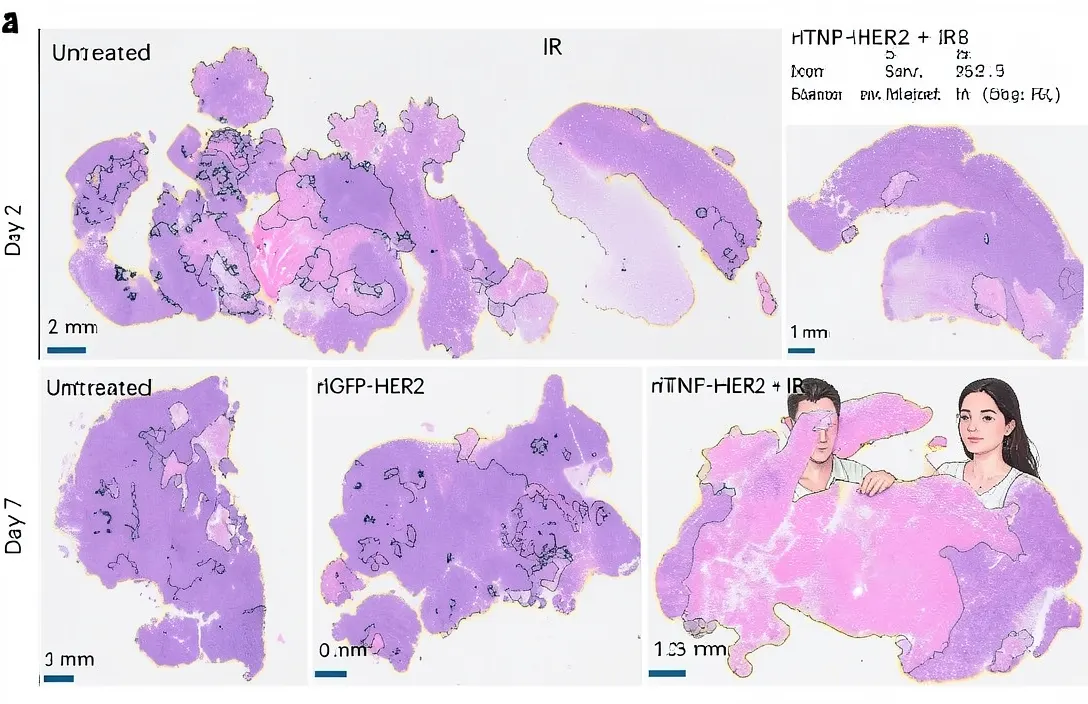

A study published in Nature Cancer describes a new CAR T-cell platform that uses a radiation-activated switch to enhance tumor regression. The engineered CAR T cells carry a gene for tumor necrosis factor (TNF), which is released only when the tumor is irradiated. This combination of TNF-releasing CAR T cells and local radiation resulted in greater tumor regression compared to either treatment alone or with standard CAR T cells plus radiation, according to the research (1). [1]
The tumor microenvironment (TME) poses significant challenges for CAR T-cell therapies due to its immunosuppressive nature, which prevents CAR T-cell entry into the tumor and causes exhaustion of the cells that do enter. Researchers engineered CAR T cells to secrete TNF in a controlled manner, effectively overriding immunosuppressive signaling within the TME. This approach enables targeted local delivery of TNF, which is powerful enough to kill tumor cells and damage supporting structures such as blood vessels (1). [1]
The team created a novel promoter—a molecular switch that triggers TNF production in CAR T cells specifically upon exposure to radiation. This switch responds to radiation rather than to tumor recognition, allowing the cells to release TNF even where the CAR cannot find its target. This offers a potential solution to antigen loss, which defeats many engineered cell therapies (1). [1]
The researchers also observed that TNF was not acting on cancer cells alone. Tumors treated with the combination therapy showed extensive necrosis, increased cell death, damaged and leaking blood vessels, and substantially more CAR T cells inside them. Gene expression analysis showed the tumors had switched on inflammatory and antigen-presentation programs, becoming more visible to the immune system (1). [1]
Advertisement
The research was conducted at the University of Chicago Medicine Comprehensive Cancer Center, with experiments carried out in mice models, including those with human tumors and fully intact immune systems. The study specifically tested the platform in a pancreatic tumor model, which is notoriously resistant to radiation, highlighting the potential of this approach in particularly challenging cancers. The experimental setup involved localized irradiation of tumor sites, which activated the TNF-releasing switch within the CAR T cells. The irradiation was applied directly to the tumor, ensuring that the TNF was released in proximity to the target tissue. This localized approach was critical to avoid systemic toxicity, a major limitation of traditional TNF administration. The irradiation doses used in the experiments were carefully calibrated to activate the switch without causing excessive damage to surrounding healthy tissue, reflecting the precision required in clinical applications. [1]
The CAR T-cell platform was tested across four different tumor models, demonstrating its broad applicability. These models included both murine and human-derived tumors, allowing researchers to evaluate the therapy's effectiveness in diverse tumor environments. The studies were conducted in mice with tumors on both sides of the body, revealing that irradiating one tumor had a partial effect on the other, though less effective than irradiating both simultaneously. This finding underscores the importance of comprehensive tumor irradiation in achieving optimal therapeutic outcomes. The research also included gene expression analysis of treated tumors, which revealed significant activation of inflammatory and antigen-presentation pathways, indicating that the therapy not only killed cancer cells but also altered the tumor microenvironment to enhance immune recognition. These results were consistent across all tested models, including the pancreatic tumor model, which is typically resistant to conventional treatments. [1]
The tumor microenvironment (TME) was a central focus of the study, with specific attention given to its immunosuppressive nature. Researchers identified that the TME consists of heterogeneous components, including immune cells, blood vessels, and cancer-associated fibroblasts, which collectively support tumor growth and shield it from immune attack. The study emphasized that standard CAR T-cell therapy and radiotherapy often fail to disrupt this support network, allowing surviving cancer cells to regrow. To address this, the researchers engineered CAR T cells with a radiation-activated switch that specifically targets the TME. The switch was based on a promoter gene that responds to radiation, allowing for precise and localized TNF release. This approach aimed to overcome the limitations of previous therapies by integrating radiation, CAR T-cell therapy, and cytokine immunotherapy into a cohesive treatment strategy. The results showed that the combination therapy significantly reduced tumor necrosis, increased cell death, and enhanced CAR T-cell infiltration into the tumor. [1]
A study published in Nature Cancer describes a new CAR T-cell platform that uses a radiation-activated switch to enhance tumor regression. The tumor microenvironment (TME) poses significant challenges for CAR T-cell therapies due to its immunosuppressive nature, which prevents CAR T-cell entry into the tumor and causes exhaustion of the cells that do enter. The team created a novel promoter—a molecular switch that triggers TNF production in CAR T cells specifically upon exposure to radiation (source ID: 1). [1]
Advertisement
The researchers observed that TNF was not acting on cancer cells alone. When the team engineered tumors that could not respond to TNF at all, the therapy still showed promising results, providing evidence that the cytokine was reshaping the tissue around the tumor, including its blood supply. Tumors treated with the combination showed extensive necrosis, increased cell death, damaged and leaking blood vessels, and substantially more CAR T cells inside them (source ID: 1). [1]
Gene expression analysis showed the tumors had switched on inflammatory and antigen-presentation programs, becoming more visible to the immune system rather than simply being killed. Moreover, TNF levels inside treated tumors were roughly a hundredfold above what circulated in the blood, concentrating a cytokine long considered too toxic to give systemically at the precise location where it was needed. This approach worked across four tumor models, in mice carrying human tumors, and in mice with fully intact immune systems (source ID: 1). [1]
Sources
Prepared with AI assistance from the cited sources.
The Cali Reporter newsletter
The stories worth your time.
California, the country, and what comes next. Join our free newsletter for reporting that keeps you informed.
More in Health & Medicine
- Understanding Fascia and the Evidence Behind Fascia Release
Fascia is a connective tissue that plays a structural role in the human body, but evidence supporting specific exercises or tools for 'fascia release' remains limited.
- Antidepressant Effectiveness and Long-Term Use
A new review suggests that some antidepressants may be more effective than others in helping people manage depression symptoms over the long term, according to a study published in The Lancet Psychiatry.
- Experimental Weight-Loss Drug Shows Promise for Knee Osteoarthritis Pain
A new study suggests that an experimental weight-loss drug, retatrutide, may significantly reduce knee pain in people with osteoarthritis and obesity.