Night-Shift Work Linked to Subtle Changes in Heart Structure and Biomarkers
A large-scale study has found that frequent night-shift work is associated with minor differences in heart structure and certain biomarkers linked to cardiovascular health.

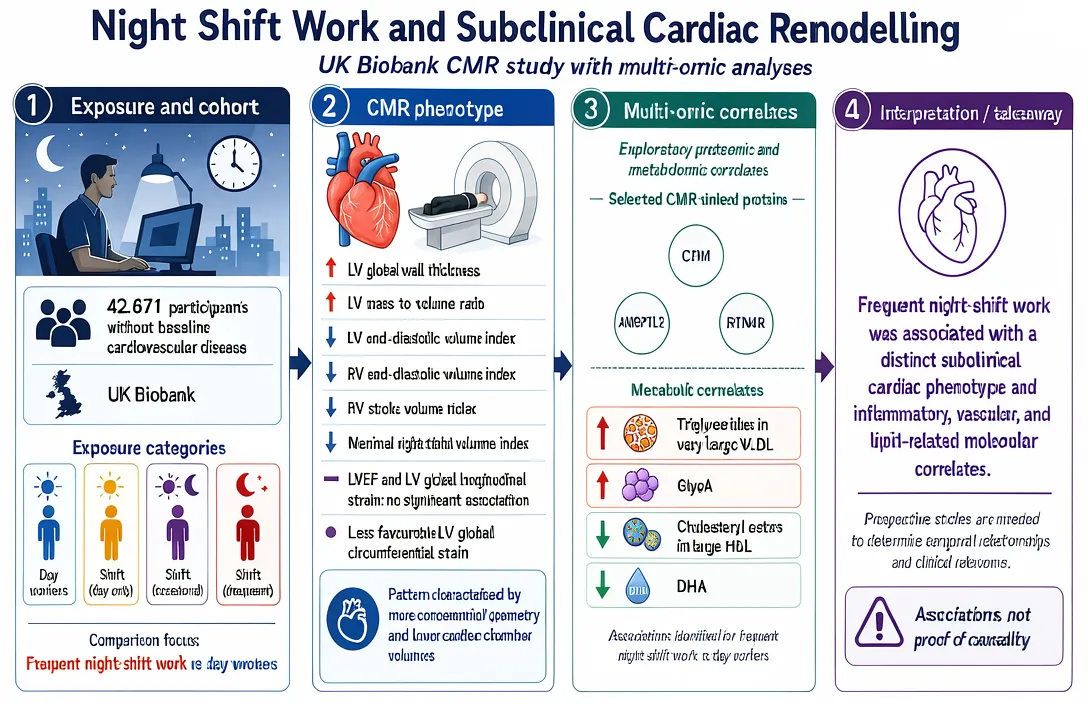

A new study published in the European Heart Journal—Cardiovascular Imaging found that frequent night-shift work is associated with differences in the structure of the heart and how the heart muscle functions. The research, which analyzed data from 42,671 individuals in the UK Biobank, identified subtle structural changes, such as slightly thicker heart walls and smaller heart chambers, among those who frequently worked night shifts (Source ID: 1). [1]
The study also found differences in biomarkers linked to cardiovascular health, including lower levels of DHA, an omega-3 fatty acid that supports heart and blood vessel health, and lower levels of HDL, which is associated with 'good' cholesterol. In contrast, the research observed higher levels of markers related to triglycerides and inflammation (Source ID: 1). [1]
The researchers emphasized that the differences observed were small average differences at a population level and do not mean that all night-shift workers will develop heart disease or heart failure. The study was observational, so it could not establish whether frequent night-shift work directly damages the heart (Source ID: 1). [1]
The researchers acknowledge limitations in the study, including the UK Biobank population being predominantly white European and consisting of healthy volunteers, which may limit the generalizability of findings to other populations. Additionally, the exclusion of participants with unavailable shift-work information may have introduced selection bias (Source ID: 1). [1]
Advertisement
A new study published in the European Heart Journal—Cardiovascular Imaging found that frequent night-shift work is associated with differences in the structure of the heart and how the heart muscle functions (source ID: 1). The research, which analyzed data from 42,671 participants in the UK Biobank, found that individuals who frequently worked night shifts had slightly thicker heart walls in relation to the size of the main pumping chamber and somewhat smaller heart chambers. These structural differences were observed in a population-level analysis, and the researchers emphasized that the findings do not imply that all night-shift workers will develop heart disease or heart failure. [1]
The study also found differences in biomarkers linked to cardiovascular health, including lower levels of DHA, an omega-3 fatty acid that supports heart and blood vessel health, and lower levels of HDL, which is associated with 'good' cholesterol (source ID: 1). Additionally, the researchers observed higher levels of markers related to triglycerides and inflammation. These exploratory findings provide clues to possible biological pathways but do not establish a complete causal pathway from night-shift work to molecular changes and then to the cardiac findings. [1]
The researchers acknowledged limitations in the study, including the predominantly white European population of the UK Biobank and the exclusion of participants with unavailable shift-work information. These factors may limit the generalizability of the findings to other populations. The study authors suggest that further research is needed to investigate the long-term effects of night-shift work on cardiac structure and function and to determine whether changes can be reversed with reduced exposure to night shifts (source ID: 1). [1]
A new study published in the European Heart Journal—Cardiovascular Imaging found that frequent night-shift work is associated with differences in the structure of the heart and how the heart muscle functions (source ID: 1). The research analyzed data from a prospective cohort of 42,671 men and women in the UK Biobank, with a mean age of 52 at baseline, of whom 1,322 reported frequent night-shift work. The researchers did not include participants who had cardiovascular disease at the outset of the study. Using scans from cardiac magnetic resonance imaging, the researchers found that people who frequently worked night shifts tended to have slightly thicker walls in the heart in relation to the size of the main pumping chamber and somewhat smaller heart chambers. [1]
Advertisement
The study also found differences in biomarkers linked to cardiovascular health, including lower levels of DHA, an omega-3 fatty acid that supports heart and blood vessel health, and lower levels of HDL, which is associated with 'good' cholesterol (source ID: 1). There were higher levels of markers relating to triglycerides, a type of fat that can raise the risk of heart disease when levels are too high, and markers relating to inflammation. These exploratory findings, together with genetic analyses of selected molecular markers, provide clues to possible biological pathways. However, they do not establish a complete causal pathway from night-shift work to molecular changes and then to the cardiac findings. [1]
The researchers stress that the differences they observed were small average differences at a population level and do not mean that all night-shift workers will develop heart disease or heart failure (source ID: 1). Study author Dr. Muwei Li, from Zhengzhou University, emphasized that the research was observational and could not establish whether frequent night-shift work directly damages the heart. Nonetheless, he suggested that people who regularly work at night should pay particular attention to taking care of their cardiovascular health, including maintaining a healthy diet, staying physically active, and keeping blood pressure, cholesterol, and blood glucose well controlled. [1]
The study notes that further research is needed to investigate the long-term effects and clinical implications of the differences in biomarkers and heart structure identified in the research (source ID: 1). The researchers emphasize that their findings are based on a single time point assessment, and they cannot determine what would happen if someone reduced or stopped night-shift work (source ID: 1). The study highlights the importance of understanding whether cardiac differences become more pronounced with longer exposure to night-shift work, whether they improve when night-shift exposure is reduced, and whether they are associated with future cardiovascular disease (source ID: 1). [1]
The researchers acknowledge limitations in the study, including the predominantly white European population of the UK Biobank and the exclusion of participants with unavailable shift-work information (source ID: 1). These participants tended to be older and have a higher prevalence of cardiometabolic disease, which may introduce selection bias (source ID: 1). The study's findings may not be generalizable to other populations or individuals with different health profiles (source ID: 1). [1]
Advertisement
The researchers suggest that people who regularly work at night should pay particular attention to taking care of their cardiovascular health, including not smoking, staying physically active, maintaining a healthy diet and weight, getting sufficient sleep, and keeping sleep timing as regular as possible (source ID: 1). Doctors may wish to consider night-shift work as part of a patient's occupational and lifestyle history, particularly when that person also has established cardiovascular risk factors (source ID: 1). [1]
Sources
Prepared with AI assistance from the cited sources.
The Cali Reporter newsletter
The stories worth your time.
California, the country, and what comes next. Join our free newsletter for reporting that keeps you informed.
More in Health & Medicine
- Understanding Fascia and the Evidence Behind Fascia Release
Fascia is a connective tissue that plays a structural role in the human body, but evidence supporting specific exercises or tools for 'fascia release' remains limited.
- Antidepressant Effectiveness and Long-Term Use
A new review suggests that some antidepressants may be more effective than others in helping people manage depression symptoms over the long term, according to a study published in The Lancet Psychiatry.
- Experimental Weight-Loss Drug Shows Promise for Knee Osteoarthritis Pain
A new study suggests that an experimental weight-loss drug, retatrutide, may significantly reduce knee pain in people with osteoarthritis and obesity.