Newly Discovered Mechanism May Help Ovarian Cancer Cells Silence Tumor-Suppressor Genes
Researchers have identified a previously unknown link between two regulatory systems that may contribute to the progression of high-grade serous ovarian carcinoma.

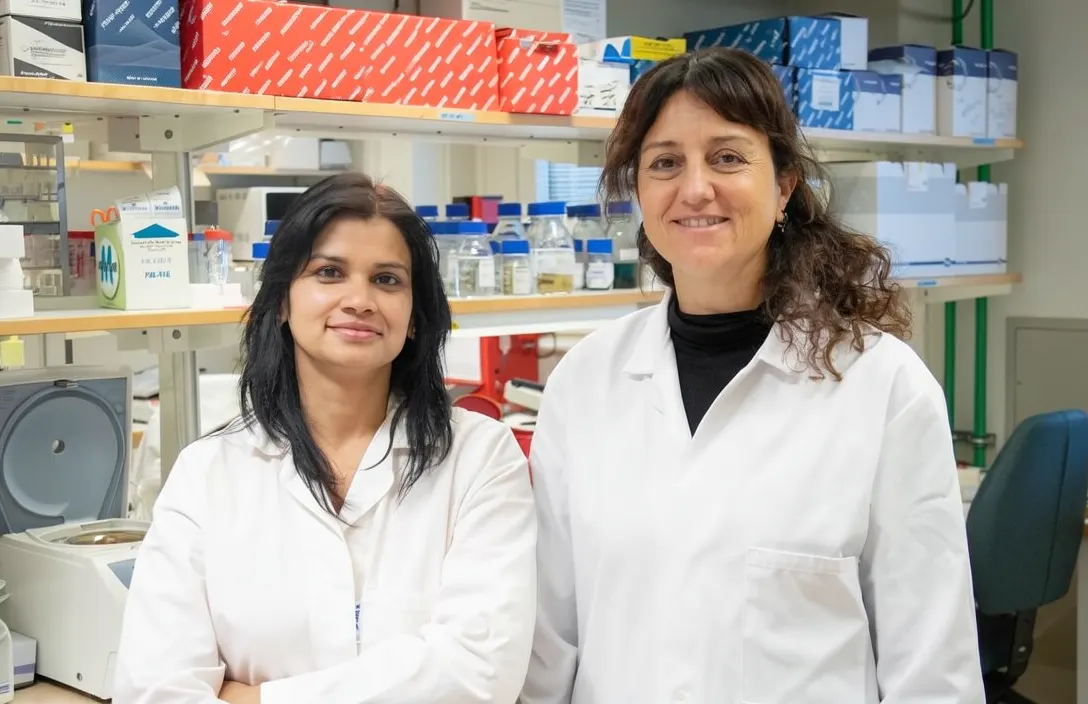

Researchers Kanchan Kumari and Francesca Aguilo from Umeå University have identified how chemical marks on RNA control a DNA methylation enzyme, contributing to the silencing of tumor-suppressor genes in ovarian cancer cells (Source ID: 1). This discovery, published in Science Advances, reveals a previously unknown link between two systems that regulate gene activity in cancer cells. The study highlights how METTL3, an enzyme that modifies messenger RNA, increases the production of DNMT1, an enzyme that methylates DNA and helps keep tumor-suppressor genes switched off. [1]
The study shows that METTL3 adds a chemical modification to the messenger RNA that carries the instructions for producing DNMT1, allowing more DNMT1 protein to be produced without increasing the amount of messenger RNA (Source ID: 1). This modification affects how efficiently the information in the RNA is used to produce DNMT1 protein, thereby indirectly influencing tumor-suppressor genes that DNMT1 helps keep switched off. The findings provide new insights into the disease and may contribute to the development of new treatment strategies for high-grade serous ovarian carcinoma. [1]
Experiments in both cell-based models and animal studies demonstrated that inhibiting METTL3 reduced ovarian cancer cell growth and the cells' ability to form colonies. In a mouse model of ovarian cancer, reducing METTL3 delayed tumor development and reduced tumor growth (Source ID: 1). When DNMT1 was inhibited, DNA methylation across the genome decreased, while the activity of tumor-suppressor genes increased. These results emphasize the importance of understanding the fundamental mechanisms of gene regulation in cancer. [1]
The study was conducted at Umeå University in Sweden and involved collaboration with several international institutions, including the Hospital del Mar Medical Research Institute (HMRI) and the Josep Carreras Leukaemia Research Institute (IJC) in Barcelona, Spain, the Centro de Investigación Biomédica en Red Cáncer (CIBERONC) in Madrid, Spain, and the University of Chicago in the United States. These partnerships facilitated a multidisciplinary approach to understanding the molecular mechanisms underlying ovarian cancer progression. The research focused specifically on high-grade serous ovarian carcinoma (HGSOC), which is the most aggressive and lethal subtype of ovarian cancer and accounts for the majority of ovarian cancer-related deaths. This form of the disease is particularly challenging to treat due to its late-stage diagnosis and lack of effective screening methods. The study was published in *Science Advances* in 2026, and the findings were highlighted for their potential to contribute to the development of new treatment strategies for HGSOC. The research team included Kanchan Kumari and Francesca Aguilo, with Kumari serving as the first and co-corresponding author of the study. The research was supported by the collaboration between Umeå University and these international partners, which allowed for a comprehensive investigation into the role of METTL3 and DNMT1 in ovarian cancer progression. The study also emphasized the importance of understanding the interaction between RNA modifications and DNA methylation in cancer cells, which had previously been studied independently. This work represents a significant advancement in the field of ovarian cancer research and may lead to new therapeutic approaches for this aggressive form of the disease. [1]
Advertisement
The research team at Umeå University investigated the role of METTL3, an enzyme that adds a specific chemical modification known as m6A to messenger RNA (mRNA), in the regulation of DNMT1, an enzyme involved in DNA methylation. The study demonstrated that METTL3 enhances the production of DNMT1 protein by increasing the efficiency of mRNA translation without increasing the overall levels of mRNA. This process allows for greater DNMT1 activity, which in turn contributes to the silencing of tumor-suppressor genes. The findings were validated using both cell-based experiments and animal models, with results showing that inhibiting METTL3 reduced ovarian cancer cell growth and colony formation. In a mouse model, reducing METTL3 delayed tumor development and decreased tumor growth. Additionally, inhibiting DNMT1 led to a reduction in DNA methylation across the genome and an increase in the activity of tumor-suppressor genes. These results suggest that METTL3 and DNMT1 play critical roles in the progression of high-grade serous ovarian carcinoma. The study also noted that METTL3 and its partner enzyme, METTL14, are associated with poor clinical outcomes in ovarian cancer patients. The research team emphasized the importance of understanding the molecular mechanisms that drive cancer progression in order to develop new treatment strategies. This work represents a significant step forward in the understanding of gene regulation in ovarian cancer and may lead to new therapeutic targets for this disease. [1]
Researchers Kanchan Kumari and Francesca Aguilo have discovered how chemical marks on RNA control a DNA methylation enzyme and contribute to the silencing of tumor-suppressor genes in ovarian cancer cells (Source ID: 1). The findings provide new insights into the disease and may, in the long term, contribute to the development of new treatment strategies for high-grade serous ovarian carcinoma. The study, published in Science Advances, identifies a previously unknown link between two systems that regulate gene activity in cancer cells. [1]
The study shows how METTL3, an enzyme that modifies messenger RNA, increases the production of DNMT1, an enzyme that methylates DNA and helps keep tumor-suppressor genes switched off. The researchers found that METTL3 adds a chemical modification to the messenger RNA that carries the instructions for producing DNMT1. This modification allows more DNMT1 protein to be produced without increasing the amount of messenger RNA (Source ID: 1). [1]
Experiments in both cell-based models and animal studies demonstrated that inhibiting METTL3 reduced ovarian cancer cell growth and the cells' ability to form colonies. When METTL3 was inhibited, ovarian cancer cell growth and the cells' ability to form colonies decreased. In a mouse model of ovarian cancer, reducing METTL3 delayed tumor development and reduced tumor growth (Source ID: 1). [1]
Advertisement
The Cali Reporter newsletter
The stories worth your time.
California, the country, and what comes next. Join our free newsletter for reporting that keeps you informed.
More in Health & Medicine
- Understanding Fascia and the Evidence Behind Fascia Release
Fascia is a connective tissue that plays a structural role in the human body, but evidence supporting specific exercises or tools for 'fascia release' remains limited.
- Antidepressant Effectiveness and Long-Term Use
A new review suggests that some antidepressants may be more effective than others in helping people manage depression symptoms over the long term, according to a study published in The Lancet Psychiatry.
- Experimental Weight-Loss Drug Shows Promise for Knee Osteoarthritis Pain
A new study suggests that an experimental weight-loss drug, retatrutide, may significantly reduce knee pain in people with osteoarthritis and obesity.