New Research Explains Earth's Missing Geological History
A study published in Nature suggests that the Great Unconformity, a vast gap in Earth's geological record, may be the result of slow continental movements driven by deep mantle convection.

More than a billion years of Earth's geological history are missing from some of the planet's rock formations. Scientists have debated the cause of this enormous gap for decades, but new research suggests that the answer may lie in the slow movement of entire continents, driven by powerful forces deep inside Earth. A study led by a PhD candidate at the University of Wollongong (UOW) offers a new explanation for the Great Unconformity, one of geology's most enduring mysteries. Published in the journal Nature, the findings suggest that ancient continents gradually rose and sank over hundreds of millions of years as hot rock moved through Earth's interior (source ID 1). [1]
Normally, layers of sedimentary rock accumulate over time, creating a geological timeline in which older rocks lie beneath younger ones. Scientists can study these layers to reconstruct ancient environments and understand how Earth has changed over billions of years. Yet this timeline contains a remarkable interruption. At numerous locations worldwide, sedimentary rocks dating to the Cambrian period, around 540 million years ago, rest directly on much older crystalline rocks, including granite that can be more than a billion years old. The intervening geological layers are absent, leaving an enormous break in the record known as the Great Unconformity (source ID 1). [1]
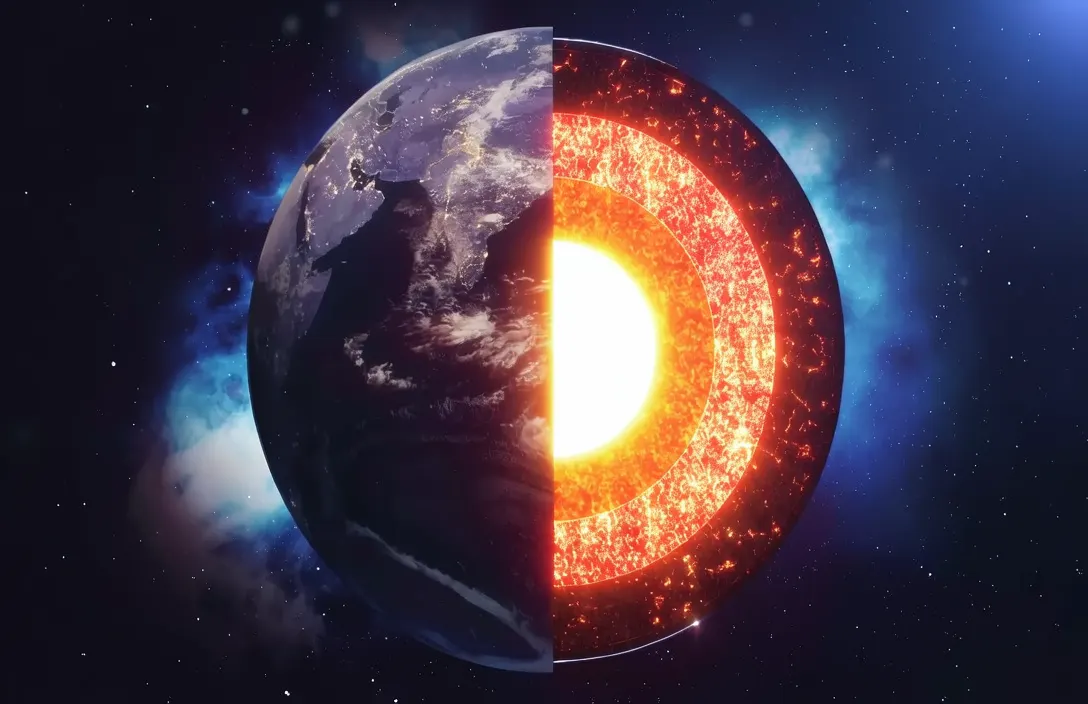
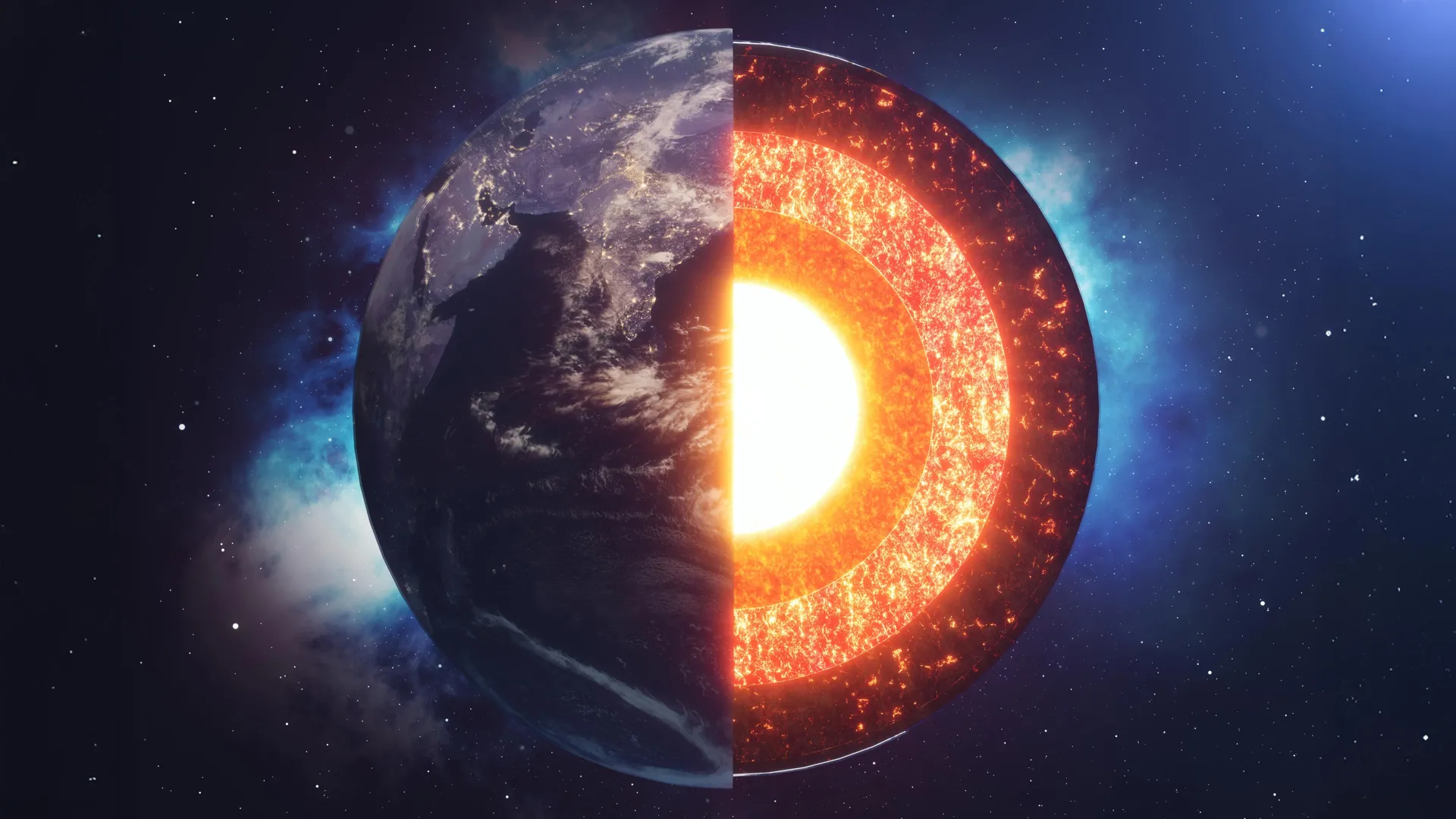
To investigate what caused these missing chapters, Dhungana worked with his supervisor and co-author, Associate Professor Nicolas Flament, to simulate the movement of Earth's mantle over hundreds of millions of years. The mantle is an immense layer of hot, mostly solid rock beneath Earth's crust. Although this material appears rigid on human timescales, it can deform and flow extremely slowly over geological periods. Heat-driven circulation within the mantle, a process called mantle convection, can gradually raise enormous regions of Earth's surface or cause them to subside (source ID 1). [1]
More than a billion years of Earth's geological history are missing from some of the planet's rock formations, according to a study published in the journal Nature. This gap, known as the Great Unconformity, is evident in locations such as the Grand Canyon, where Cambrian period sedimentary rocks rest directly on much older crystalline rocks. The study, led by Santosh Dhungana of the University of Wollongong, suggests that the missing geological layers may have been erased by erosion following the uplift of ancient continents driven by mantle convection (1). [1]
Advertisement
The researchers simulated the movement of Earth's mantle over hundreds of millions of years and found that mantle convection could have caused ancient continents to rise and sink. When continents rise, erosion can strip away extensive layers of older rock, removing hundreds of millions of years of geological history. This process may explain the disappearance of ancient rock layers and the preservation of the geological boundary that remains visible today (1). [1]
The simulations revealed a striking pattern across three major ancient continental regions: Laurentia, Baltica, and North China. According to the models, mantle convection caused these continents to rise during the Neoproterozoic Era, followed by widespread subsidence during the Phanerozoic eon. This sequence of uplift, erosion, subsidence, and sediment deposition could have produced the Great Unconformity seen in rock formations today (1). [1]
More than a billion years of Earth's geological history are missing from some of the planet's rock formations, according to a study published in the journal Nature (source ID: 1). Scientists have debated the cause of this enormous gap for decades, but new research suggests that the answer may lie in the slow movement of entire continents, driven by powerful forces deep inside Earth. The study led by a PhD candidate at the University of Wollongong (UOW) offers a new explanation for the Great Unconformity, one of geology's most enduring mysteries. [1]
The simulations revealed a striking pattern across three major ancient continental regions: Laurentia, Baltica, and North China (source ID: 1). According to the models, mantle convection caused the ancient cores of these continents to rise during the Neoproterozoic Era, which extended from roughly one billion to 540 million years ago. This long interval preceded the Cambrian period, when animal life underwent a remarkable expansion in diversity, commonly known as the Cambrian explosion. [1]
Advertisement
The researchers found that this period of uplift was followed by widespread subsidence during the Phanerozoic eon, which encompasses approximately the past 540 million years (source ID: 1). As these ancient continental regions slowly sank, advancing seas covered their eroded surfaces. New sediments accumulated above the exposed older rocks, preserving the boundary between the two. Over immense spans of time, this sequence of uplift, erosion, subsidence, and sediment deposition could have produced the Great Unconformity seen in rock formations today. [1]
Sources
Prepared with AI assistance from the cited sources.
The Cali Reporter newsletter
The stories worth your time.
California, the country, and what comes next. Join our free newsletter for reporting that keeps you informed.
More in Science
- Volcanic Eruption Reshapes Iwo Jima’s Coastline
A recent volcanic eruption near Iwo Jima has temporarily extended the island's black sand beaches, though the longevity of the new land remains uncertain.
- Galaxies in the NGC 7771 Group Engage in Cosmic Merger
Astronomers have observed a group of galaxies in the NGC 7771 Group, which is located approximately 200 million light-years away in the constellation Pegasus. These galaxies are in the process of merging, a phenomenon…
- NASA Awards Contract for NOAA’s Near Earth Orbit Network Program
NASA has awarded a contract to Northrop Grumman Systems Corporation for the Sounder for Microwave-Based Applications (SMBA) instruments on NOAA’s Near Earth Orbit Network (NEON) satellites. The contract includes a…