New Math Tools Improve Accuracy in Brain Activity Measurements
Researchers have developed new computational algorithms that enhance the accuracy of brain activity measurements by correcting for noise in calcium imaging data.

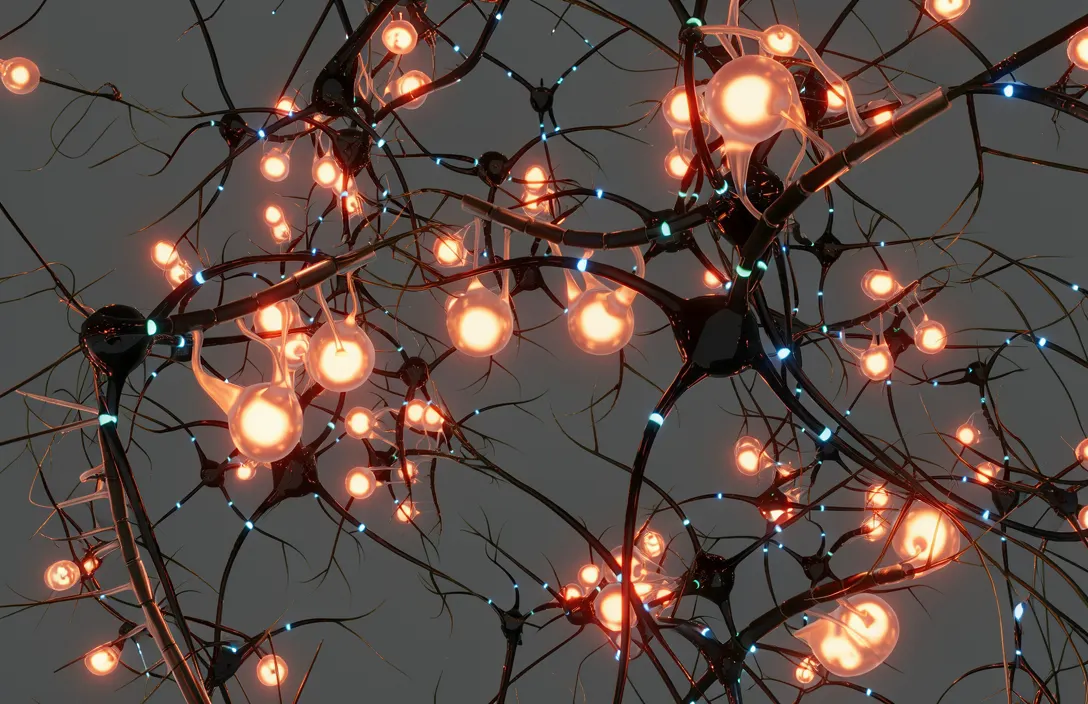

Neuroscientists have traditionally used calcium fluorescence as a proxy for neural activity, but this method has limitations. The calcium indicator only approximates the original shape, size, and origin of neural activity, similar to how a cloud of smoke lingers after a firework explosion (1). Merav Stern, a physics fellow at Rockefeller University, has developed three new computational algorithms that recover the 'fireworks' in the data, providing a more reliable depiction of the underlying neural dynamics (1). [1]
Conventional one-photon imaging can capture large cortical areas but cannot record single neurons. The light signals can also get contaminated by blood flow or the lag time between neural firing and calcium fluorescence, leading to data that show neural activity in the wrong temporal locations (1). Neuroscientists have long attempted to mathematically correct for these complications using the Lucy–Richardson algorithm, which has proven less effective in neuroscience due to assumptions about noise distribution that may not hold true for brain activity (1). [1]
Stern discovered that the noise in brain data does not fall into a Poisson distribution but instead follows the Gaussian or normal distribution. Basing her models on that assumption allowed her to create models that recovered the neural activity itself rather than using calcium fluorescence as a proxy for it (1). The new algorithms, named dynamical binning, first differences, and continuously varying, as well as an adapted Wiener filter–based approach, have shown superior results in cleaning up statistical noise in wide-field calcium imaging data (1). [1]
Neuroscientists have traditionally used calcium fluorescence as a proxy for neural activity, but this method has limitations. Conventional one-photon imaging can capture large cortical areas but cannot record single neurons. Stern discovered that the noise in brain data does not fall into a Poisson distribution but instead follows the Gaussian or normal distribution (source ID: 1). [1]
Advertisement
Merav Stern, a physics fellow at Rockefeller University, has developed three entirely new computational algorithms that recover the "fireworks" in the data. These algorithms offer a more reliable depiction of the underlying neural dynamics compared to using fluorescence as a measure of the neural spiking rate (source ID: 1). [1]
Stern's discovery that the noise in brain data follows a Gaussian distribution allowed her to create models that recover the neural activity itself rather than using calcium fluorescence as a proxy for it. This approach has the potential to improve the conclusions that can be drawn from brain activity recordings (source ID: 1). [1]
Neuroscientists have traditionally used calcium fluorescence as a proxy for neural activity, but this method has limitations. Conventional one-photon imaging can capture large cortical areas but cannot record single neurons. Merav Stern, a physics fellow at Rockefeller University, has developed three entirely new computational algorithms that recover the "fireworks" in the data. Stern's discovery that the noise in brain data follows a Gaussian distribution allowed her to create models that recover the neural activity itself rather than using calcium fluorescence as a proxy for it (1). [1]
Stern's algorithms were developed using a combination of real and synthetic brain activity data sets. Key to their creation was her discovery that the noise in brain data did not fall into a Poisson distribution but instead followed the Gaussian or normal distribution. Basing her models on that assumption allowed her to create models that recovered the neural activity itself rather than using calcium fluorescence as a proxy for it (1). [1]
Advertisement
Stern named these algorithms dynamical binning, first differences, and continuously varying; she also adapted the Wiener filter–based approach. While first differences and dynamical binning had excellent results in select applications, both continuously varying and the adapted Wiener filter–based approach excelled across diverse types of data sets (1). [1]
Sources
Prepared with AI assistance from the cited sources.
The Cali Reporter newsletter
The stories worth your time.
California, the country, and what comes next. Join our free newsletter for reporting that keeps you informed.
More in Health & Medicine
- Understanding Fascia and the Evidence Behind Fascia Release
Fascia is a connective tissue that plays a structural role in the human body, but evidence supporting specific exercises or tools for 'fascia release' remains limited.
- Antidepressant Effectiveness and Long-Term Use
A new review suggests that some antidepressants may be more effective than others in helping people manage depression symptoms over the long term, according to a study published in The Lancet Psychiatry.
- Experimental Weight-Loss Drug Shows Promise for Knee Osteoarthritis Pain
A new study suggests that an experimental weight-loss drug, retatrutide, may significantly reduce knee pain in people with osteoarthritis and obesity.