New Fossil Species Identified in Illinois
A previously unrecognized species, Jeanerpeton mazonensis, has been identified from a fossil discovered in Illinois, offering new insights into Carboniferous-era life.

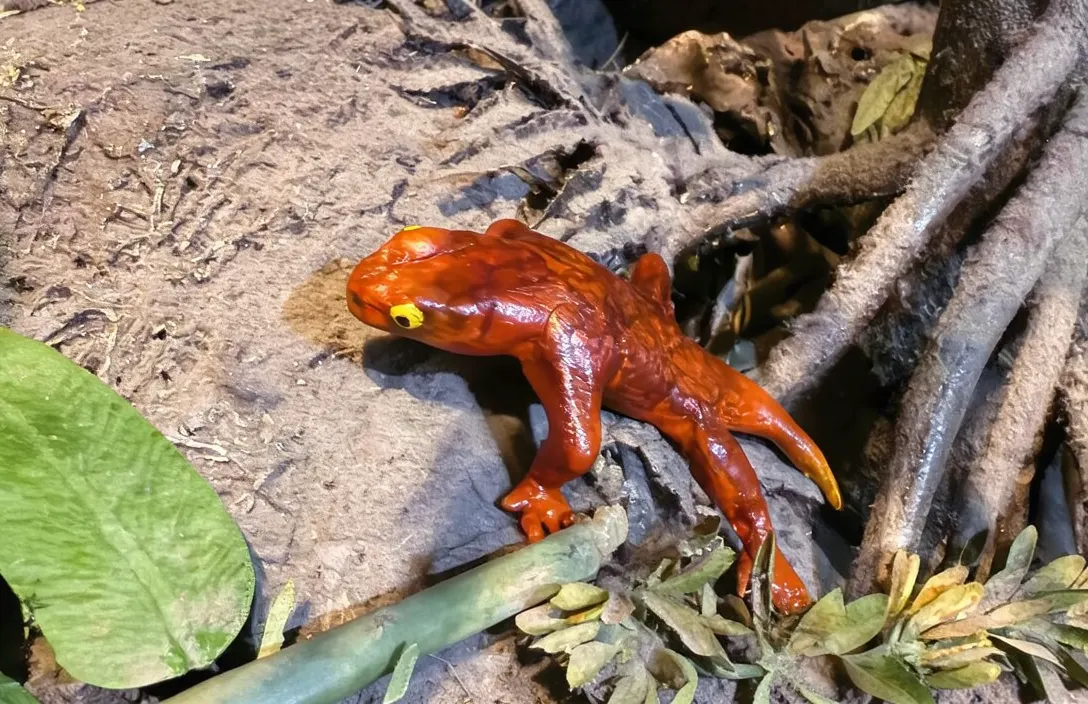
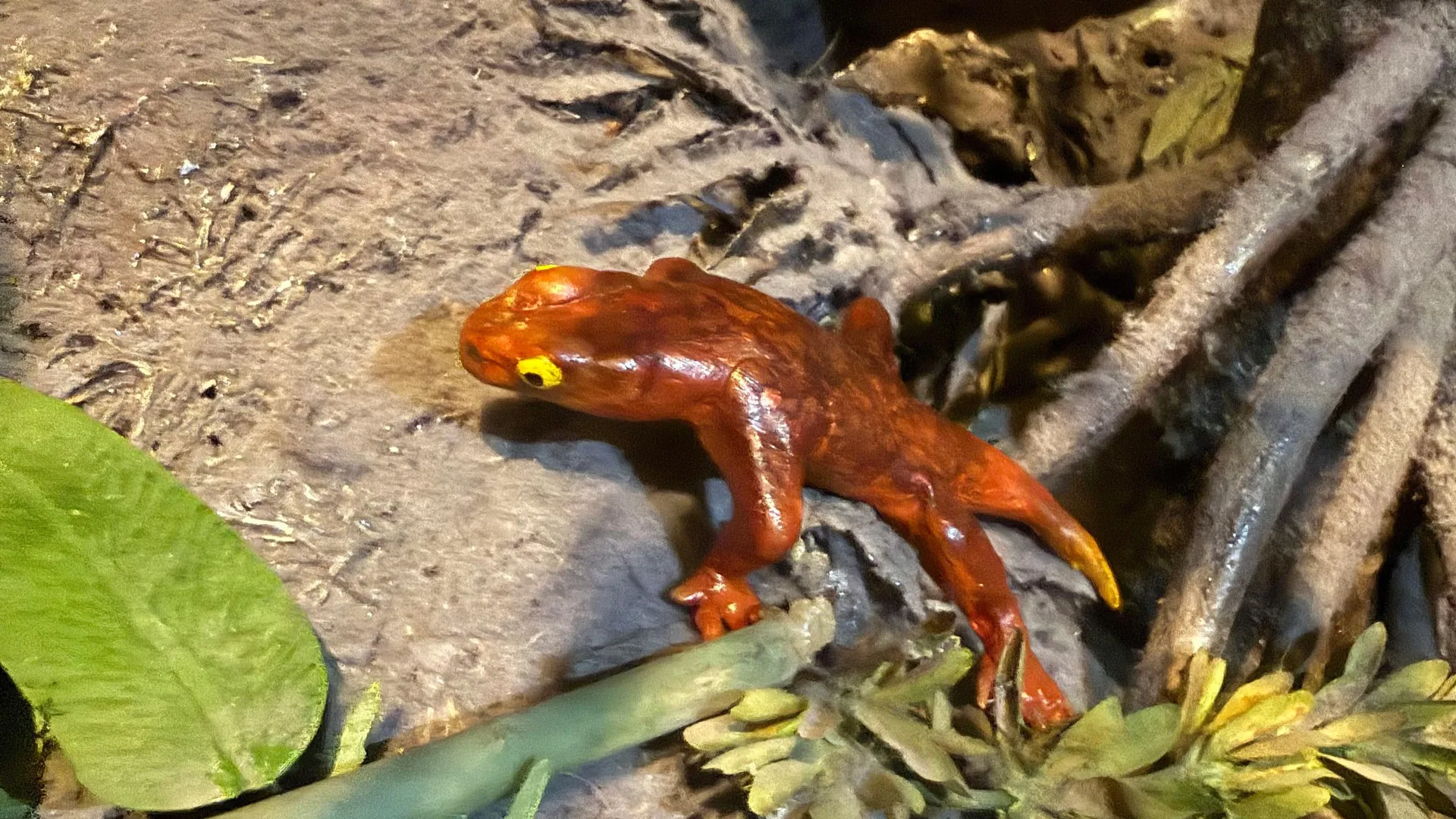
A fossil discovered in Illinois years ago has turned out to belong to a previously unrecognized species that lived 309 million years ago, long before dinosaurs appeared. The newly identified species, Jeanerpeton mazonensis, resembled a salamander with the short, stocky body of a frog. Its name means 'Jean's crawler from Mazon Creek,' honoring the mothers of the two student researchers, both of whom are named Jean. The discovery is described in the Journal of Vertebrate Paleontology (source ID 1). [1]
The Mazon Creek fossil deposits are among the world's most important sources of Carboniferous fossils, in large part because of the conditions that existed when the animals were alive. As plants and animals died in the ancient river delta, layers of sediment quickly covered their remains. This rapid burial created ideal conditions for fossilization, sometimes preserving delicate structures that would ordinarily disappear long before they could become fossils (source ID 1). [1]
Although Jeanerpeton mazonensis has only recently been formally described, its fossil was discovered many years earlier. An amateur fossil collector originally found the specimen and later donated it to the Field Museum. When researchers first examined it, they classified the animal as Amphibamus grandiceps, a previously established species known from the Mazon Creek area. However, closer examination eventually revealed that the fossil represented a distinct animal (source ID 1). [1]
The research was co-led by Payton Kohlberg and Allison Sefcovic, who participated in the Field Museum's Women in Science internship program in 2025. The initiative encourages young women to explore careers in scientific research and museums. Both students worked alongside Cam So as members of the research group led by Arjan Mann, the museum's assistant curator of fossil fishes and early tetrapods in the Negaunee Integrative Research Center (source ID 1). [1]
Advertisement
A fossil discovered in Illinois years ago has turned out to belong to a previously unrecognized species that lived 309 million years ago, long before dinosaurs appeared. The Mazon Creek fossil deposits are among the world's most important sources of Carboniferous fossils, in large part because of the conditions that existed when the animals were alive. During the Carboniferous period, the region surrounding present-day Chicago looked dramatically different, with a warm, swampy river delta populated by giant insects, early animals adapted to life on land, and unusual creatures swimming through its waterways (source ID: 1). [1]
The newly identified species, Jeanerpeton mazonensis, resembled a salamander with the short, stocky body of a frog. Its name means "Jean's crawler from Mazon Creek," honoring the mothers of the two student researchers, both of whom are named Jean. The Mazon Creek fossil deposits are among the world's most important sources of Carboniferous fossils, in large part because of the conditions that existed when the animals were alive. As plants and animals died in the ancient river delta, layers of sediment quickly covered their remains, creating ideal conditions for fossilization (source ID: 1). [1]
Although Jeanerpeton mazonensis has only recently been formally described, its fossil was discovered many years earlier. An amateur fossil collector originally found the specimen and later donated it to the Field Museum. When researchers first examined it, they classified the animal as Amphibamus grandiceps, a previously established species known from the Mazon Creek area. However, closer examination eventually revealed that the fossil represented a distinct animal (source ID: 1). [1]
The research was co-led by Payton Kohlberg and Allison Sefcovic, who participated in the Field Museum's Women in Science internship program in 2025. The initiative encourages young women to explore careers in scientific research and museums. Both students worked alongside Cam So as members of the research group led by Arjan Mann, the museum's assistant curator of fossil fishes and early tetrapods in the Negaunee Integrative Research Center (source ID: 1). [1]
Advertisement
A fossil discovered in Illinois years ago has turned out to belong to a previously unrecognized species that lived 309 million years ago, long before dinosaurs appeared (1). The Mazon Creek fossil deposits are among the world's most important sources of Carboniferous fossils, in large part because of the conditions that existed when the animals were alive (1). These deposits are particularly valuable because the rapid burial of remains in the ancient river delta created ideal conditions for fossilization, sometimes preserving delicate structures like toe pads, body outlines, scales, and even eye impressions (1). [1]
The newly identified species, Jeanerpeton mazonensis, resembled a salamander with the short, stocky body of a frog (1). Its name means "Jean's crawler from Mazon Creek," honoring the mothers of the two student researchers, both of whom are named Jean (1). The discovery is described in the Journal of Vertebrate Paleontology (1). Although Jeanerpeton mazonensis has only recently been formally described, its fossil was discovered many years earlier (1). [1]
An amateur fossil collector originally found the specimen and later donated it to the Field Museum (1). When researchers first examined it, they classified the animal as Amphibamus grandiceps, a previously established species known from the Mazon Creek area (1). However, closer examination eventually revealed that the fossil represented a distinct animal (1). This highlights how museum collections can continue to produce discoveries long after fossils are first collected (1). [1]
A fossil discovered in Illinois years ago has turned out to belong to a previously unrecognized species that lived 309 million years ago, long before dinosaurs appeared (1). The Mazon Creek fossil deposits are among the world's most important sources of Carboniferous fossils, in large part because of the conditions that existed when the animals were alive (1). During the Carboniferous period, the region surrounding present-day Chicago looked dramatically different. Instead of a modern city, the landscape was a warm, swampy river delta populated by giant insects, early animals adapted to life on land, and unusual creatures swimming through its waterways (1). [1]
Advertisement
The newly identified species, Jeanerpeton mazonensis, resembled a salamander with the short, stocky body of a frog (1). Its name means "Jean's crawler from Mazon Creek," honoring the mothers of the two student researchers, both of whom are named Jean (1). The discovery is described in the Journal of Vertebrate Paleontology (1). A 309-Million-Year-Old Fossil With Extraordinary Detail (1). [1]
What's really cool about Mazon Creek is that it preserves all of these unusual details -- things like toe pads and body outlines (1). In the fossil of Jeanerpeton, we can see some of the scales on its back and tiny 'belly ribs' called gastralia. You can even see the eye impressions! It's so cool to see (1). These exceptionally preserved features offer valuable evidence of what early amphibian relatives looked like (1). [1]
Sources
Prepared with AI assistance from the cited sources.
The Cali Reporter newsletter
The stories worth your time.
California, the country, and what comes next. Join our free newsletter for reporting that keeps you informed.
More in Science
- Volcanic Eruption Reshapes Iwo Jima’s Coastline
A recent volcanic eruption near Iwo Jima has temporarily extended the island's black sand beaches, though the longevity of the new land remains uncertain.
- Galaxies in the NGC 7771 Group Engage in Cosmic Merger
Astronomers have observed a group of galaxies in the NGC 7771 Group, which is located approximately 200 million light-years away in the constellation Pegasus. These galaxies are in the process of merging, a phenomenon…
- NASA Awards Contract for NOAA’s Near Earth Orbit Network Program
NASA has awarded a contract to Northrop Grumman Systems Corporation for the Sounder for Microwave-Based Applications (SMBA) instruments on NOAA’s Near Earth Orbit Network (NEON) satellites. The contract includes a…