New Brain-Mapping Tool Reveals How the Brain Computes Motion Direction
Researchers at UC San Francisco have developed a new brain-mapping tool that shows the brain computes motion direction independently of the eye's signals.

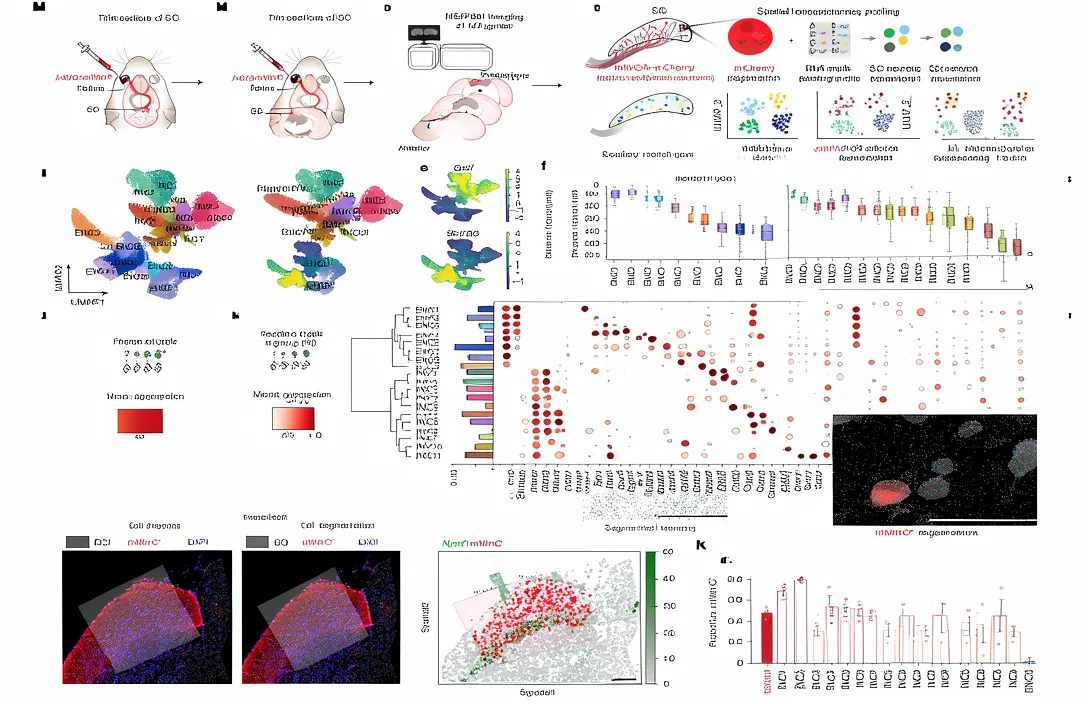

Scientists have long known that certain cells in the eye activate only when something moves in a particular direction, and they assumed the brain simply received that information directly from those eye cells. However, no tool existed to confirm this hypothesis by mapping out the precise connections between cells in the eye and those in the brain until now. Researchers at UC San Francisco have developed a new brain-mapping tool to trace these connections, revealing that the brain doesn't just take the eye's word for the direction of motion; some cells in the brain also compute it on their own (Source ID: 1). [1]
The new technology, called TransA-MERFISH, combines anterograde trans-neuronal tracing with MERFISH, a technique that analyzes the gene activity of every cell in a tissue slice at once. This approach allowed researchers to sort nearly 46,000 mouse brain cells into types and flag which ones were lit up by signals from the eye. The study, published in Nature, provides a blueprint for revealing structural maps of the brain and illustrates how these maps can be used to answer longstanding questions regarding brain function (Source ID: 1). [1]
In the retinas of mammals, one group of cells is finely tuned to the direction of motion. Specific cells fire for movement that is left, right, up or down, while combinations of cells fire to indicate movement at an angle. Using their new tool, researchers found that some cells in the superior colliculus, an area of the brain previously shown to play a role in direction sensing, did not connect to these specific eye cells. Instead, they used basic visual information to compute motion direction on their own (Source ID: 1). [1]
The study also shows that even when the eye's dedicated direction-sensing machinery was disabled, this second group of brain cells could still detect which way objects were moving. Understanding these connections is key for developing treatments and technologies to restore vision in people with conditions such as glaucoma, optic nerve injuries, and multiple sclerosis (Source ID: 1). [1]
Advertisement
Scientists have long known that certain cells in the eye activate only when something moves in a particular direction, and they assumed the brain simply received that information directly from those eye cells. However, no tool existed to confirm this hypothesis by mapping out the precise connections between cells in the eye and those in the brain. Now, researchers at UC San Francisco have developed a new brain-mapping tool to trace these connections (source ID 1). [1]
The new technology, called TransA-MERFISH, combines anterograde trans-neuronal tracing with MERFISH, a technique that analyzes the gene activity of every cell in a tissue slice at once. This approach allowed researchers to map nearly 46,000 mouse brain cells and identify which ones received signals from the eyes (source ID 1). [1]
In the retinas of mammals, one group of cells is finely tuned to the direction of motion. The study also shows that even when the eye's dedicated direction-sensing machinery was disabled, this second group of brain cells could still detect which way objects were moving. This suggests that the brain has an independent mechanism for computing motion direction (source ID 1). [1]
Scientists have long known that certain cells in the eye activate only when something moves in a particular direction, and they assumed the brain simply received that information directly from those eye cells. However, no tool existed to confirm this hypothesis by mapping out the precise connections between cells in the eye and those in the brain. Now, researchers at UC San Francisco have developed a new brain-mapping tool called TransA-MERFISH, which combines anterograde trans-neuronal tracing with MERFISH, a technique that analyzes the gene activity of every cell in a tissue slice at once (source ID: 1). [1]
Advertisement
Using this technology, researchers showed that the brain doesn't just take the eye's word for the direction of motion; some cells in the brain also compute it on their own. The study found that in the retinas of mammals, one group of cells is finely tuned to the direction of motion. Specific cells fire for movement that is left, right, up or down, while combinations of cells fire to indicate movement at an angle (source ID: 1). [1]
The research team used their new tool to study an area of the brain previously shown to play a role in direction sensing, called the superior colliculus. They showed mice a screen of moving black bars scrolling in any of eight different directions—including diagonal—and recorded in real time which eye and superior colliculus cells fired when. One group of cells behaved as expected, receiving precalculated direction signals directly from specialized retinal cells. But another set of cells within the superior colliculus didn't connect to these specific eye cells. Instead, they used basic visual information to compute motion direction on their own (source ID: 1). [1]
What's more, even when the eye's dedicated direction-sensing machinery was disabled, this second group of brain cells could still detect which way objects were moving. This finding suggests that the brain has an independent mechanism for detecting motion direction, which may help in sensing larger background movements or the movement of the body through the world (source ID: 1). [1]
Scientists have long known that certain cells in the eye activate only when something moves in a particular direction, and they assumed the brain simply received that information directly from those eye cells. The new technology, called TransA-MERFISH, combines anterograde trans-neuronal tracing with MERFISH, a technique that analyzes the gene activity of every cell in a tissue slice at once (source ID: 1). This innovation has enabled researchers to map the precise connections between cells in the eye and those in the brain, offering new insights into how motion direction is perceived. [1]
Advertisement
In the retinas of mammals, one group of cells is finely tuned to the direction of motion. Specific cells fire for movement that is left, right, up or down, while combinations of cells fire to indicate movement at an angle. Using the TransA-MERFISH tool, researchers studied the superior colliculus, an area of the brain previously shown to play a role in direction sensing (source ID: 1). They observed that one group of cells in the superior colliculus receives precalculated direction signals directly from specialized retinal cells. [1]
Another set of cells within the superior colliculus did not connect to these specific eye cells. Instead, they used basic visual information to compute motion direction on their own. What's more, even when the eye's dedicated direction-sensing machinery was disabled, this second group of brain cells could still detect which way objects were moving (source ID: 1). This finding suggests that the brain has a redundant system for detecting motion direction, which may serve different functional roles. [1]
Sources
Prepared with AI assistance from the cited sources.
The Cali Reporter newsletter
The stories worth your time.
California, the country, and what comes next. Join our free newsletter for reporting that keeps you informed.
More in Health & Medicine
- Understanding Fascia and the Evidence Behind Fascia Release
Fascia is a connective tissue that plays a structural role in the human body, but evidence supporting specific exercises or tools for 'fascia release' remains limited.
- Antidepressant Effectiveness and Long-Term Use
A new review suggests that some antidepressants may be more effective than others in helping people manage depression symptoms over the long term, according to a study published in The Lancet Psychiatry.
- Experimental Weight-Loss Drug Shows Promise for Knee Osteoarthritis Pain
A new study suggests that an experimental weight-loss drug, retatrutide, may significantly reduce knee pain in people with osteoarthritis and obesity.