New Bacterium Discovered in Deep-Sea Sea Pigs
Researchers have identified a previously unknown bacterium living within the body walls of deep-sea sea pigs, offering new insights into how bacteria adapt to living in close association with other organisms.

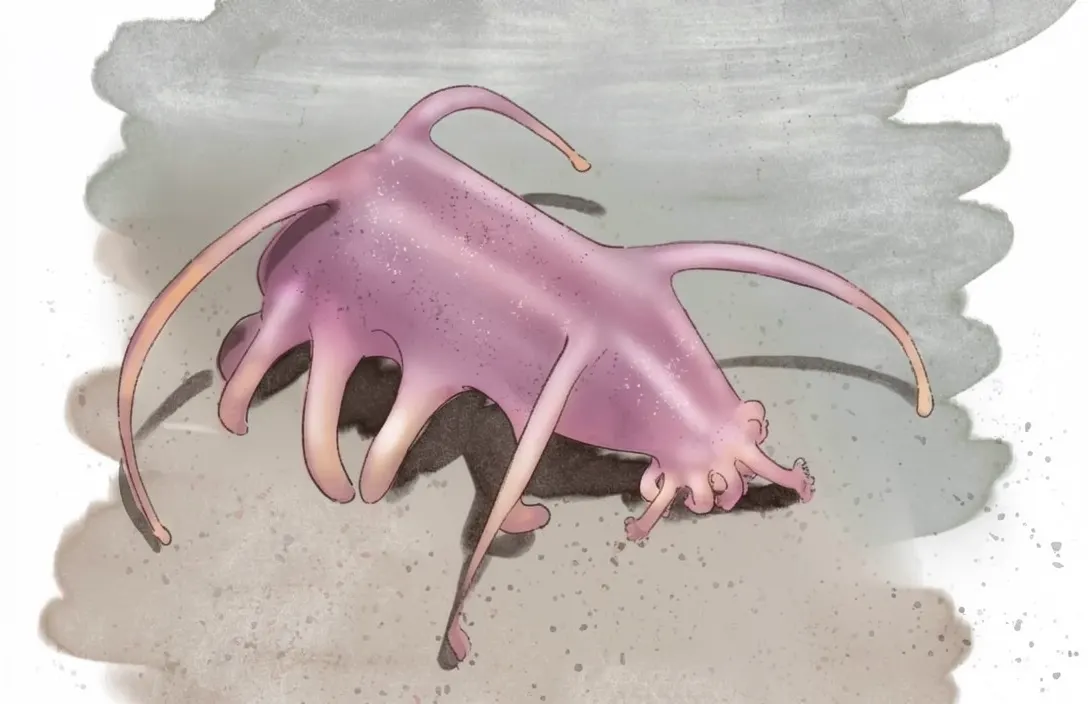
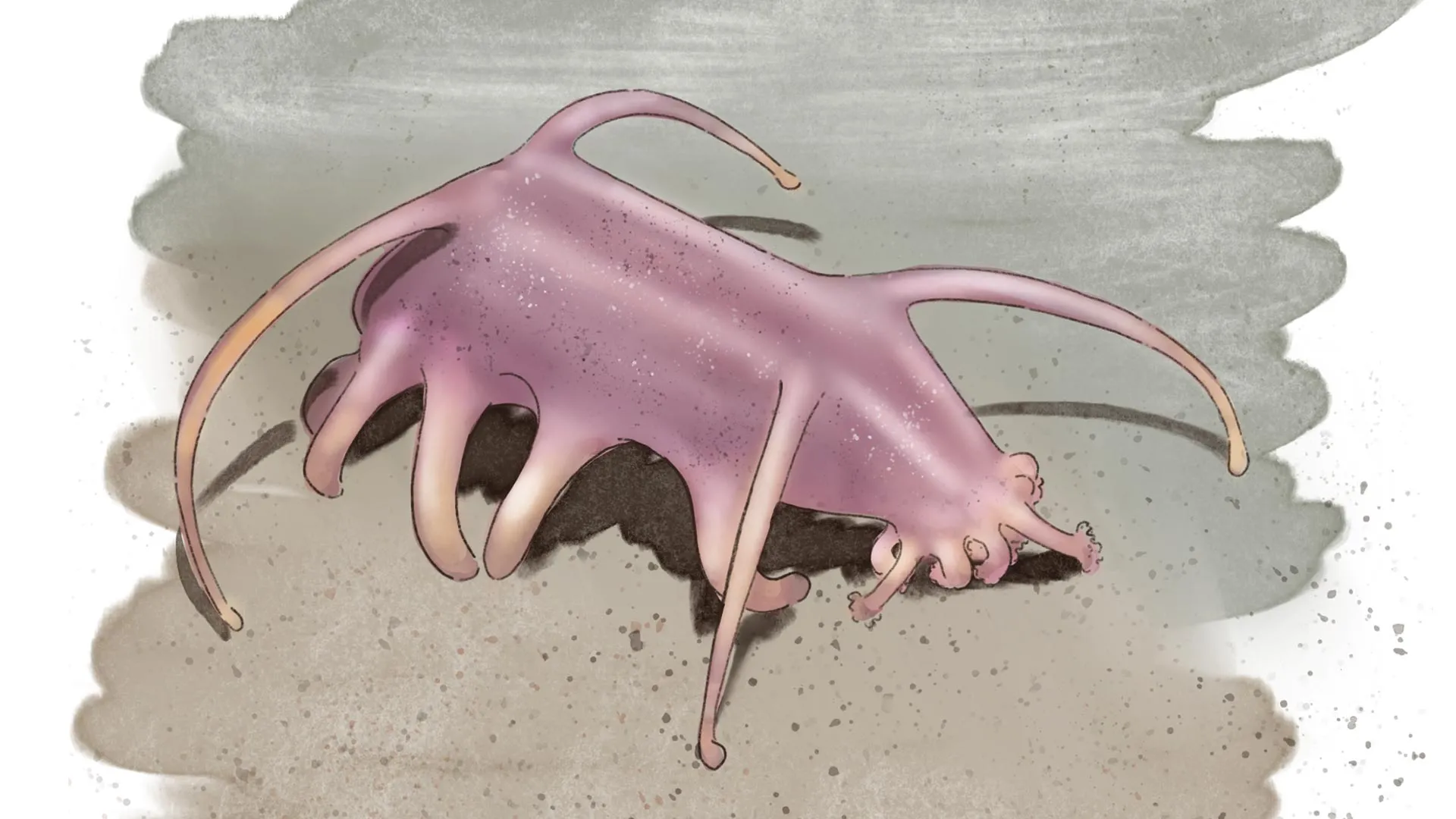
Deep beneath the ocean's surface, strange, translucent creatures known as sea pigs crawl across the seafloor. Now, researchers at the University of Tokyo have discovered that these unusual animals are hiding something even stranger beneath their "skin." Living within their body walls is a previously unknown bacterium with an extraordinarily small genome and a surprising collection of genes responsible for producing enormous proteins (1). The researchers identified the bacterium, which they named Candidatus Abyssoplasma scotoplanesicola, and used fluorescence imaging to pinpoint its location inside sea pig tissues. [1]
Genetic analysis revealed that its genome contains just 649,000 DNA bases, yet more than a quarter of its genetic material is devoted to producing groups of proteins associated with the bacterial surface. Some of these "giant" proteins contain more than 5,000 amino acids and may help the bacteria interact with their hosts or form clusters (clustering into groups) (1). The discovery offers new insights into how bacteria adapt to living in close association with other organisms and which biological functions they retain as they become increasingly dependent on their hosts. [1]
Sea pigs belong to a group of marine invertebrates called echinoderms (marine invertebrates including sea cucumbers and sea stars). Like other members of this group, they can harbor bacteria beneath their outer body covering. Scientists are particularly interested in understanding how these microorganisms interact with their hosts and how such relationships evolved (1). This research is also ecologically important because sea cucumbers make up more than 90% of the biomass of large seafloor animals in some deep-ocean environments. [1]
Researchers at the University of Tokyo have identified a previously unknown bacterium, named Candidatus Abyssoplasma scotoplanesicola, living within the body walls of sea pigs. Using fluorescence imaging, they pinpointed the location of this bacterium inside sea pig tissues. Genetic analysis revealed that its genome contains just 649,000 DNA bases, which is significantly smaller than the genome of Escherichia coli, a widely studied bacterium (source ID: 1). [1]
Advertisement
Despite its small genome, more than a quarter of the bacterium's genetic material is devoted to producing groups of proteins associated with the bacterial surface. Some of these proteins contain more than 5,000 amino acids, which is unusually large compared to the average bacterial protein length of about 300 amino acids. This finding suggests that these proteins may play a significant role in the bacterium's interaction with its host or in forming clusters (source ID: 1). [1]
The discovery of this bacterium offers new insights into how bacteria adapt to living in close association with other organisms. The bacterium's genome lacks some genes involved in energy-producing processes, indicating that it may rely heavily on its host for essential nutrients such as amino acids, nucleic acid precursors, lipids, and mineral nutrients. However, the exact functions of the bacterium's large surface proteins and the potential benefits to the sea pig remain unknown (source ID: 1). [1]
Deep beneath the ocean's surface, strange, translucent creatures known as sea pigs crawl across the seafloor. Researchers at the University of Tokyo have identified a previously unknown bacterium, named Candidatus Abyssoplasma scotoplanesicola, living within the body walls of sea pigs (1). The discovery of this bacterium offers new insights into how bacteria adapt to living in close association with other organisms (1). [1]
Genetic analysis revealed that the bacterium's genome contains just 649,000 DNA bases, yet more than a quarter of its genetic material is devoted to producing groups of proteins associated with the bacterial surface. Some of these "giant" proteins contain more than 5,000 amino acids and may help the bacteria interact with their hosts or form clusters (1). [1]
Advertisement
The researchers identified the bacterium and used fluorescence imaging to pinpoint its location inside sea pig tissues. The results revealed that one particular bacterium was remarkably abundant in the animals' body walls, accounting for more than 70% of bacterial 16S rRNA gene sequences (1). [1]
The absence of genes involved in certain energy-producing processes suggests that the bacterium may have lost some of the biological machinery that many other bacteria use to survive independently. Yet even more remarkable was how much of its limited genetic material was devoted to proteins associated with its surface (1). [1]
Sources
Prepared with AI assistance from the cited sources.
The Cali Reporter newsletter
The stories worth your time.
California, the country, and what comes next. Join our free newsletter for reporting that keeps you informed.
More in Science
- Volcanic Eruption Reshapes Iwo Jima’s Coastline
A recent volcanic eruption near Iwo Jima has temporarily extended the island's black sand beaches, though the longevity of the new land remains uncertain.
- Galaxies in the NGC 7771 Group Engage in Cosmic Merger
Astronomers have observed a group of galaxies in the NGC 7771 Group, which is located approximately 200 million light-years away in the constellation Pegasus. These galaxies are in the process of merging, a phenomenon…
- NASA Awards Contract for NOAA’s Near Earth Orbit Network Program
NASA has awarded a contract to Northrop Grumman Systems Corporation for the Sounder for Microwave-Based Applications (SMBA) instruments on NOAA’s Near Earth Orbit Network (NEON) satellites. The contract includes a…